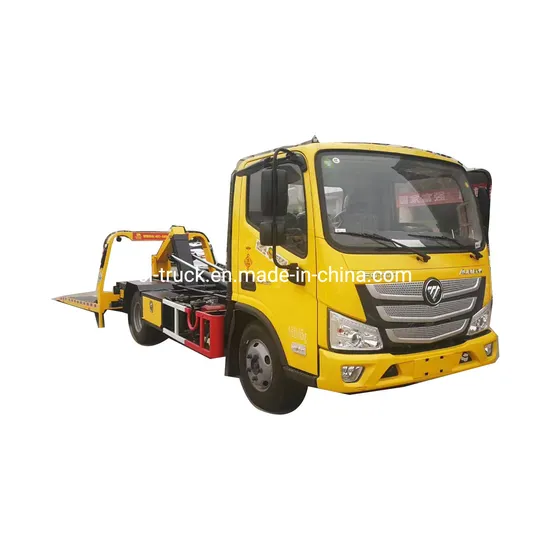
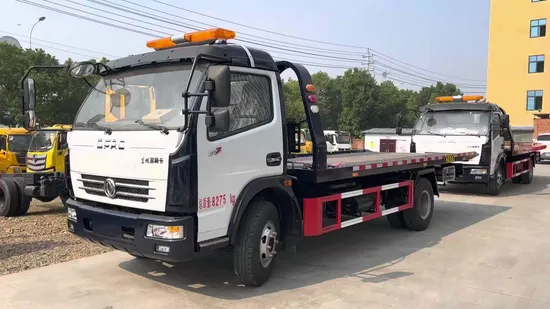
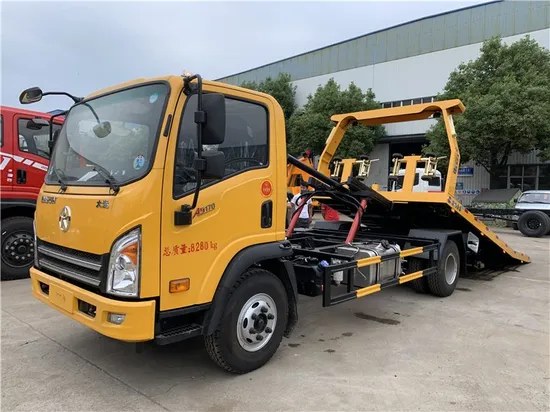
The Foton Aumark S38 Full Landing Wrecker Truck 4-5t is a flatbed recovery vehicle on a Foton Aumark S38 chassis with a single-row cab, a 3800 mm wheelbase and a 105 kW diesel engine. The full landing platform tilts down to the ground, so a disabled vehicle can be pulled on with the winch and carried instead of being dragged.
It suits roadside rescue operators, workshops, towing companies and fleet depots that move cars and light commercial vehicles in the 4 to 5 ton class. The cab seats three people and is left-hand drive, with right-hand drive available on request, so a driver and a helper can work together at the scene.
Chassis, engine and brakes
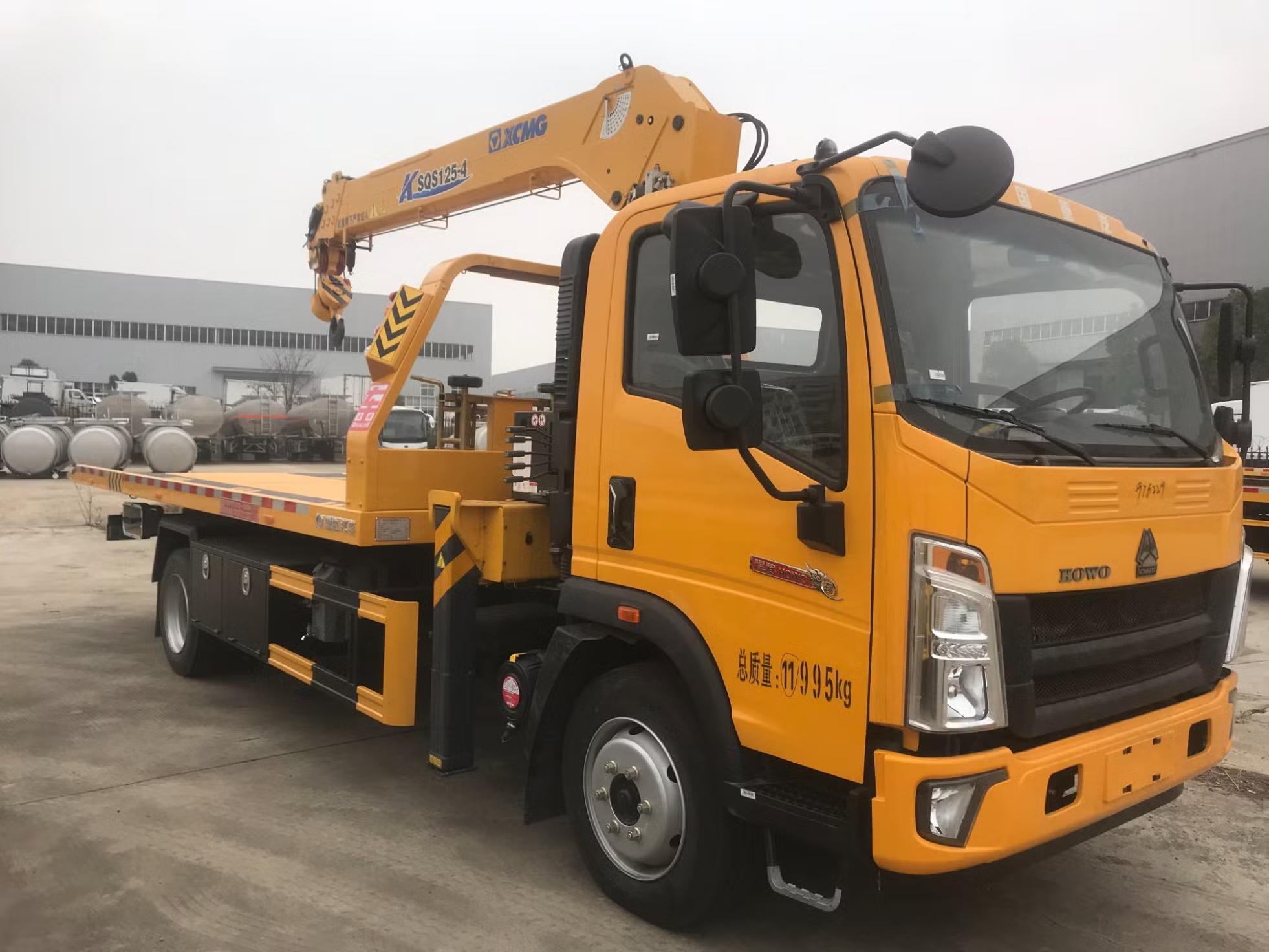
The engine has a displacement of 3.76 L, a rated power of 105 kW and a maximum torque of 450 N.m. The gross vehicle weight is 11995 kg, the cab is the W2060 single-row type, and the rear suspension uses 8+6 leaf springs. Tyres are 8.25R20 14PR in a 6+1 arrangement, including the spare.
The parking brake is a gas brake and an engine exhaust brake serves as auxiliary braking. An exhaust brake helps control speed on long descents, which is useful when the platform is carrying a vehicle. The emission standard on this chassis is Euro 3, and operators should check it against the rules for their own roads.
Platform and winch equipment
The platform has a working stroke of 2700 mm, an inner width of 2220 mm and stands 1070 mm above the ground. Its minimum inclination angle is 8, and the plate mechanism can bear up to 3000 kg. A hydraulic capstan rated at 4 tons does the pulling, with a rated traction of 40 kN and a drum diameter of φ110.
The steel wire rope has a diameter of φ11, and the L-shaped tow arm has a hydraulic lock. The maximum lifting capacity at full extension is 1330 kg, which describes the tow arm and not the platform. Always keep the lifted load within this figure when using the arm to raise the front or rear axle of a vehicle.
Accessories and working method
The truck comes with four lashing ropes, one tool box, an alarm light on the gantry frame that can be removed, and two auxiliary small wheels. The ropes secure the casualty vehicle to the platform once it is loaded, and the alarm light warns passing traffic while the crew works beside a live road.
A typical job starts with the alarm light on and the platform lowered to the ground. The casualty vehicle is hooked, winched up, lashed down with the four ropes and then carried to the workshop. Check the ropes for wear and the hydraulic parts for leaks at the start of each shift to keep recoveries smooth.
What to confirm before ordering
Please confirm the drive side, the emission standard and the cab specification you need. Wire rope length and winch speed depend on the configuration and are confirmed in the quotation, and so are the exact tow weight limits for the vehicles you plan to carry. Tell us the heaviest vehicle you expect to recover.
Also discuss the body colour, extra lighting, additional tools and any storage you want fitted. Customisation is possible, and the best time to ask is before the quotation is finalised. Our team will go through your intended jobs and check that the platform size and winch rating suit them.
Request a current quotation for your selected configuration, quantity and delivery terms.