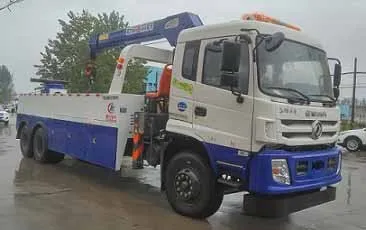
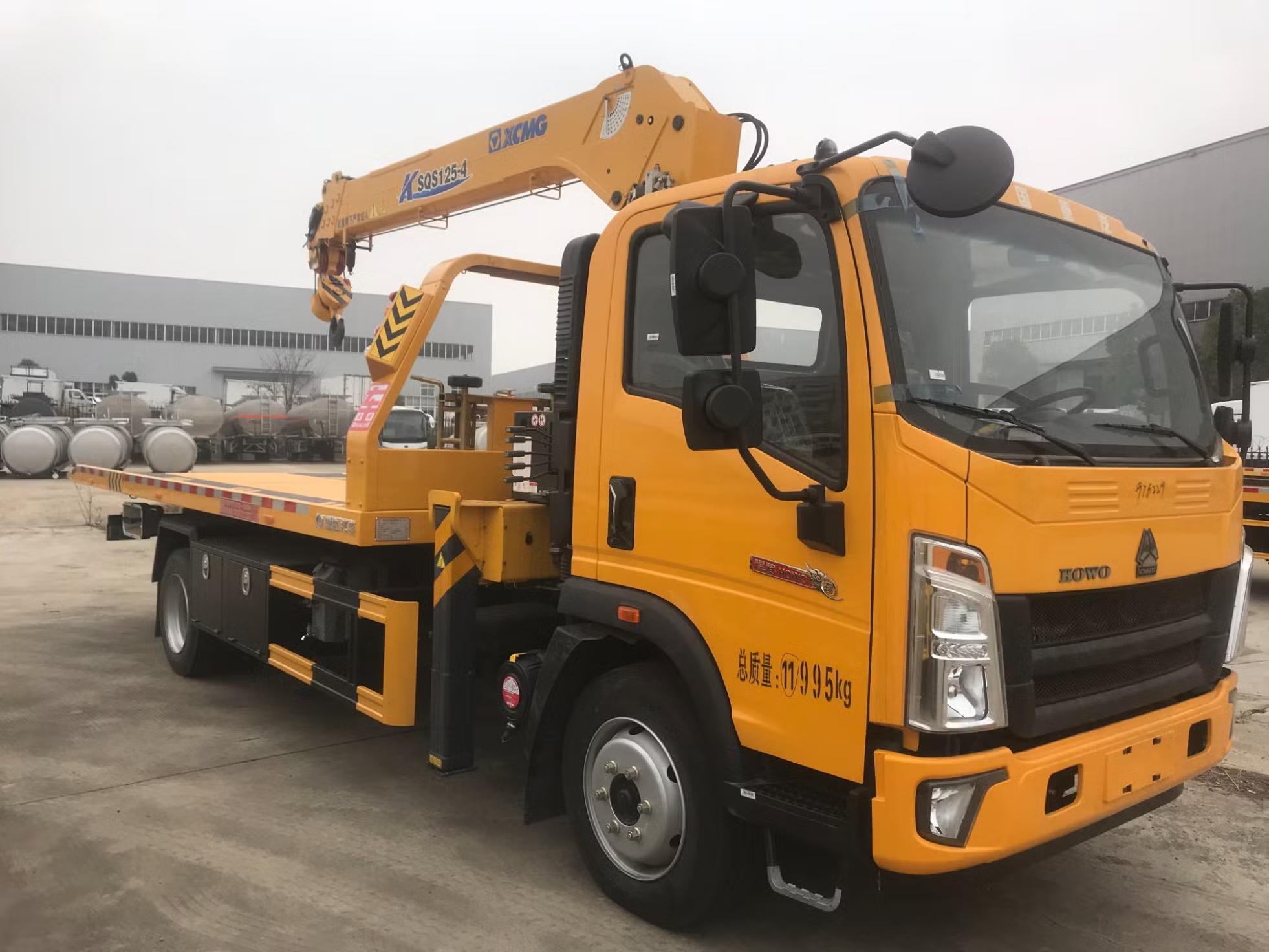
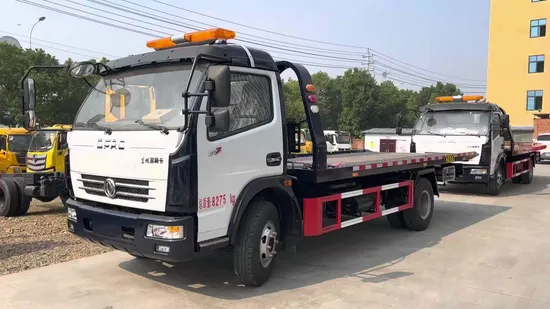
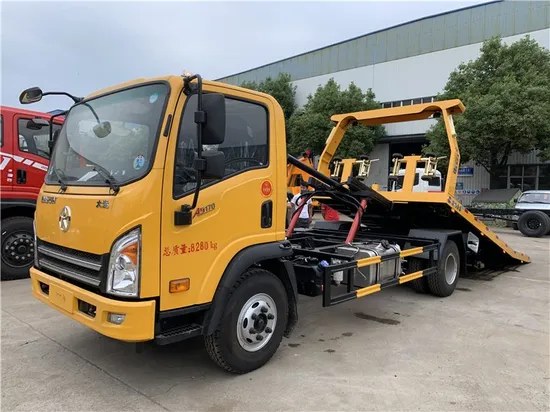
The Dongfeng 6x4 20t Wrecker Truck with 8t Crane is a heavy recovery vehicle built on a Dongfeng EQ1258VFJ2 chassis, with the truck model code CLW5251TQZE5. It has a 6×4 drive layout, a tow lifting capacity of 20 tons and an 8 ton crane. Left-hand drive is standard, and right-hand drive is available on request.
It suits towing companies, highway rescue teams, fleet operators and depots that need to lift and move disabled trucks, buses and heavy equipment. The combination of a towing lift and a crane gives crews two ways to work: lifting a vehicle for towing, and lifting loads or components at the scene of a breakdown or accident.
Chassis, engine and drivetrain
The engine runs on diesel and meets the Euro 5 emission standard. The transmission is a manual gearbox with eight forward gears and one reverse, which gives the driver a wide choice of ratios for moving off with a heavy tow and for road running when empty. Power steering is fitted, along with an air brake system and ABS.
The front axle is rated at 5 tons and the rear axles are rated at 10 × 2 tons. The wheelbase is 4350 mm plus 1350 mm. The tyres are 11.00R20, with six on the vehicle and one spare. A heavy-duty axle and brake set is the foundation of safe recovery work, since the truck must stop itself and its tow.
Weights and dimensions
The gross vehicle mass is 25000 kg and the kerb weight is approximately 16850 kg. The overall dimensions are approximately 8800 × 2500 × 3550 mm for length, width and height. These figures are approximate because the body equipment can vary with the configuration, and exact values are confirmed in the quotation.
The overall height of about 3550 mm affects the routes the truck can take, so check bridges, tunnels and depot doors against it. The difference between gross and kerb weight sets the allowance for the crew, tools and equipment carried on the truck, and the weight of the towed vehicle is a separate question handled by the lifting capacity.
Towing and crane work
The tow wrecker lifts up to 20 tons, and the crane is rated at 8 tons. Crews should always work within the rating at the actual reach and boom position being used, because capacity falls as a load moves further from the truck. Use the crane for recovery and lifting at the scene, and the tow lift for transport.
Good recovery practice begins with a safe scene: park the truck on firm, level ground where possible, set the brakes, and warn approaching traffic. Assess the weight and condition of the casualty vehicle before lifting. Operators should be trained for the equipment, and the controls should be checked before each shift.
What to confirm before ordering
Confirm the drive side, the emission standard for your registration, and the exact lifting capacity and crane details for your configuration. Confirm the equipment you need on the body, for example lighting, tool storage and tow accessories, and the colour. All these points are written into the quotation.
Customisation is available. Tell our team what you typically recover, such as buses, loaded trucks or construction machines, and the roads and sites you work on. With that information we can check the configuration against the job and confirm the details of the 20 ton lift and the 8 ton crane.
Request a current quotation for your selected configuration, quantity and delivery terms.