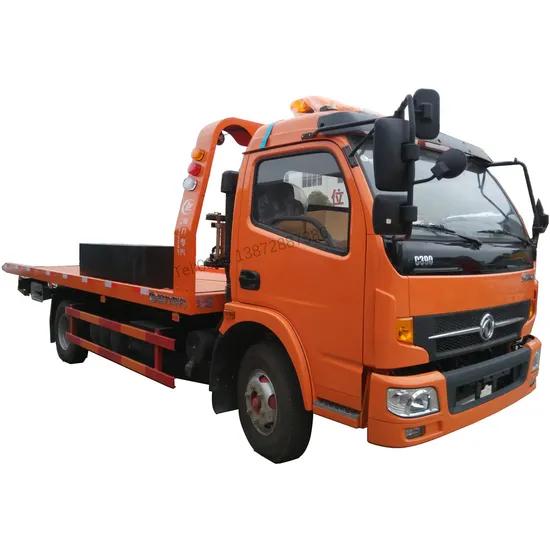
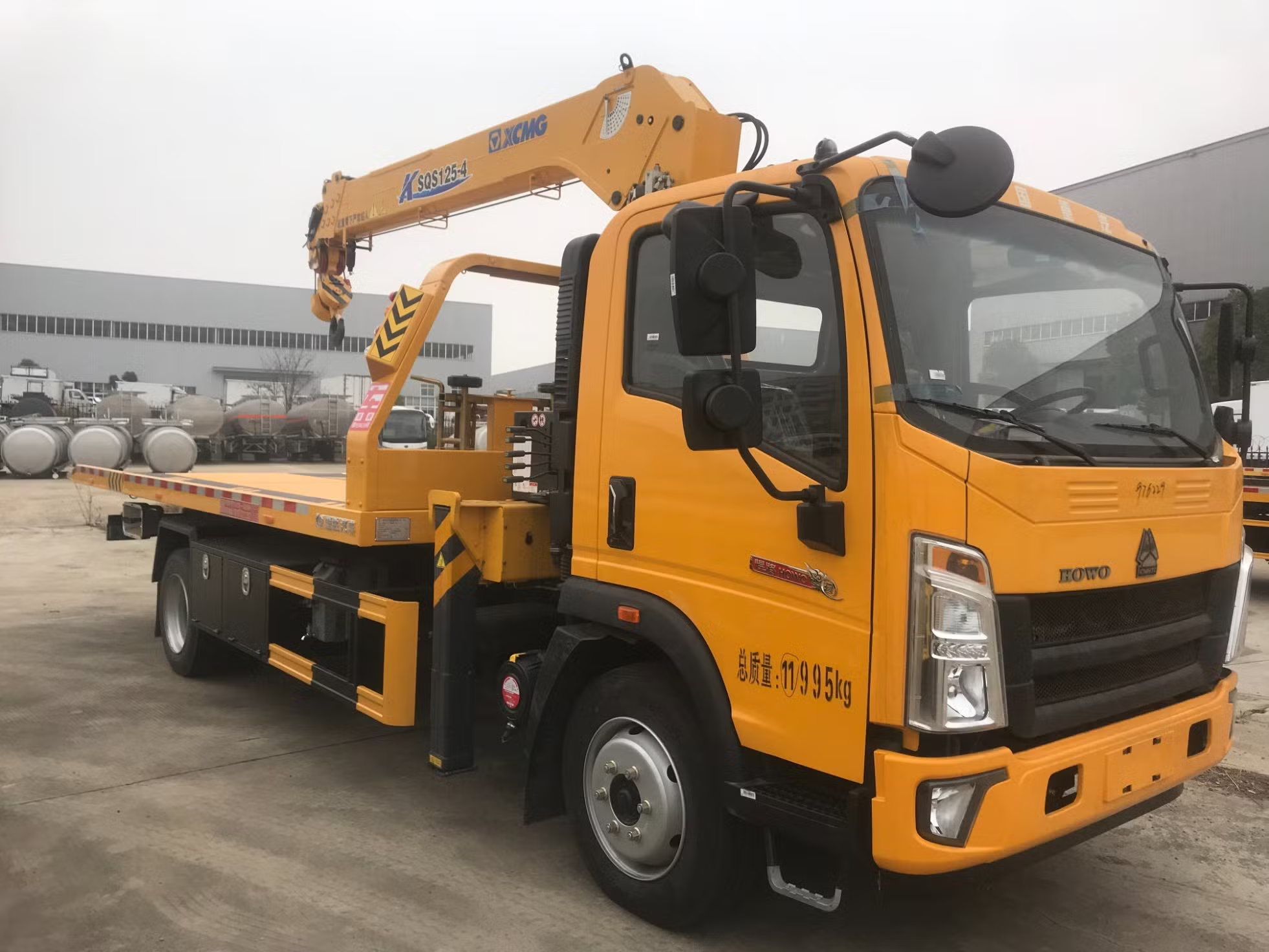
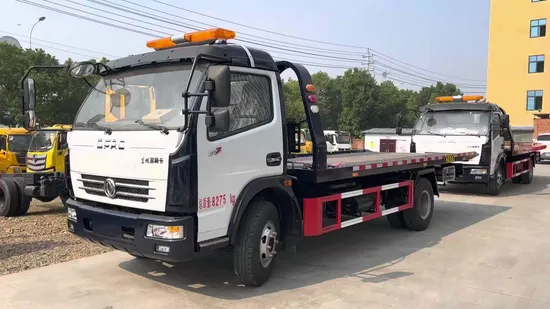
The Dongfeng 4x2 RHD Tilt Tray Wrecker Tow Truck 4t is a light-duty recovery truck with a tilt tray flatbed of 5600 × 2300 mm on a Dongfeng 4×2 chassis. A 4-ton winch pulls the casualty vehicle up the tilted bed, and the whole vehicle is carried instead of being dragged on its own wheels. This is a right-hand drive version, and the cab carries air conditioning as standard.
It is a sensible tool for towing companies, garages, breakdown services, dealers and fleet depots that move cars, vans and small trucks and want a flat bed that can be driven through town traffic without the size of a heavy recovery vehicle.
How a tilt tray works
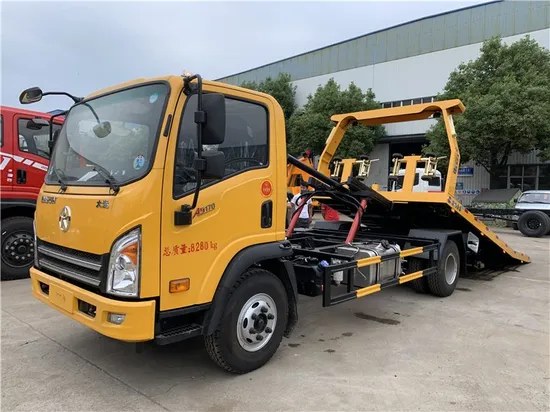
The bed sits flat on the chassis while driving. At the scene, hydraulic cylinders tilt it to a shallow slope and slide it back until its rear edge touches the ground. The winch cable, 21 m of steel wire rope, is run out to the casualty, and the vehicle is hauled onto the bed. The bed is then returned to the horizontal and the vehicle is secured with straps. The equipment includes four bandages for this purpose.
Carrying a vehicle on its wheels off the ground has real advantages. It suits a car with damaged steering, a locked transmission or a flat tyre, and it avoids further wear on the casualty. It is also the preferred way to move low-clearance or all-wheel-drive vehicles that are difficult to tow.
Chassis, engine and drivetrain
The wheelbase is 3800 mm, the gross vehicle weight is 7460 kg and the curb weight is 5495 kg. Overall size is 7420 × 2300 × 2540 mm. The engine is a four-cylinder, water-cooled, inter-cooled diesel of 3.856 litres with a maximum output of 88 kW, and the exact engine model is confirmed in the quotation. Emission standard is Euro 2.
Power goes through a five-speed manual gearbox with one reverse. Steering is power assisted, brakes are air operated, and the front and rear axles are rated at 2.4 and 4.2 tons. Tyres are 7.50R16, six on the road and one spare. Maximum speed is 90 km/h.
Recovery equipment
The recovery gear includes bilateral linkage operating controls, a single 4-ton winch, a rear drag arm lift rated at 2.5 tons, a tool box, an alarm lamp, two auxiliary small round items and four bandages. The hydraulic valve is imported. Bilateral linkage means the controls can be worked from either side of the truck, which lets the operator stand where he can see both the casualty and the traffic.
The rear drag arm lets the truck lift one end of a vehicle for towing when a tilt-and-load is not possible, for example in a narrow lane. The alarm lamp warns other road users while the operator works.
Daily checks and safe use
Start by checking the hydraulic oil level and looking for leaks at the tilt cylinders, hoses and valve block. Run the bed through a full tilt and slide cycle before the shift so that any sticking is found at the depot, not at the roadside. Inspect the winch rope along its full length for broken strands, since a worn rope is the most common safety problem on a recovery truck.
When loading, keep people clear of the rope line, put the casualty in neutral while it is winched, and strap it down at several points before moving off. Remember that this is a light chassis with a gross vehicle weight of 7460 kg, so do not load a vehicle that would push the total past that figure.
What to confirm before ordering
The towing tonnage and the engine model are confirmed in the quotation.
Also confirm the bed length and width you need for the vehicles you recover, what the auxiliary small round items and bandages are in size and rating, the make of the hydraulic valve, and the colour.
Request a current quotation for your selected configuration, quantity and delivery terms.