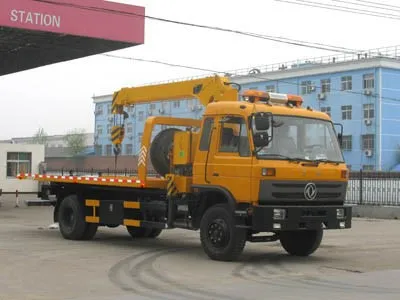
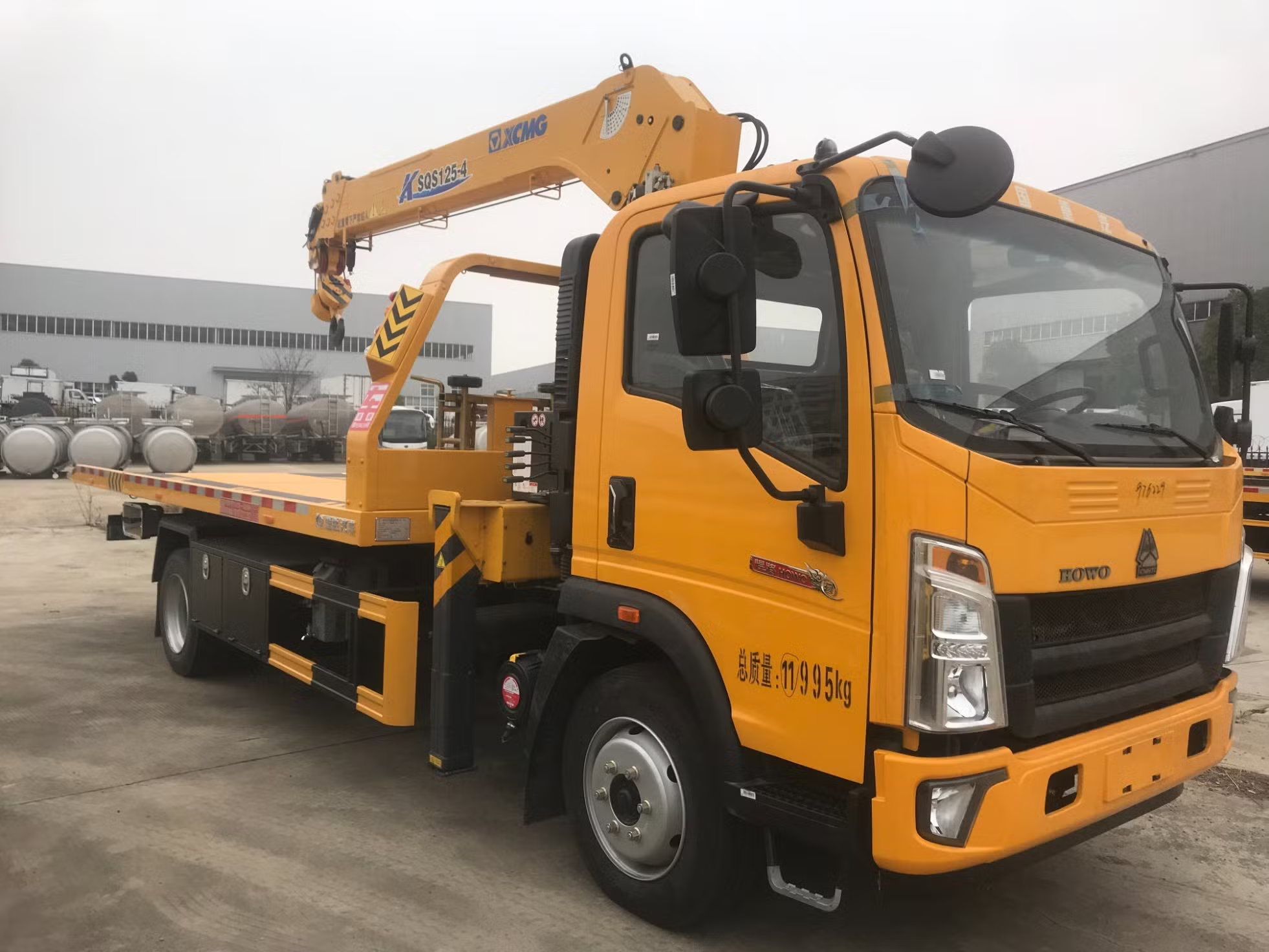
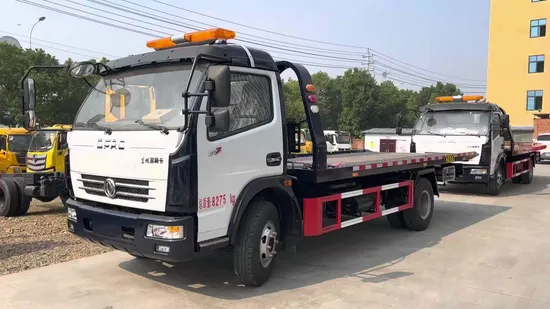
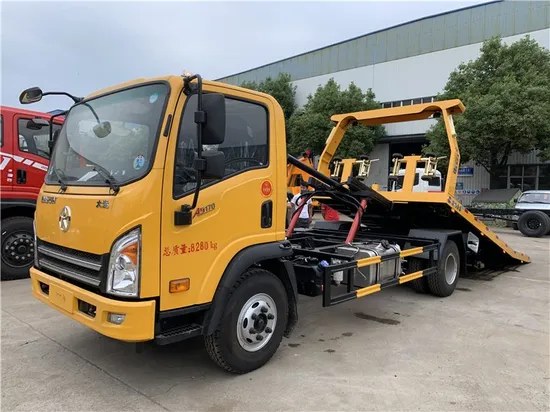
The Dongfeng 4x2 6t Tilt Tray Road Wrecker Truck with Crane is a recovery truck with a flat tilt tray, a Dongfeng cab and a Cummins 190hp diesel engine. It is intended for carrying broken-down vehicles rather than dragging them, which suits operators who want to move a casualty vehicle without putting load on its own wheels.
We offer it in left-hand or right-hand drive. It has a gross vehicle weight of 12,450 kg, a curb weight of 8,455 kg and a wheelbase of 5,100 mm, and the overall size is 9,000 × 2,480 × 3,500 mm. Typical buyers are towing firms, breakdown services and workshops that handle heavier vehicles on a regular basis.
Chassis, engine and drivetrain
The Cummins engine is rated at 190hp and 140 kW, in a straight-six, water-cooled layout running on diesel. It is paired with a Dongfeng gearbox with five forward gears and one reverse, operated manually. The emission standard is Euro 2. Power steering and an air brake system are fitted as standard on this chassis.
The front axle is rated at 5 tons and the rear axle at 10 tons. Tyres are 10.00-20, six on the road plus one spare, and the maximum speed is 90 km/h. These ratings suit a vehicle that carries part of the casualty vehicle's weight on its tray, so axle loading should be reviewed before each recovery.
Tilt tray, winch and crane
The tilt tray is the working platform: it tilts so that a vehicle can be winched on, and then lies flat for transport. The winch uses a steel wire rope 21 m long and pulls at 8 m/min, and its rating is confirmed in the quotation. A tool box and an alarm lamp are also fitted to the body.
This model is supplied with a crane, and its lifting capacity and reach are confirmed in the quotation, as they depend on the body layout chosen. The tray length and width are confirmed in the same way. Ask us for the figures that matter for the vehicles you handle most often, rather than relying on general ratings.
Working routine on the road
On arrival, park with the alarm lamp on, tilt the tray down, and use the winch to draw the vehicle up the tray. Once the vehicle is flat and secured, return the tray and drive away. Carrying the vehicle on the tray means its own wheels, steering and gearbox do not need to be in working order.
Plan around the total weight: the tray, the casualty vehicle and the crew equipment all count against the 12,450 kg gross weight. Check the wire rope, the tray locking and the air brake system before every shift, and record any damage so that the truck is ready when the next call arrives.
What to confirm before ordering
Please confirm the drive side, the emission standard you need, the tilt tray length and width, the winch rating and the lifting capacity of the crane. Colour is made to customer requirements, and customisation is available, so we can discuss body paint, extra lighting or additional tool storage.
Send us the heaviest vehicle you expect to carry, along with its length and width, and tell us whether you mostly recover cars, vans or small trucks. We will compare that with the axle ratings and the gross weight, and recommend whether this model suits or a larger tray would be better.
Request a current quotation for your selected configuration, quantity and delivery terms.