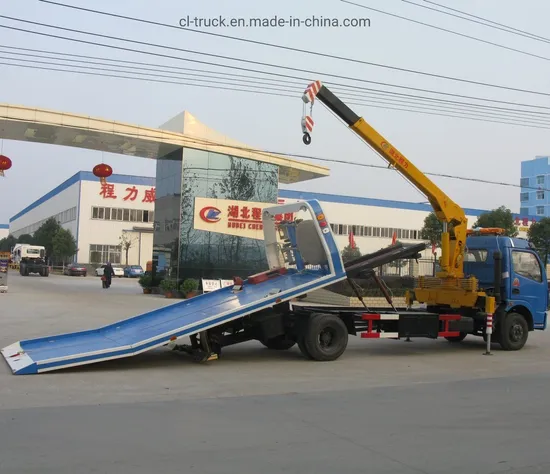
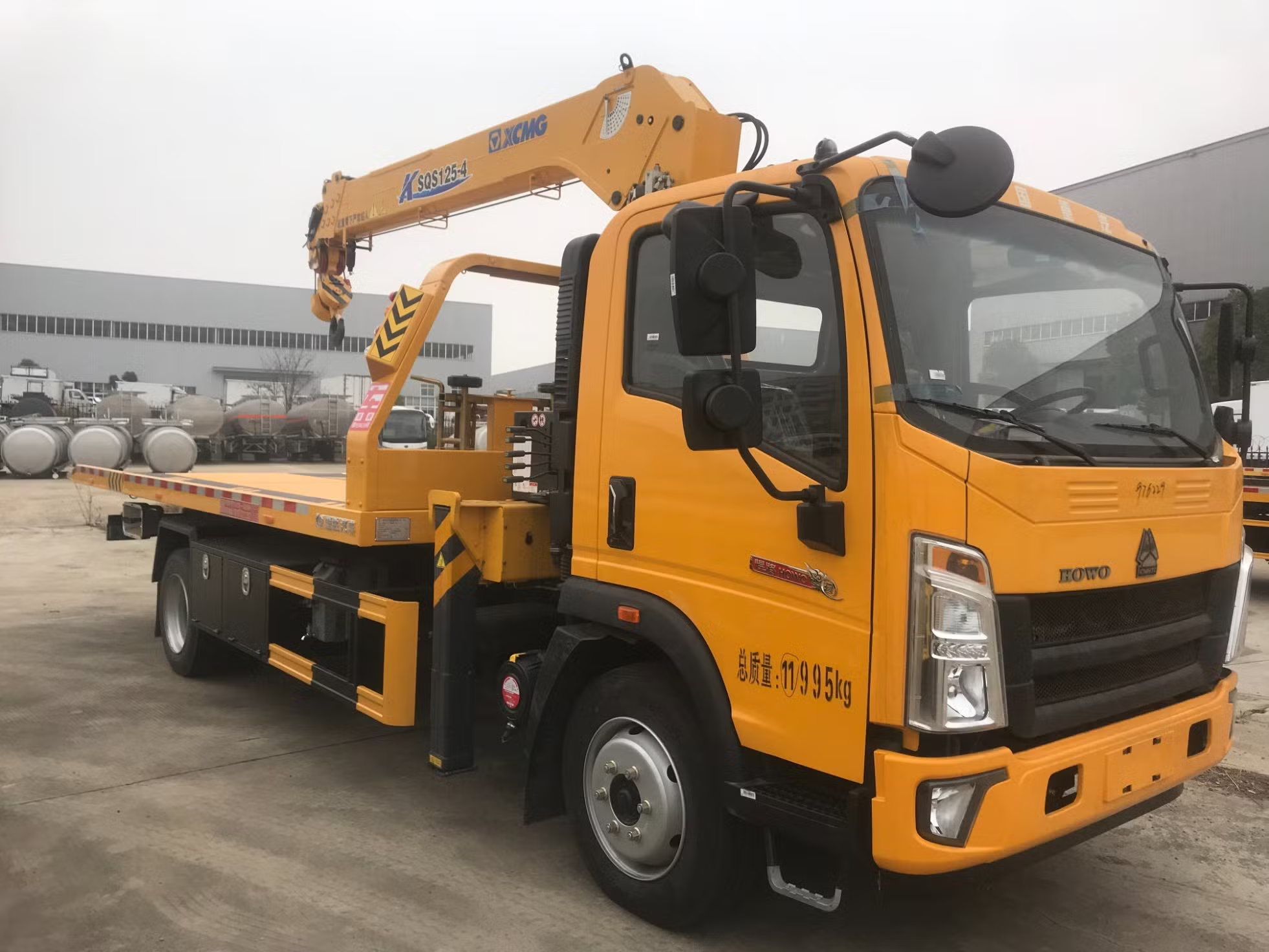
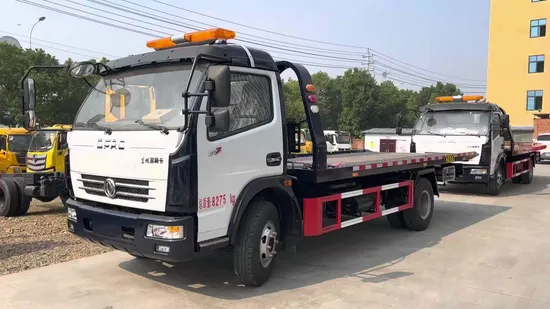
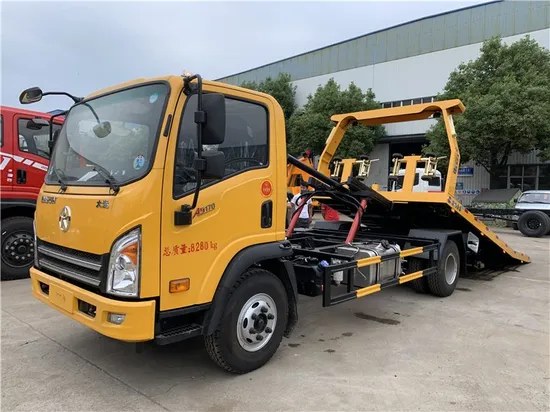
The Dongfeng 3t Tilt Tray Wrecker Towing Truck with Crane is a 4×2 diesel recovery truck on a Dongfeng chassis, with a flat bed of 5,600 mm by 2,300 mm, a 4-ton winch and a single-row cab with air conditioning. The gross vehicle weight is 7,460 kg and the wheelbase is 3,800 mm.
It suits towing companies, workshops, road service operators and property managers who need to recover or move disabled cars and light commercial vehicles. A tilt tray carries the vehicle on the bed instead of dragging it, which is gentler on the casualty and easier to handle.
Where this truck is used
Tilt tray wreckers are used after breakdowns and collisions, and for moving vehicles between workshops, yards and car parks. The bed tilts so a vehicle can be winched up on its own wheels or lifted on, then it travels with all wheels clear of the road.
This model also has a crane, which helps with tasks that a tray alone cannot handle, such as lifting parts or loading items beside the truck. The crane capacity is confirmed in the quotation for the version you order. Crews should follow the stated lifting limits at all times.
Chassis, engine and drivetrain
The truck is driven on a 4×2 layout, available as left-hand drive or right-hand drive. The engine is a water-cooled, inter-cooled straight four-cylinder diesel of 3.856 L with a maximum output of 88 kW. The engine model is confirmed from the options offered, and the emission standard is Euro 2.
The gearbox is a manual with five forward gears and one reverse, steering is power-assisted, and the brake system is air operated. Maximum speed is 90 km/h. Front and rear axles are rated at 2.4 tons and 4.2 tons, and the standard tyres are 7.50R16, six fitted plus one spare.
Wrecker equipment
The recovery equipment includes a 4-ton winch with 21 m of steel wire rope, a rear drag arm lift of 2.5 tons, a tool box, and an alarm lamp. The flat bed is 5,600 mm by 2,300 mm and the overall truck dimensions are 7,420 mm by 2,300 mm by 2,540 mm.
Curb weight is 5,495 kg, leaving the difference to the 7,460 kg gross weight for the casualty vehicle and equipment. Operators should weigh typical casualties before routine use. Overloading the bed affects braking and steering, so keep every recovery within the weight the chassis can carry.
Cab and daily checks
The cab is a Dongfeng single-row cab with air conditioning as standard configuration, a practical feature for drivers who wait at roadside incidents in hot weather. Because the cab seats the driver and a small crew, many operators plan the vehicle for one or two staff per call-out.
Daily checks should cover tyre pressure, air brake pressure, winch rope condition, tray locking and warning lamp operation. Inspect the wire rope for damage before each shift and keep it neatly wound. A short checklist used at every shift change helps catch problems before they affect a recovery.
What to confirm before ordering
Please confirm the drive side (left or right), the emission standard required for registration, the engine model, and the crane capacity you need. The towing and lifting figures depend on the final configuration, so our team states them for your version in the quotation.
Also tell us the heaviest vehicle you expect to carry, body colour, and any extra equipment such as additional lights or storage. With that information we prepare a quotation covering each item, so that the finished wrecker matches your usual recovery work.
Request a current quotation for your selected configuration, quantity and delivery terms.