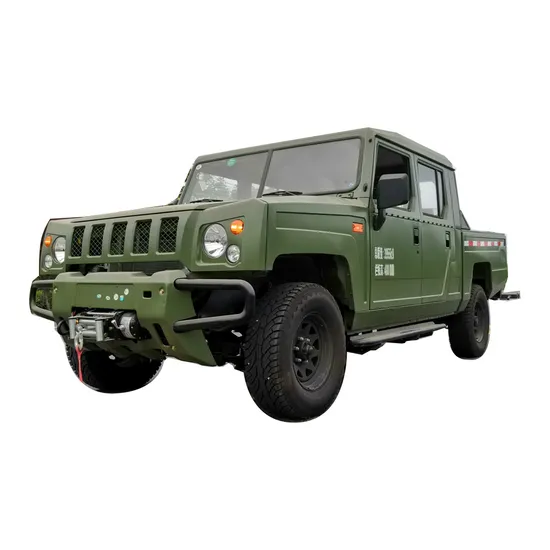
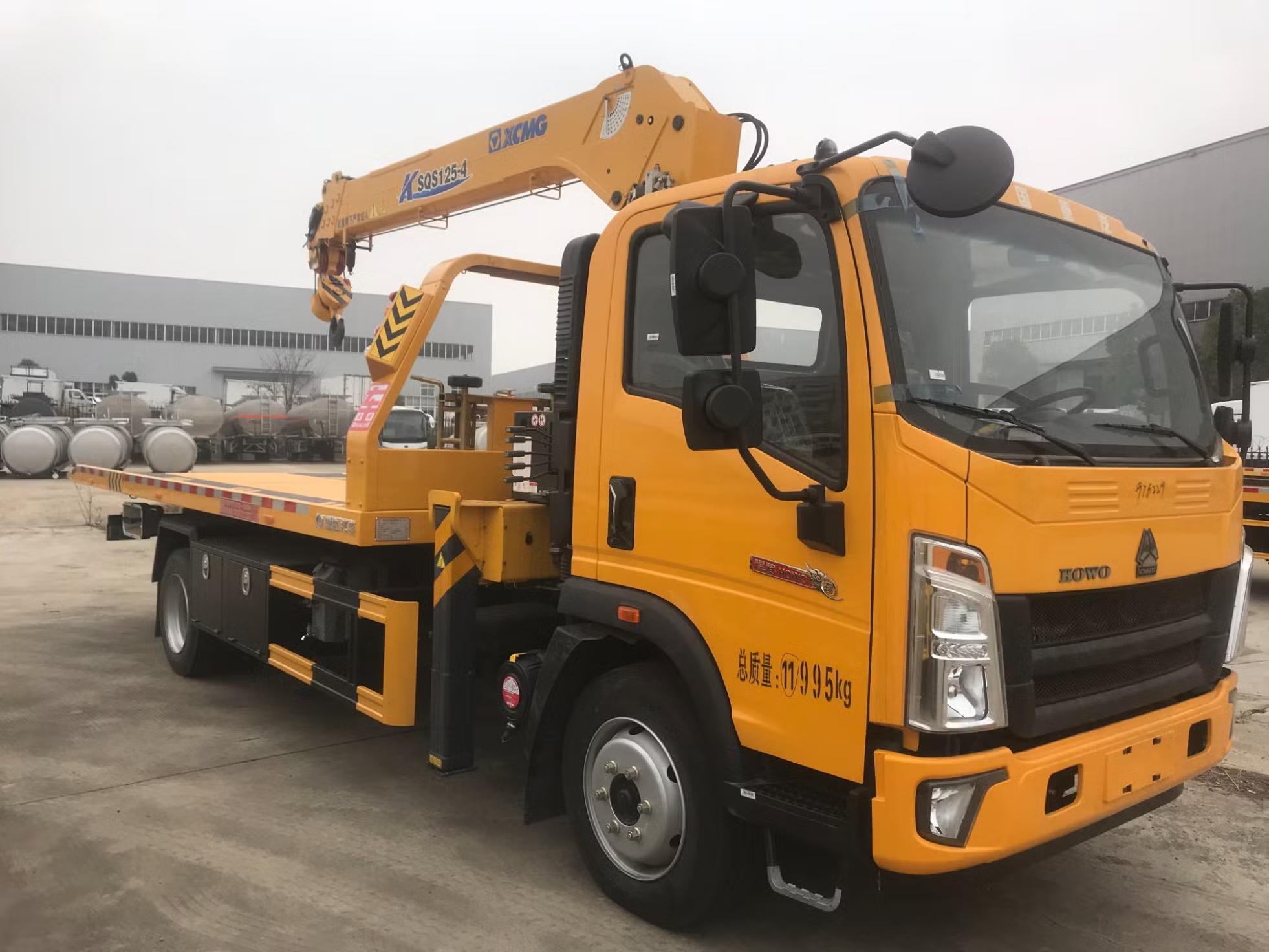
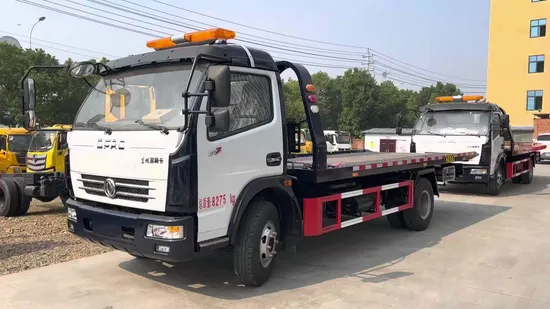
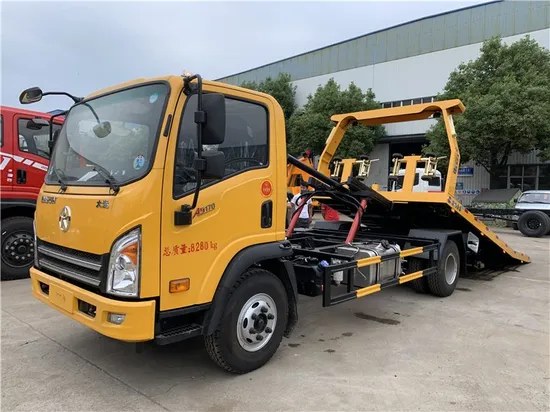
The Beijing 4x4 Off-Road Pickup Wrecker Truck Euro 6 is a light recovery vehicle built on a four-wheel-drive pickup chassis and powered by a diesel engine with a manual gearbox. We build it for towing and winching work on rough ground where a heavy wrecker cannot be positioned easily, and the Euro 6 emission level is part of the specification.
It suits roadside rescue teams, small towing companies, site operators and fleet owners who need to move light vehicles from soft shoulders, tracks and yards. The towing rating is 3 tons and the winch is rated at 4 tons, so the truck is aimed at cars, pickups and similar light vehicles rather than loaded commercial trucks.
Where this truck is used
Light recovery is the core job. A pickup wrecker can reach a car that has slid into a ditch, stalled on a gravel track or stopped in a narrow service lane, places where a long-wheelbase wrecker would struggle to turn. The compact footprint and four-wheel drive let the crew get close, attach the winch line and pull the vehicle back to firm ground.
Typical customers include breakdown service operators, estate maintenance teams, mining and construction sites, and rental or logistics companies that need to clear their own light vehicles. Because the cab seats 2+3 persons, a recovery crew can travel together with the driver rather than following in a second vehicle, which keeps the call-out simple and the scene properly staffed.
Chassis, engine and drivetrain
The chassis, model BAW2043HMS51D, uses a four-wheel-drive layout on a 3350 mm wheelbase, with front and rear overhangs of 775 mm and 1865 mm. The approach angle is 42 degrees and the departure angle is 12 degrees, which gives useful clearance when entering a slope or crossing a ditch edge. Tyres are 265/70R16LT 8PR.
Power comes from a Yuchai YCY24140-60A diesel engine of 2360 ml displacement, rated at 103 kW (140 PS) and matched to a manual transmission. Gross vehicle mass is 3955 kg and kerb weight is 2990 kg, figures that matter when you plan how much recovery equipment and how many passengers the truck can carry within its rating.
Using the winch and tow equipment
The truck carries a 4-ton winch. In practice a winch is used for straight, controlled pulls: the operator anchors the truck, runs the line to the casualty vehicle, takes up slack and then pulls steadily rather than jerking. Keeping the pull in line with the vehicle protects the cable and the truck frame, and an angled pull should be avoided whenever the recovery spot allows it.
Towing tonnage is 3 tons, so the load you plan to recover should stay within that limit, including any cargo inside the casualty vehicle. Before the first real job, we suggest the crew practise the full routine in a yard: positioning, winching, hooking up and securing. Familiarity with the equipment shortens roadside time and reduces the chance of damage.
What to confirm before ordering
Several points are settled in the quotation rather than assumed. These include the drive side, left-hand or right-hand, and the exact body dimensions, since the overall length and width depend on the build. Please also tell us the heaviest vehicle you expect to recover so that we can check it against the towing and winch ratings.
Colour follows your requirement, and optional equipment is agreed at the same time. Share your site conditions, such as soft ground, steep ramps or narrow lanes, and our team will confirm that the angles, wheelbase and tyre specification fit them. A short list of your typical jobs is enough for us to prepare a clear quotation.
Request a current quotation for your selected configuration, quantity and delivery terms.