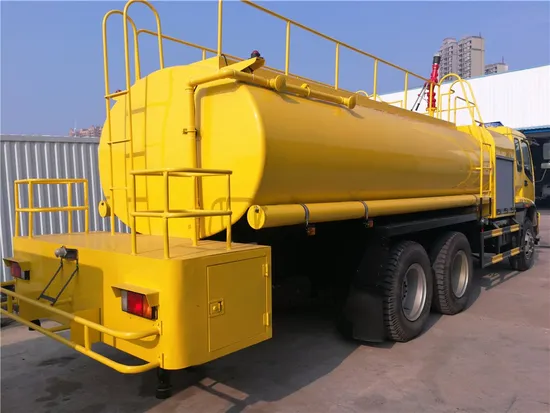
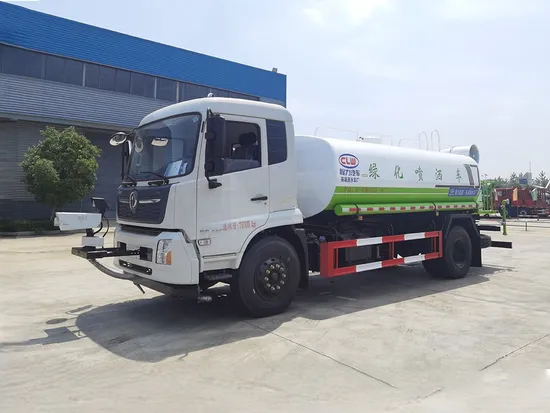
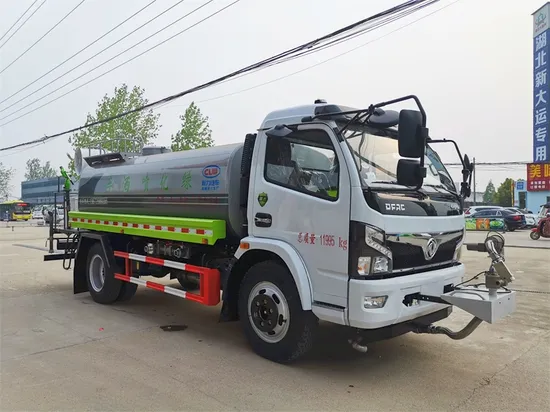
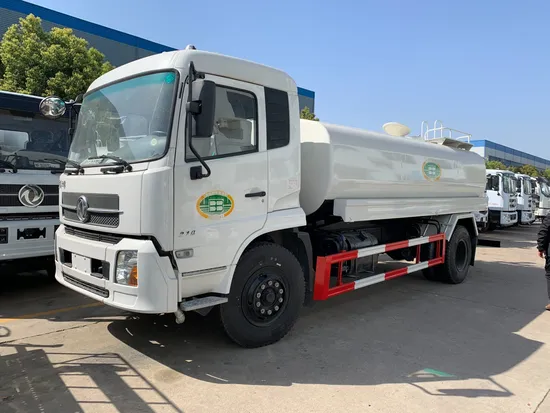
The Isuzu FVZ 6x4 High Pressure Water Tank Truck 15m3 is a three-axle water truck on an Isuzu FVZ chassis, equipped for high pressure washing and flushing. It carries water in a tank and delivers it through a pressure system, so it can wash roads, kerbs, walls and equipment, and flush drains. It is useful to city cleaning departments, contractors, industrial plants and mines that need to move a large amount of water and work with it on site.
How a high pressure water truck works
A water pump driven by an auxiliary engine draws water out of the tank and sends it to spray bars or a hose at high pressure. A separate engine for the pump means the main engine can be set at the speed that suits driving, while the pump runs at its own speed as the truck crawls along the road. The flushing pressure is 10 MPa and the flushing height is at least 21 m.
A pressure of this level can lift caked mud and dust from road surfaces. Pressure and reach are rated values; they fall when long hoses or small nozzles are used, so choose accessories to suit the work.
Working widths and routines
The cleaning width is 3.5 m, wide enough to cover a normal traffic lane in one pass. Typical routines include washing roads and central reservations after sweeping, flushing out drains, cleaning tunnel walls, and damping dusty haul roads on construction sites. Plan the route so that the tank is refilled at a known point, because high pressure work uses water quickly.
Keep the speed steady while washing, since walking pace gives better results than a hurried pass. Watch for pedestrians and traffic at all times, and avoid flushing near live electrical fittings.
Chassis and weights
This is a 6x4 truck. The gross vehicle mass is 16000 kg and the truck speed is at least 95 km/h. Three axles with two driven give better traction on soft yards and slopes than a 4x2 truck of similar size, which helps when the tank is full. Weight is concentrated in the tank, so drivers need to brake earlier and take bends slowly with a full load. Partly filled tanks are harder to handle than full or empty ones, because the water moves.
Maintenance and what to confirm
Check the pump oil and the drive between the secondary engine and the pump before each shift, and look for leaks around hoses, couplings and nozzles. Clean the strainer so debris does not reach the pump, and drain the lines in freezing weather. Fill with clean water where possible, since grit shortens the life of pump seals and nozzles.
The most important point to confirm is the tank. The working tank volume depends on the configuration and is confirmed in the quotation. Also confirm the steering side, the emission standard, the pump flow, the hose length, the spray equipment, and whether front spray, rear spray bar or hose reel are included.
Request a current quotation for your selected configuration, quantity and delivery terms.