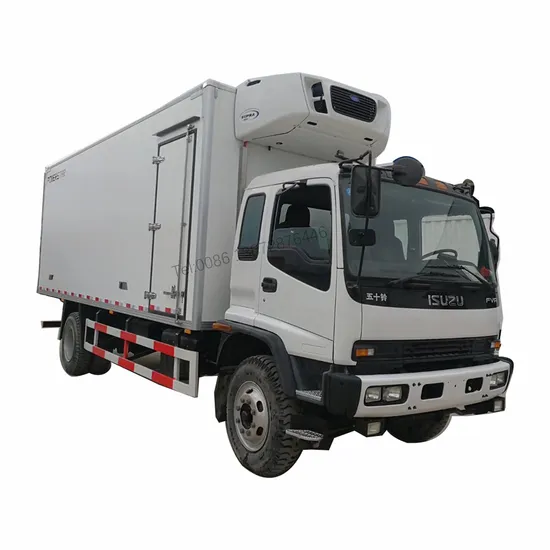
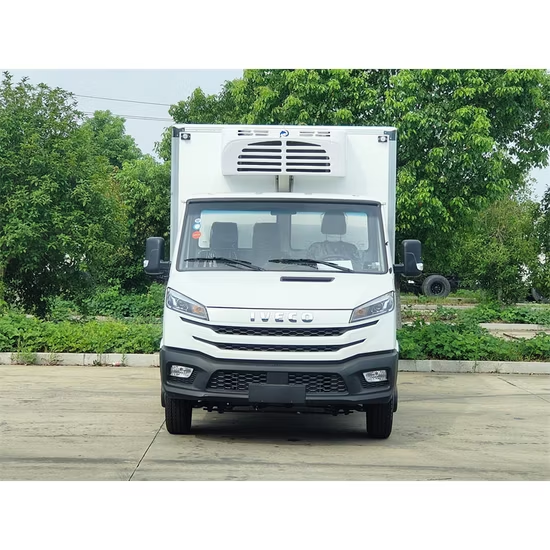
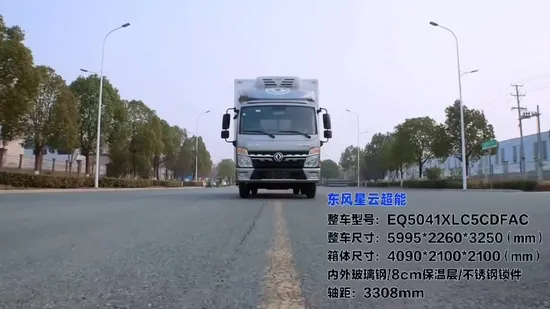
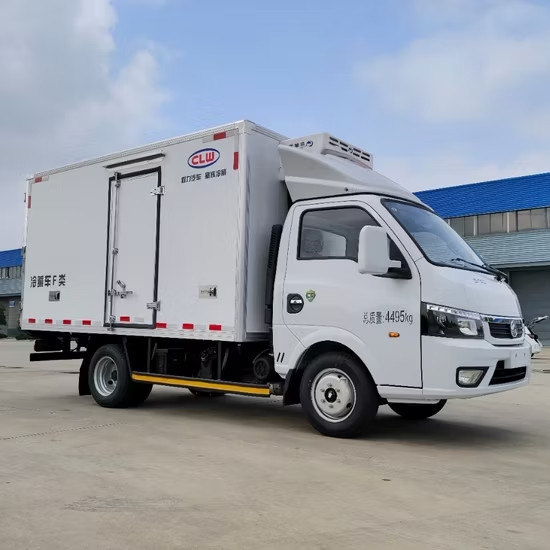
The Isuzu FTR FVR 4x2 Refrigerated Truck 10-20t LHD is a left-hand drive refrigerated truck on an Isuzu FTR or FVR chassis and cab. It is aimed at heavy cold-chain loads, with the payload class chosen to suit your cargo and confirmed in the quotation.
Frozen food producers, meat and fish distributors, dairy cooperatives and wholesale cold stores will find it useful for long scheduled runs where a full box is carried and the truck rarely travels empty. A rigid 4×2 layout keeps the chassis simpler than a tractor and trailer combination, which suits routes with limited turning space.
Engine and drivetrain
The engine is the Isuzu 4HK1-TCG40, a four-stroke, water-cooled straight-4 with electronic control and a displacement of 5.193 L. Maximum output is 140 kW. Output of 190 HP or 205 HP is mentioned for this truck, and the figure for your build is confirmed in the quotation. A six-speed MSB manual gearbox gives six forward gears and one reverse.
The front axle is rated at 6.3 tons, and the rear axle rating is confirmed in the quotation. Tyres are 10.00-20, with six fitted and one spare. The cab carries the FVR FTR name and includes air conditioning, a USB port, a sound system and electric windows, giving the driver reasonable comfort on long hauls.
Refrigerated box
The box is formed from composite panels with glass reinforced plastic on both the inside and outside faces and an 8 cm polyurethane extruded layer sandwiched between them. The four sides are bonded with polyurethane foam glue into a closed section. A colour plate box is used instead when the truck is built as a dry van.
The cooling system is designed to bring the cargo space down as far as minus 18 degrees. On a heavy truck the box length, the unit capacity and the door layout have the greatest effect on performance, so these are agreed with you in detail rather than picked from a fixed list, and are confirmed in the quotation.
Matching the truck to your job
FTR and FVR are different chassis families, and which one suits you depends mostly on the weight you carry and the box length you need. A shorter route with lighter cartons may not need the heaviest option, while full pallets of frozen product on daily long runs usually do.
Check tyre pressures before each trip, as a loaded refrigerated body puts steady stress on the rear tyres. Pre-cool the box, load evenly and keep door openings short. Inspect door seals regularly, and note the set temperature at departure and arrival so any change in cooling performance is visible early.
What to confirm before ordering
Please confirm the drive side first: left-hand drive is standard here, and right-hand drive is available on request. Confirm the payload class, the engine output, the axle ratings and the emission standard, because these depend on the configuration and are set out in the quotation. We will not guess them from a model name.
Please also send the cargo type and required temperature, the box length and door arrangement, and any preference for the refrigeration unit brand. Mention extra cab equipment or body finishes early. A clear description of your routes and loads lets us select the chassis variant, unit capacity and tyre arrangement that will actually suit your operation.
Request a current quotation for your selected configuration, quantity and delivery terms.