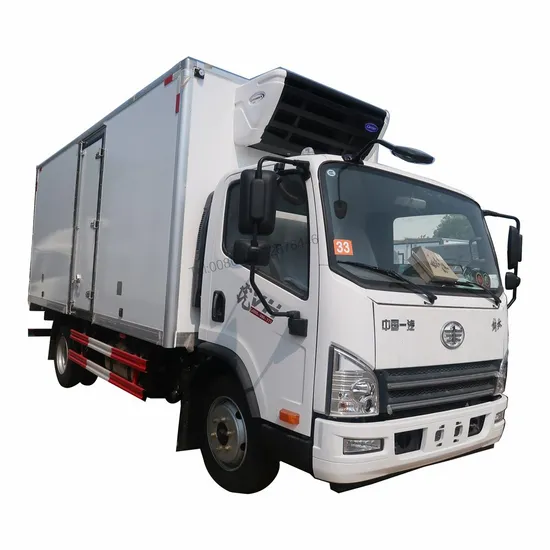
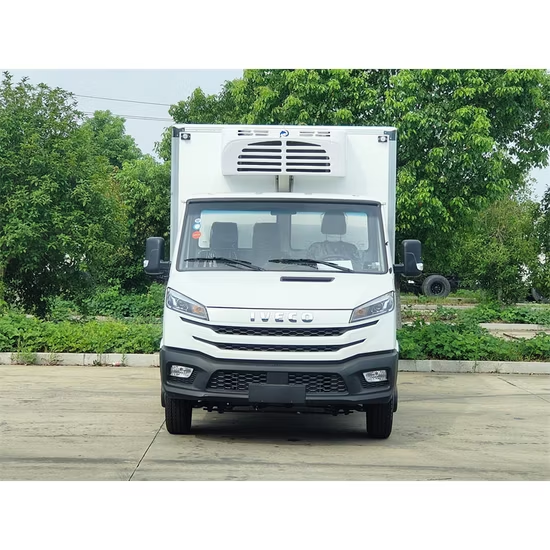
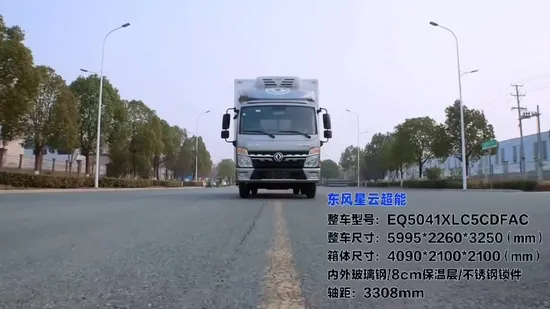
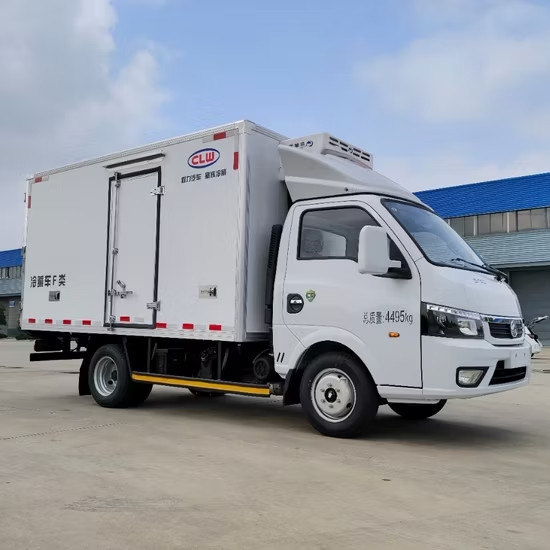
The FAW Euro 5 LHD 5t Refrigerator Truck is a temperature-controlled box truck on an FAW chassis, set up for left-hand drive and a nominal load of 5 tons. It is meant for operators who move chilled or frozen goods on regular routes, such as food distributors, caterers and wholesalers, and who want a medium-sized vehicle that is easy to place at loading docks and in busy streets.
Box and chassis figures are confirmed in the quotation, so this description explains what such a truck consists of and which questions to ask when specifying it.
How a refrigerated box works
The cargo box is an insulated shell, usually built from panels with a foam core between an inner and an outer skin. The foam slows the heat entering from outside. The refrigeration unit, normally mounted on the front of the box, removes whatever heat does get in, together with the heat that warm goods give off. A condenser and an evaporator move heat out of the box, and a thermostat decides when the compressor runs.
Door seals matter, because a gap at the rear door loses cold air quickly. The floor is normally a hard-wearing surface with grooves or ribs so that cold air can circulate under the load and the box can be washed out.
Chassis and cab
The chassis is an FAW unit, configured for left-hand drive, and the emission standard is Euro 5. Wheelbase, engine output, gearbox and tyre sizes differ between FAW chassis in this class, so we confirm them in the quotation. A medium chassis of this type normally has a single-row or double-row cab, air brakes or hydraulic brakes and a manual gearbox, but the exact build must be confirmed.
Loading and daily use
Pre-cool the box before loading, because a unit is designed to hold temperature rather than to pull down a warm load quickly. Load product that is already at the right temperature, leave a gap around the cargo so that air can flow, and keep door openings short. A thermometer or data logger inside the box lets the driver or dispatcher record the temperature along the route.
Chilled goods such as dairy and fresh produce sit a few degrees above freezing, while frozen products need much lower settings, so decide the main product before choosing the unit.
Daily checks should include the door seals, the drain outlet of the evaporator, the belt or electrical connections on the unit, and the fuel level if the unit has its own engine.
What to confirm before ordering
Confirm the drive side, the emission standard (Euro 5), the real payload and the gross weight of the chosen chassis. Ask for the inside dimensions and volume of the box, the thickness and type of insulation, the floor and door arrangement, and the make and model of the refrigeration unit with its temperature range, whether chilled, frozen or both. Also ask whether the unit runs from the truck engine, an electric standby input or its own engine, since this affects overnight storage at depots. Colour and other changes can be agreed in the quotation.
Request a current quotation for your selected configuration, quantity and delivery terms.