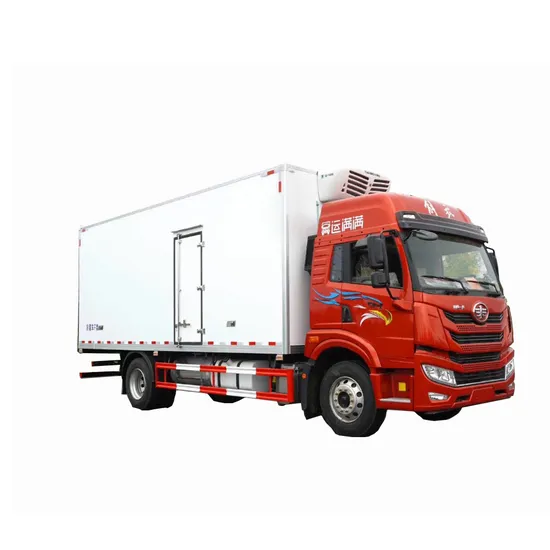
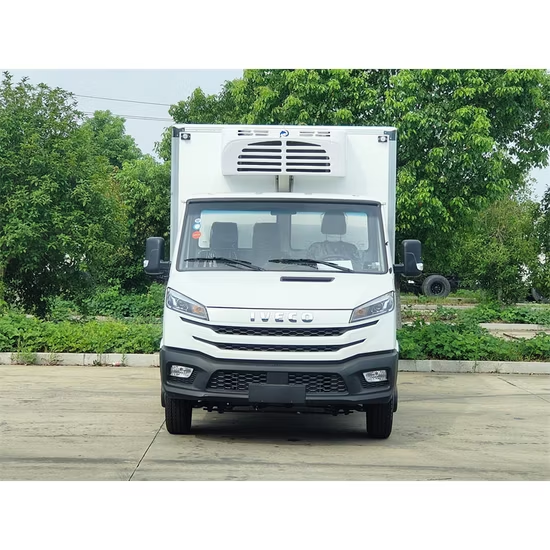
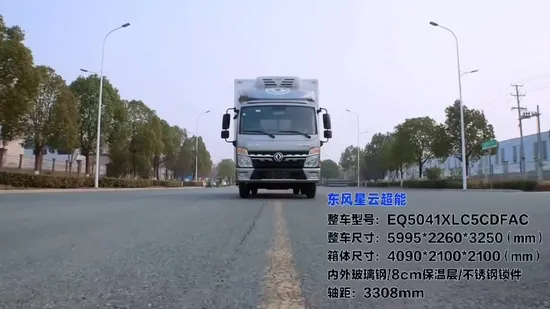
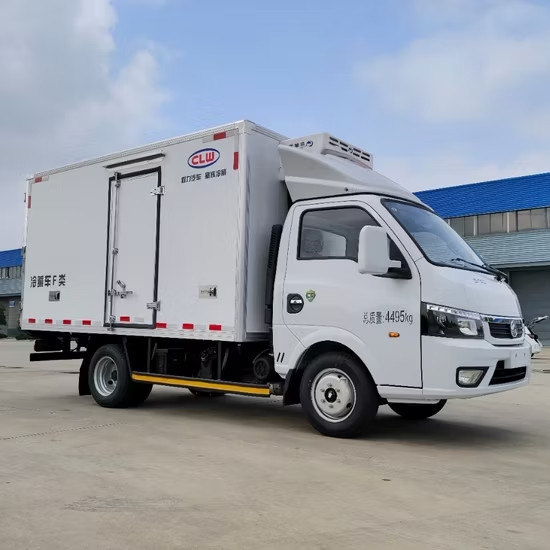
The FAW 4x2 Freezer Truck, model CA5189XLCPK2L2E5A80, is a medium-heavy refrigerated box truck in the 10 ton class. It uses a two-axle, 4×2 layout with a 6600 ml diesel engine and a manual gearbox. We offer it to businesses that need to move frozen or chilled goods in bulk without stepping up to a multi-axle truck.
Regional food distributors, meat and poultry suppliers, supermarket depots and cold-store operators are typical customers. With a 5250 mm wheelbase and 18000 kg total mass, the truck carries a considerable cargo on routes between depots and shops, while the two-axle layout keeps tyre costs and maintenance simple and the truck easy to manoeuvre.
Engine and chassis
The engine is the CA6DLD-24E5, with a capacity of 6600 ml. It is rated at 240 horsepower, or 179 kW, and the manual gearbox transmits it to the rear axle. The maximum speed is 98 km/h. Curb weight is 7810 kg, and the bulletin loading figure is 10060 kg, so the truck is sold as a 10 ton class vehicle.
Tyres are 275/80R22.5 18PR, six in total on two axles. Track widths are 1914 mm at the front and 1860 mm at the rear. The approach angle is 21 degrees and the departure angle 13 degrees, with front and rear overhangs of 1332 mm and 2250 mm, figures that matter for loading ramps and uneven yards.
Refrigeration system
The refrigeration system uses R404a refrigerant, with a charge of 2.8 kg. Its capacity is 5650 W when holding minus 18 degrees and 10870 W when holding 0 degrees, so it can serve both frozen and chilled cargo. These figures are useful when you compare the unit against the size of your box and the heat load of your products.
Capacity falls as the temperature target drops, so deep-frozen goods need more care than chilled ones. Pre-cool the box, load cold goods, and avoid opening the doors more often than needed. The box construction, the insulation thickness and the internal dimensions depend on the configuration and are confirmed in the quotation.
Daily operation and maintenance
Drivers of a 240 horsepower, 6600 ml truck will appreciate steady, low-rpm driving when the box is full. Keep to the recommended oil change schedule, watch the coolant and air system, and check all six tyres and wheel nuts regularly. Inspect the door seals and drain points inside the box every week.
The refrigeration unit needs its own routine too: clean the condenser, check belts and mountings, and look for refrigerant leaks or ice build-up on the evaporator. Written logs of temperatures and service work help you spot a developing fault early and keep the cargo safe on the road.
What to confirm before ordering
Please confirm the chassis brand, the emission standard, the drive side, the final payload and the box dimensions with us before you order. These details depend on the configuration, and the quotation will state exactly what is included so that the truck matches your rules and your cargo.
Also describe the goods you carry, the temperature you need, and the type of loading dock you use, so the door position and floor can be chosen sensibly. Our team will answer with a full configuration sheet and any options that suit your routes.
Request a current quotation for your selected configuration, quantity and delivery terms.