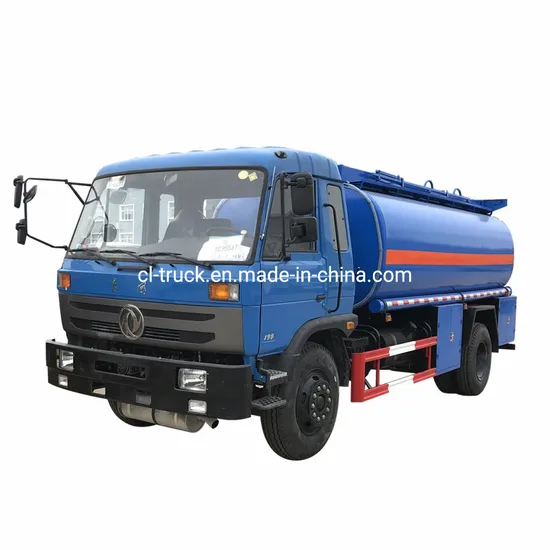
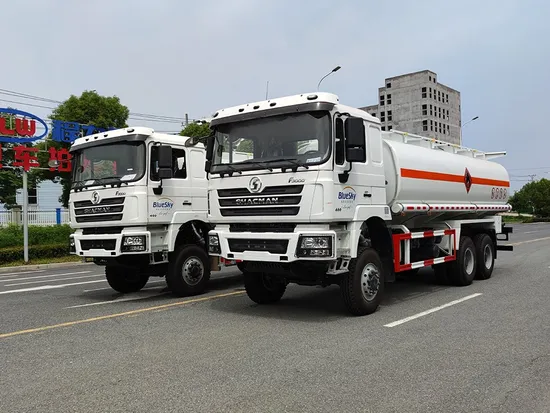
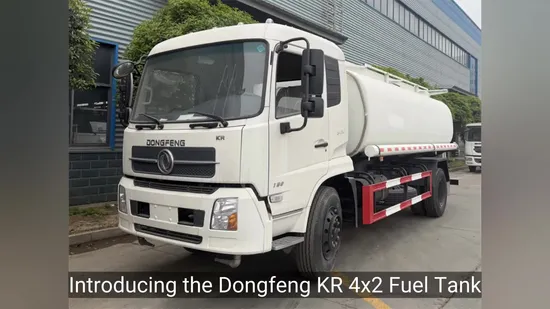
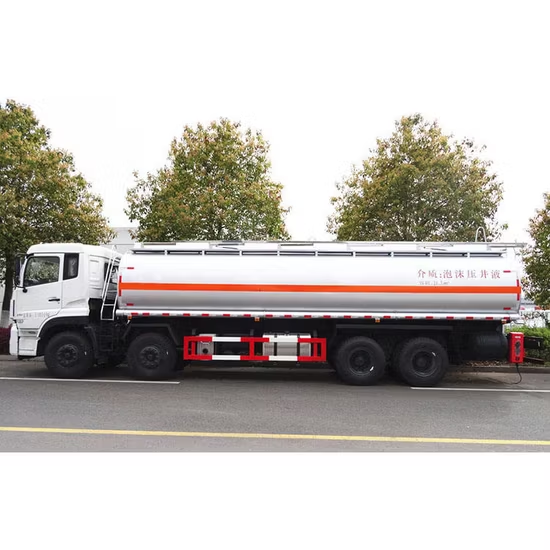
The Dongfeng 4×2 Plastic Fuel Tank Truck is a diesel-powered fuel carrier with a tank of 10 to 15 m³. It sits on a Dongfeng 4×2 chassis with a Dongfeng 153 cab and a Cummins engine of 170HP, and it carries a pump and fuel nozzle so diesel or gasoline can be moved straight into the receiving tank.
It suits fuel distributors, mining and construction sites, farms and fleet depots that refill machines on site instead of at a filling station. Tank sizes of 10 m³, 12 m³ and 15 m³ are offered, and the exact volume is fixed when we prepare your quotation. Left hand drive is standard, and right hand drive is available on request.
Chassis, engine and drivetrain
Power comes from a Cummins B170 33 engine rated at 170HP (125 kW), a straight-6 water-cooled and inter-cooled diesel of 5.9 L displacement. The gearbox gives six forward gears and one reverse with manual operation. Steering is power assisted, braking is by air brake and the maximum speed is 90 km/h. The base emission level is Euro 2.
The wheelbase is 3950 mm, the overall size is 7300 × 2470 × 2800 mm and the curb weight is 6320 kg. Axle ratings are 3.6 tons at the front and 8 tons at the rear, on 9.00-20 tyres, six fitted plus one spare. If your fuel quality or road rules call for another engine specification, tell us before ordering.
Pump, manhole and walkway
The tank has a top access manhole of DN500 mm and a skid-resistant walkway on top, so the operator can stand safely when checking or filling. The oil pump is rated at 60 m³/h, which shortens the time spent at each stop compared with discharging by gravity alone, a real saving when a day includes many refills.
Options include a fuel dispenser, extra compartments, a sea valve, bottom loading, a flow meter and vapour recovery. Compartments are useful when one trip must carry more than one fuel grade without mixing. The compartment layout, final tank volume and fitting details are all confirmed in the quotation before we draw up the truck.
Working routine and daily checks
A typical day starts with a check of the manhole seal, the pump and hose connections, the tyres and the air brake system. At the stop, park on level ground, apply the brake, connect the hose, open the discharge valve and run the pump. After use, drain the hose and close every valve before moving off.
Fuel is hazardous, so keep ignition sources away from the filling and discharge area and keep the walkway free of spilled liquid. Regular inspection of the pump, hoses, seals and fittings extends their working life. Operators should be trained in handling the product they carry and follow the safety rules of each customer site.
What to confirm before ordering
Confirm the tank volume among 10 m³, 12 m³ and 15 m³, the number of compartments and which fuels you will carry. Tell us whether the fuel nozzle is enough or a fuel dispenser should also be fitted, and whether you need left hand or right hand drive. Weight and payload figures are confirmed in the quotation.
Please also confirm the emission standard, colour, the pump flow you expect and the access conditions at your refuelling points, such as gate width and height limits. With those details we can check that the truck fits your sites and settle the options before preparing the final drawing and quotation.
Request a current quotation for your selected configuration, quantity and delivery terms.