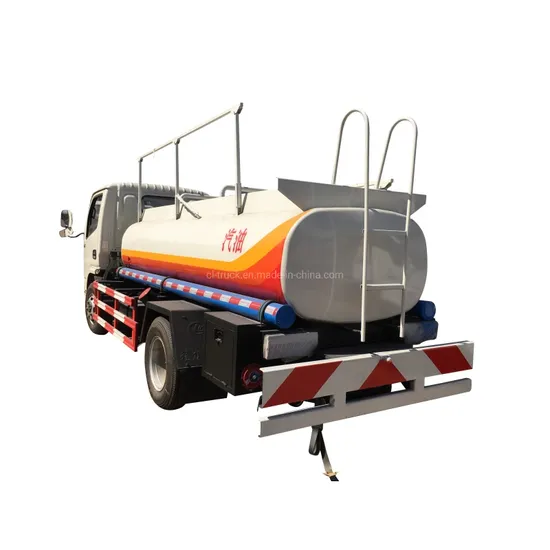
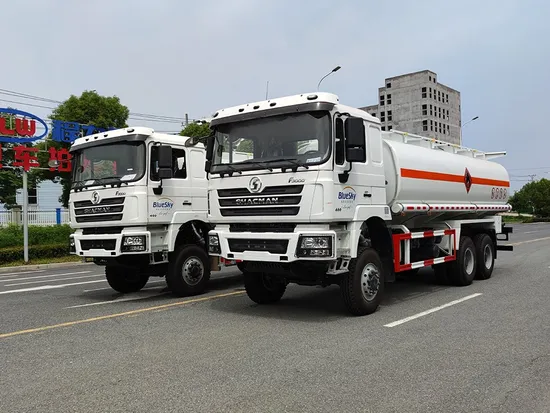
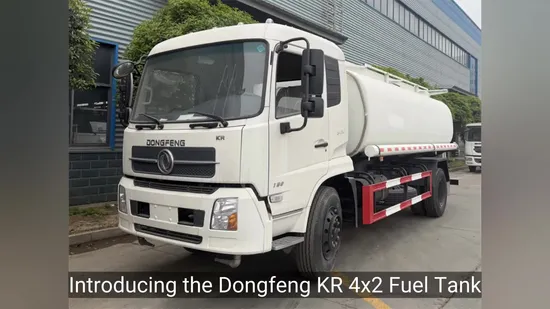
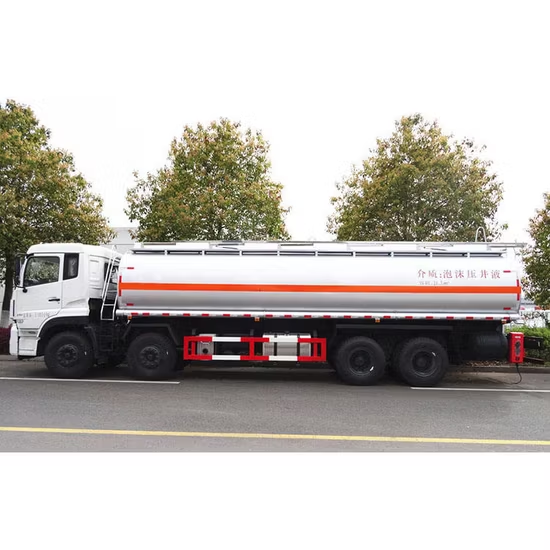
The Dongfeng 4x2 Oil Tank Truck 2-3t is a small fuel bowser on a Dongfeng chassis, with a 4×2 drive layout, a manual five-speed gearbox and a diesel engine. The tank has an elliptical cross-section, a DN500 mm manhole and a fitted pump, so the truck can deliver fuel as well as carry it. The overall size is 5990 × 1960 × 2400 mm.
Its short body and light weight make it a practical choice for fuel delivery to farms, building sites, small stations, generator sets and fleets whose yards are too tight for a large tanker. Left-hand drive is standard and right-hand drive is available on request. The tank volume is under 5000 L, so the truck belongs in the small-volume class.
Chassis and drivetrain
The wheelbase is 3300 mm and the curb weight is about 3365 kg. The gearbox has five forward gears and one reverse, operated manually, with power steering, and the maximum speed is 90 km/h. The axles are rated at 1.8 tons at the front and 3.5 tons at the rear, which guides how much load the chassis is designed to carry.
Tyres are 7.00R16, six fitted and one spare, and the emission standard is Euro 3. The engine is a diesel of under 4 L displacement. Engine output is confirmed in the quotation, particularly if you will drive on steep roads while fully loaded.
Tank, pump and hose reels
The tank is elliptical and made from Q235 carbon steel, with stainless steel or aluminium available as alternatives. An elliptical cross-section is lower than a round tank of the same volume, which lowers the centre of gravity and helps stability on a short wheelbase. A man-way hole at the top, DN500 mm, gives access for inspection and cleaning.
A fuel pump is standard, with a flow of 30 m³/h, and two 75 ft hose reels are fitted on each side of the truck. Optional items include compartments, a bottom valve, bottom loading, a flow meter and oil vapour recovery, and a fuel dispenser is also optional. Choose the options by the way you deliver rather than by the number of options available.
What to confirm before ordering
Tank volume, permitted payload and gross weight are confirmed in the quotation for one configuration, along with the exact engine model and output.
Confirm the drive side. Also confirm the tank material, number of compartments, hose lengths, whether a flow meter or dispenser is needed, and the paint colour. If you deliver to fuel stations or large customers, ask which connection and vapour recovery options their site rules require.
Maintenance and daily checks
Before each shift, check engine oil, coolant, tyre pressures and brakes, then look at the tank for leaks around the manhole seal and valves. A small fuel truck often makes many short stops, so check the hose reels and couplings for cracking, because worn hoses are a frequent source of drips during transfer.
Keep the pump and strainer clean, and run the pump only with product in the lines, since running dry damages seals. After carrying a different product, flush the tank and lines. Ground the truck during pumping, and carry the extinguishing equipment that your site rules require. Record the deliveries so any loss can be traced.
Request a current quotation for your selected configuration, quantity and delivery terms.