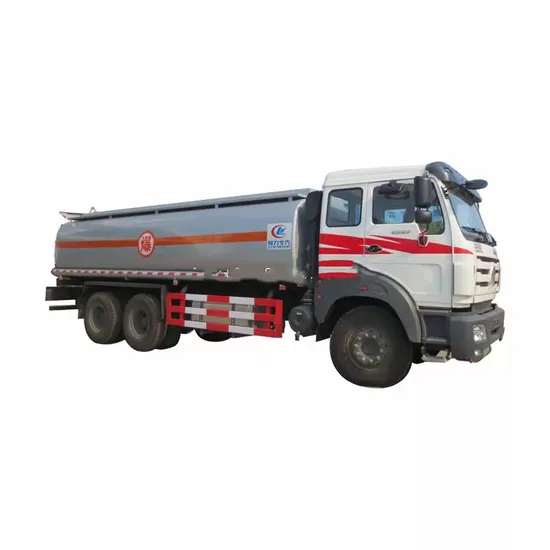
The Beiben North Benz 6x4 Oil Tank Truck 20-40m3 is a fuel tanker built on a Beiben three-axle chassis, with the model code CLW5250GYYN3. It uses a 6×4 drive layout, left-hand drive as standard with right-hand drive available on request, and carries a steel tank divided into compartments for hauling and dispensing fuel. This page explains how the truck is configured and what to settle before you order.
The truck suits fuel distributors, depot operators, mining and construction sites, and fleet owners who move diesel or other petroleum products between a storage point and the place of use. Because the tank volume is offered across a range, buyers can match capacity to their route, the axle-load rules they work under and the number of product grades they carry.
Chassis, engine and drivetrain
Power comes from a WP10.340E32 engine rated at 340 HP, a straight-six, four-stroke, water-cooled unit with turbocharging and intercooling. Displacement is 9,726 ml, maximum power is 250 kW at 2,200 rpm and peak torque is 1,250 N·m between 1,400 and 1,600 rpm. The standard build is specified as Euro 2 with EGR.
Drive passes through a 9JS150 manual gearbox with nine forward gears and one reverse, which gives a wide choice of ratios for a heavily loaded tanker. Steering is power assisted and the brakes are air operated. The front axle is rated at 7.5 tons, wheels are 12.00R20 with ten tyres plus a spare, and the wheelbase is 5050 + 1450 mm.
Tank and discharge equipment
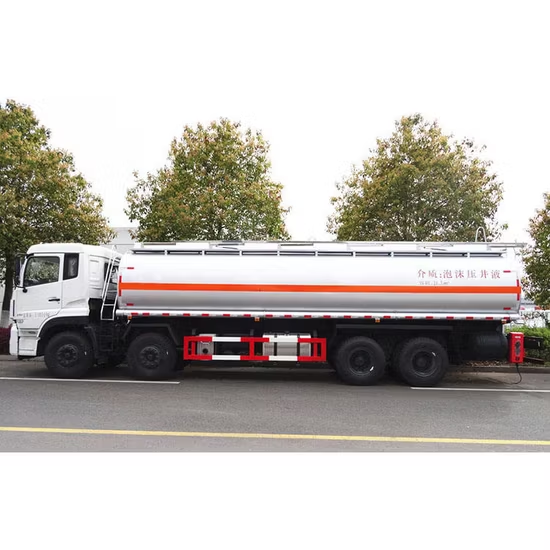
The tank is made of Q235 carbon steel, 5 mm thick, and is divided into between two and five compartments. Separate compartments let you carry different products, or separate delivery quantities, on the same trip. A European standard DN500 manhole gives access for inspection, and a skid-resistant walkway on top of the tank gives staff safer footing when they work up there.
Discharge uses one 80YHCB-60 oil pump with a flow of 60 m³/h, a working pressure of 0.6 MPa, a speed of 970 rpm, a permitted suction height of 7 m and a power of 11 kW. The truck also carries one flowmeter, two to five unloading valve outlets, and hose reels, two on each side of the vehicle, for connecting to storage tanks or customer equipment.
Options and planning dimensions
Two options are available: an oiling machine with a 15 m hose, and bottom loading with oil vapour recovery. The oiling machine suits fleets that refuel other vehicles or machines straight from the tank. Bottom loading with vapour recovery suits depots that fill from underneath and want to capture vapour at the loading point.
For planning, the overall size is approximately 10,400 × 2,500 × 3,400 mm and the curb weight is approximately 12,500 kg. Check these figures against yard gates, loading bays, bridge limits and the axle-load rules on your routes. Ask our team for a drawing so that turning space and filling points can be reviewed before production starts.
What to confirm before ordering
Tank volume is offered across a wide range, so the first item to confirm is the exact capacity and the number of compartments, together with the legal payload on your roads. The quotation will state the final figures for tank volume, compartment layout and the number of unloading outlets, because each of them can vary within the standard build.
Also confirm the drive side, left-hand as standard or right-hand on request, and the emission standard you need for registration. Tell us which products you plan to carry, whether you want the oiling machine or vapour recovery, and what paint colour you prefer, so the quotation covers one complete and clearly defined configuration.
Request a current quotation for your selected configuration, quantity and delivery terms.