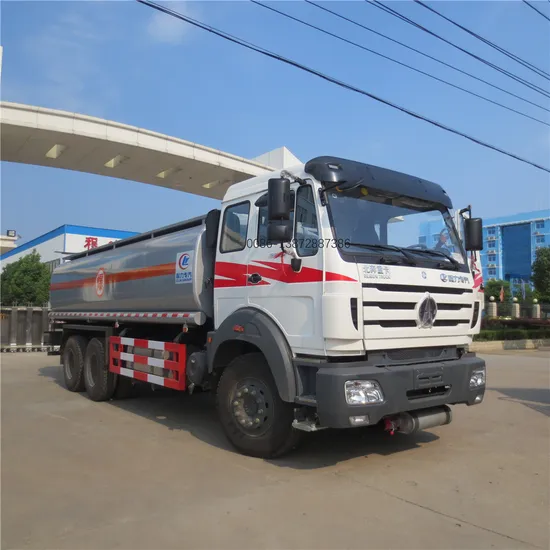
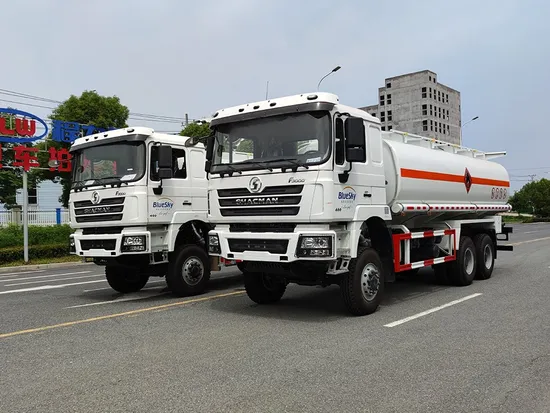
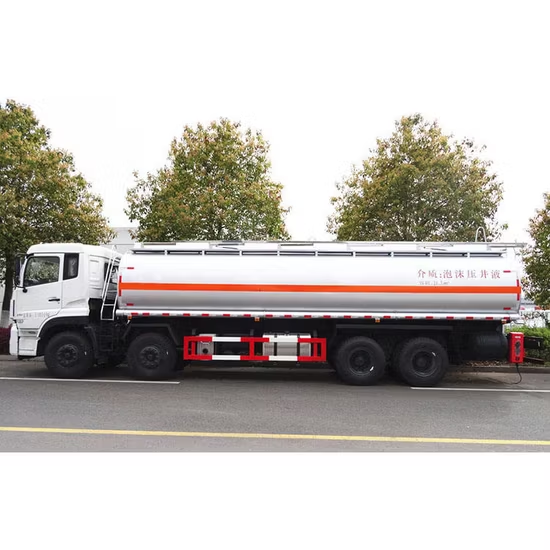
The Beiben North Benz 6x4 Heavy Oil Tanker Truck 20000L is a three-axle road tanker built on a Beiben chassis, with a 20 m³ steel tank and a 340 HP diesel engine. It is a left-hand drive truck, and right-hand drive can be arranged on request. The tank is split into three compartments, so one trip can carry more than one product. It suits fuel distributors, depots and industrial users who move heavy oil or fuel by road and want bottom loading and a flow meter on board.
Tank and body configuration
The tank is made of Q235 carbon steel and holds 20 m³. It has three compartments, which lets the driver keep different grades apart or run part loads without all the liquid moving at once. The equipment list names an oil pump, a sea valve, bottom loading, a flow meter, a manhole and oil vapour recovery. Bottom loading lets the tank be filled from a low connection at the depot, while the flow meter records what is delivered. Vapour recovery returns vapour to the depot or storage system instead of venting it.
Overall length, width and height are listed as approximately 8600 × 2500 × 3430 mm, and the unladen weight as approximately 11300 kg. The payload is given as 25 tons. Because the density changes from one heavy oil to another, ask how the 20 m³ volume and the weight limit work together for the liquid you carry.
Chassis, engine and drivetrain
Power comes from a WP10.340E32 diesel, a straight-six of 9.726 litres rated at 250 kW at 2200 rpm, with maximum torque of 1250 N·m between 1400 and 1600 rpm. A 9JS150A manual gearbox gives nine forward gears and one reverse. The emission level is listed as Euro II. The wheelbase is 3800 + 1450 mm, axle ratings are 7.5 tons front and 13 tons rear, and tyres are 12.00R20 with six fitted plus one spare.
Steering is power assisted and the brakes are air operated, which is the normal arrangement for a loaded tanker. The cab is the Beiben type with air conditioning, and the electrical system is 24 V.
Typical working routines
Typical work is depot-to-station and depot-to-site delivery of heavy oil, fuel for generators, boilers or plant, and bulk transfers between storage tanks. A three-compartment tank makes sense when deliveries are split between several customers on one route. Drivers should plan drops so the tank is not left partly filled with a large free surface, since liquid movement affects braking and cornering.
Before each trip check the pump, valve seals, flow meter connections and vapour hoses, and look for weeping at the manhole cover. Inspect the air brake lines and tyre pressures with extra care on a loaded truck, and earth the vehicle according to your site rules when loading and discharging flammable liquids.
What to confirm before ordering
Confirm the drive side, since the base truck is left-hand drive. Confirm the emission standard listed as Euro II against your road rules, the compartment sizes inside the 20 m³ total, the pump type and flow, the hose and coupling set, and the meter type. Ask for the fluid density the tank is designed for, because that decides how much you can legally carry. The final specification is written into the quotation.
Request a current quotation for your selected configuration, quantity and delivery terms.