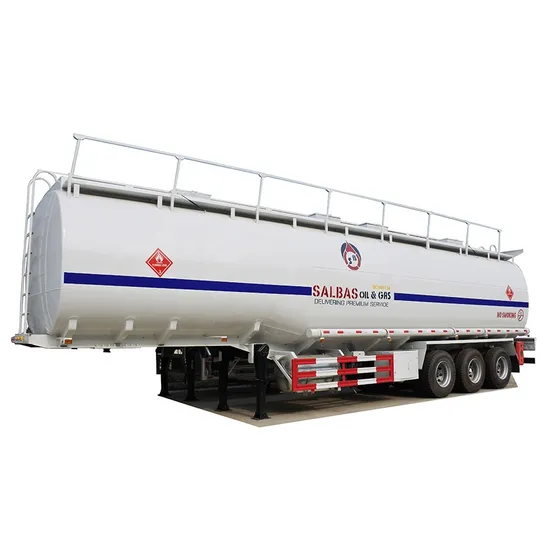
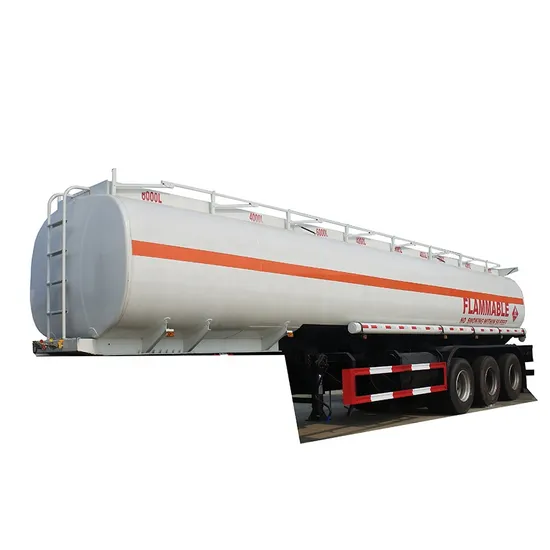
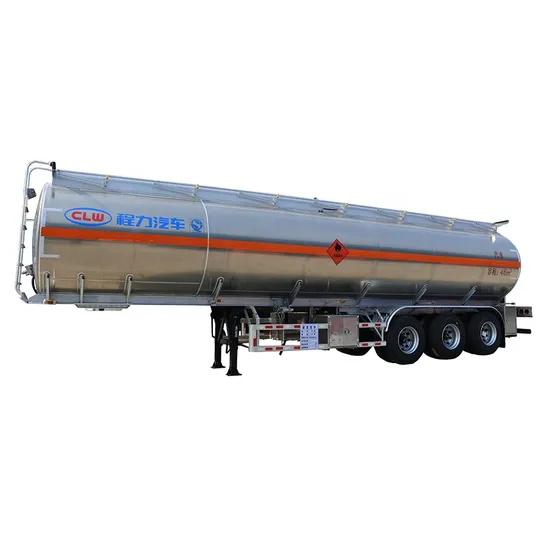
Chengli Group exported a batch of semi-trailer tankers for hazardous goods transport. The buyer was Salbas Oil and GRS.
What was supplied
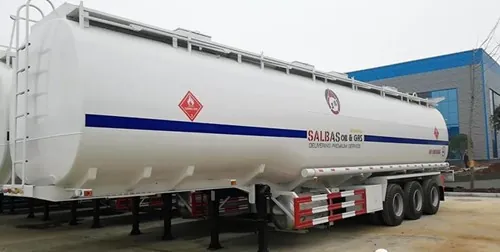
The photo shows a white tank body on a three-axle semi-trailer. A red hazard diamond label is fixed to the side of the tank, and the buyer's name is printed along a blue stripe. A ladder and guard rails run along the top of the tank.
Chengli Group sells its vehicles in Southeast Asia, South America, the Middle East, Africa and Central Asia. Its main export destinations include Malaysia, Indonesia, Peru, Bolivia, the UAE, Saudi Arabia, Algeria, Angola, Egypt, Kazakhstan and Ukraine.
About this vehicle type
A tanker semi-trailer is pulled by a tractor unit and carries liquid cargo over long distances. Fuel and other hazardous liquids need a sealed tank, correct labelling and a fitting suited to the product carried. A semi-trailer carries more per trip than a rigid tanker truck, which lowers the cost per litre on long routes.
How a tanker semi-trailer works
The trailer has no engine of its own. A tractor unit couples to it through a kingpin and a fifth wheel, and the tractor supplies the power, the steering and the air for the trailer brakes. The tank sits on a frame carried by the trailer axles, and the front of the frame rests on the tractor when the two are joined.
A typical working cycle starts at a depot or terminal, where the tank is filled through the top hatches or through a bottom-loading connection. Many tanks are divided into compartments by internal walls, so different products or different delivery volumes can travel in one trip. Baffles inside each compartment reduce the surge of liquid when the driver brakes or turns.
At the delivery point the product usually leaves the tank by gravity or with a pump, through a discharge valve and a hose or fixed pipe. After unloading, the driver closes the valves, secures the hatches and drives back to the depot. See our guide on how a fuel tanker unloads for the steps in more detail.
Main components of a tanker semi-trailer
- Tank body: holds the cargo, and is usually made of carbon steel, stainless steel or aluminium depending on the product carried.
- Compartments and baffles: separate products or delivery volumes and limit liquid surge while driving.
- Manhole covers and vents: give access for loading and inspection, and let the tank breathe safely as it fills and empties.
- Discharge valves and pipework: control the flow of product out of the tank, and usually include a fast shut-off for safety.
- Running gear: axles, suspension, tyres and brakes carry the load and brake the trailer together with the tractor.
- Kingpin and landing legs: the kingpin couples the trailer to the tractor, and the landing legs support the trailer when it stands alone.
- Safety and marking items: hazard labels, earthing points, ladders, guard rails and reflective strips help the crew work safely and meet local road rules.
What to check when you order a similar tanker trailer
- Product to be carried: fuel, chemicals and other liquids need different tank materials, valves and seals, so state the product first.
- Tank volume and compartments: choose the total volume and the number of compartments to suit your delivery pattern and the legal axle load.
- Number of axles: two, three or four axles change the allowed load, the trailer weight and the tyre cost.
- Tractor match: the kingpin size, fifth wheel height and brake connections must fit the tractor you plan to use.
- Climate and roads: hot, dusty or rough routes call for suitable suspension, tyres and tank coatings.
- Equipment and options: pumps, meters, hoses, vapour recovery and extra safety equipment can be added when your rules require them.
- Documents and spare parts: confirm the handover documents your country needs, and ask for a list of wear parts such as brake linings, tyres and seals.
If you are comparing trailer types, our overview of semi-trailer types explains where tankers sit among the other trailers. For the import side, read what must match the tractor and destination. You can also browse our range of fuel tank trailers.
Similar models you can order
Buyers can specify the number of axles, tank volume, compartments and tank material, and the markings for the operator. Left-hand drive is standard for the tractor. Right-hand drive is available on request. Related trailers on this site include Chengliwei Fuel Tanker Semi-Trailer 2/3/4 Axles, 46m3 3-Axle Carbon Steel Diesel Tanker Semi-Trailer and 3-Axle 45m3 Petrol Tanker Semi-Trailer Emergency Valve.
To request a quotation for a tanker trailer, please contact us.