A tipper truck body should be specified around the material it will carry. Sand, soil and crushed stone create different questions about loading, wear and discharge. Begin with the material description, then define the body dimensions, plate construction and lifting arrangement. A tonnage in a product title does not describe body volume.
Describe the material before selecting the box
| Material or loading condition | Body details to discuss |
|---|---|
| Sand | Required internal volume, material moisture condition, tailgate arrangement and load containment |
| Soil | Whether the load is loose, wet or cohesive; body shape and intended discharge arrangement |
| Crushed stone | Typical and largest particle size, loading impact, floor material and wear specification |
| Mixed site material | Variation in size and composition, loading method and the most demanding expected load |
Provide photographs of representative material and explain how it is loaded. A body selected for a general “construction” description may leave important requirements undefined. Ask the supplier to connect its planned plate and structure specification to your actual duty.
Request internal dimensions and the volume basis
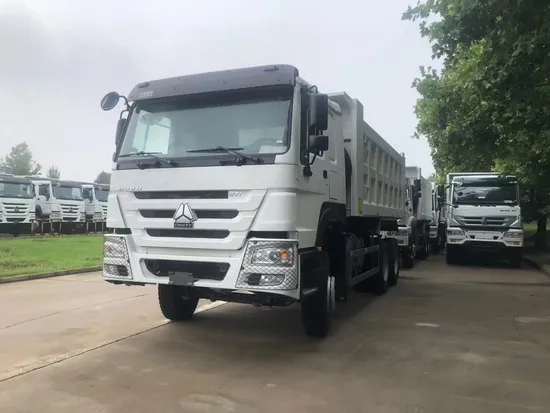
The HOWO 6X4 10-tire tipper lists a 5,600 × 2,300 × 1,200 mm box. The HOWO 6X4 construction-project tipper gives the same body-dimension entry. Ask whether those are internal or external measurements before using them to assess available load space.
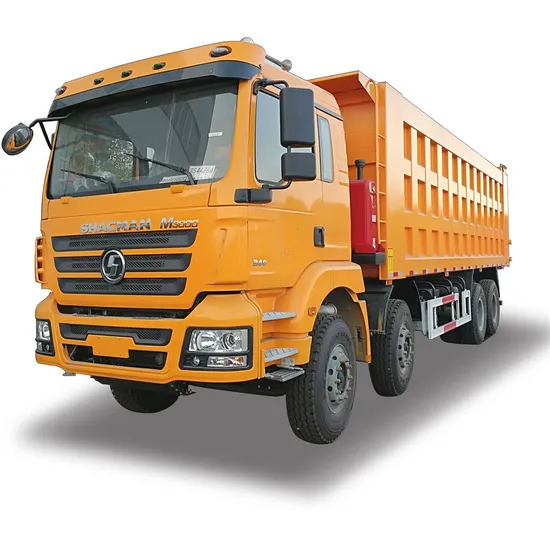
The Shacman M3000 tipper listing gives a detailed body dimension of 7,400 × 2,300 × 1,100–1,600 mm, while a summary box-length entry says 5,600 mm. Keep those entries separate and request the selected body drawing. The height range also needs to resolve to the version being quoted.
Request a normal volume with its measurement basis, such as the supplier's stated level-body volume. Do not use external dimensions or a heaped load outline as though they were the same measurement.
Keep volume and carried mass in separate fields
Body volume is expressed in cubic meters. Rated payload is expressed in kilograms or tonnes. The HOWO listings separately state a 25,000 kg rated payload and the body dimensions. The two fields should remain separate in a comparison.
The amount of material that occupies a given space depends on the material and its condition. Do not translate a title such as “30tons 40tons” into a cubic-meter capacity, or assume that filling the box establishes a permissible load. Ask for the loading information for the complete truck and selected body.
Specify floor and side plates individually
All three listings describe a reinforced iron-plate body with an 8 mm bottom and 6 mm sides. These entries identify thicknesses, but do not name a detailed steel grade or establish an abrasion-performance rating. If the duty involves coarse stone or repeated loading impact, request the exact material specification and the supplier's planned construction details.
Ask which plates, reinforcements and tailgate arrangement are included. Avoid reducing the choice to “thicker is better”: the body needs to be assessed as part of the complete vehicle, including its own weight and the intended carried load.
Resolve the lifting arrangement in the order
The HOWO pages have front-lifting wording in their summaries and a middle-lifting, 220-cylinder entry in their detailed tables. The Shacman table describes front lifting. A purchase order should identify one lifting arrangement, with the cylinder and mounting details supplied for the chosen body.
Describe the unloading location and request the working range and documentation for that configuration. Do not assume the body dimensions alone define the lifting system.
Send Chengliwei the material, desired internal body dimensions, loading method and unloading conditions. Ask for a drawing and a specification that separates body volume, plate construction, lifting equipment and rated transport load.
Related reading: our tipper lorry buying guide and the dump trucks and tipper lorries for sale page.