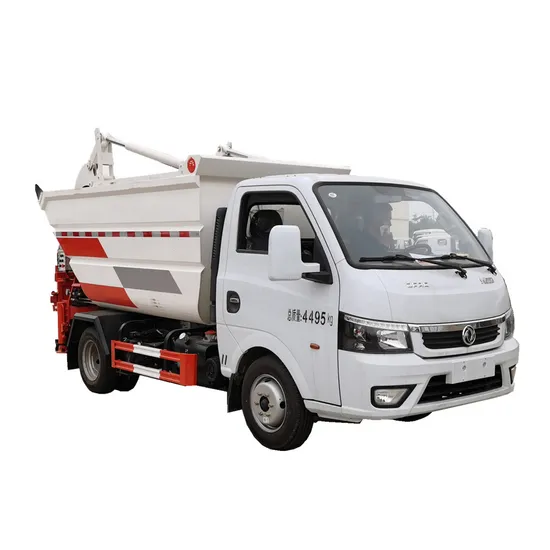
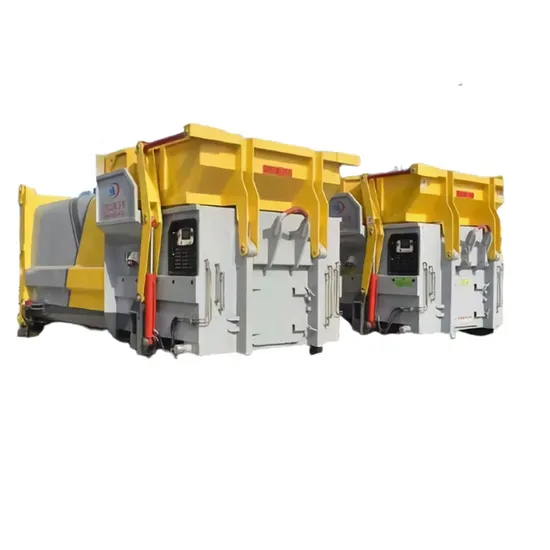
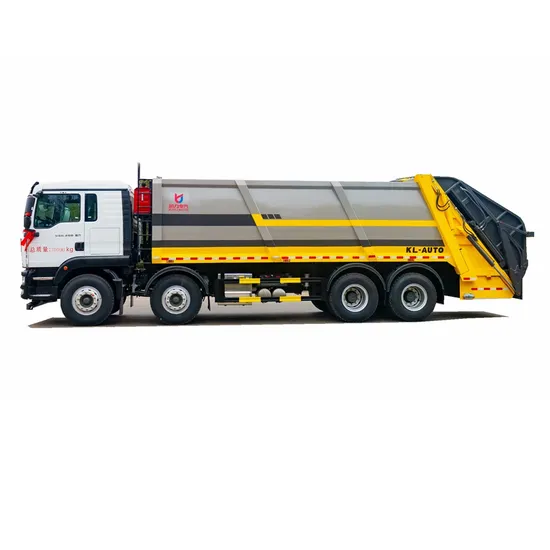
A rear loader takes waste into a hopper at the back, a side loader lifts bins with an arm at the side of the body, and a front loader lifts large containers over the cab with forks. Rear loaders suit mixed street collection, side loaders suit standard bins, and front loaders suit commercial containers.
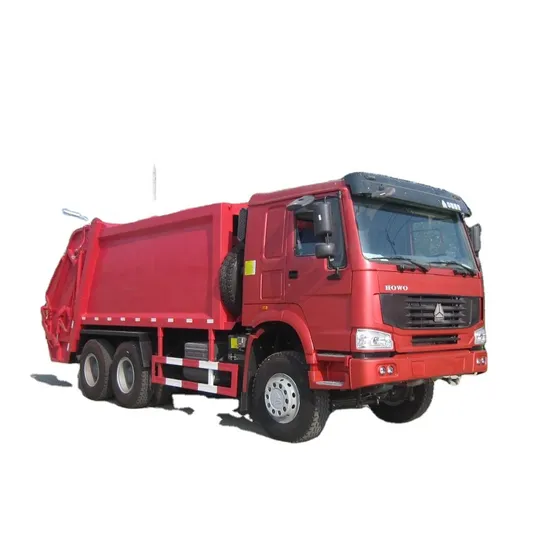
How each type picks up waste
| Type | Where waste enters | Typical use | Usual crew |
|---|---|---|---|
| Rear loader | Hopper at the back, fed by hand or by a bin lifter | Mixed household and street waste | Driver plus one or more loaders |
| Side loader | Arm at the side grips a bin and tips it into the body | Routes with uniform bins at the kerb | Often the driver alone |
| Front loader | Forks lift a container up and over the cab | Large containers at shops, depots and industrial sites | Driver alone |
Where each design works best
A rear loader is the most flexible. Crews can collect loose bags, bulky items and bins in the same pass, and the truck can reverse into a short lane. Its weakness is labour, since people feed the hopper unless a lifter is fitted.
A side loader cuts labour, but only if bins are uniform and placed where the arm can reach them. Parked cars and narrow kerbs stop the arm. A front loader needs a clear approach in front of each container and enough height above it, so it fits sites with fixed containers rather than street collection.
What our compactor range offers
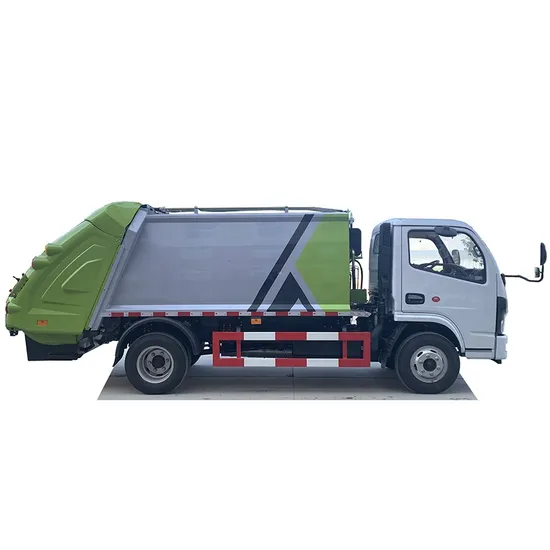
The models in our compactor garbage trucks category that state a loading method are rear loaders. Examples are the HOWO 6x4 Rear-Loading Refuse Compactor Truck 18m3, the Dongfeng 4x2 Mini Garbage Truck 3500L Euro 4, a small model for tighter lanes, and the Chengliwei 6m3 Compressed Garbage Truck 240L 660L Bins, whose title names the bin sizes it handles. If your routes need an arm or fork lifter, describe the bins or containers in your enquiry so the configuration can be checked. More models are on our garbage trucks for sale page.
Mistakes to avoid
- Buying a side loader before checking that your bins are one standard size.
- Ignoring street width, parked vehicles and overhead cables on the route.
- Counting only the purchase price and forgetting the crew cost per route.
Frequently asked questions
Which type needs the smallest crew?
Side and front loaders usually run with the driver alone because a hydraulic arm or fork lifts the container. Rear loaders often need one or more loaders to feed the hopper, unless a bin lifter at the back does the lifting.
Can a rear loader empty wheelie bins?
Yes, when it is fitted with a bin lifter at the rear. Match the lifter to the bin sizes on your routes. One of our listed models names 240 L and 660 L bins in its title, so check the options model by model.
Which type suits narrow streets?
Rear loaders are the usual choice, since the crew can walk to bags and bins that a vehicle arm cannot reach. A smaller chassis helps too; our mini rear loader model is built on a 4x2 chassis.