Refrigerated truck quotations differ because the offered vehicle is a combination of a chassis, insulated cargo box and refrigeration unit. Even two offers using the same chassis brand may describe different box dimensions, access doors or cooling equipment. Compare those three assemblies before comparing the total refrigerated truck price.
1. Identify the chassis being supplied
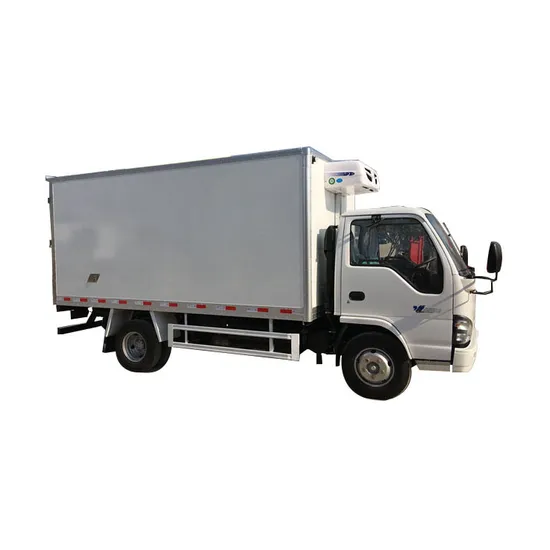
The Isuzu 600P refrigerated truck lists a 4x2 left-hand-drive configuration, 4KH1-TCG40 engine and a five-speed manual transmission. Its engine entry states 88 kW, and its main specification gives a 3,360 mm wheelbase.
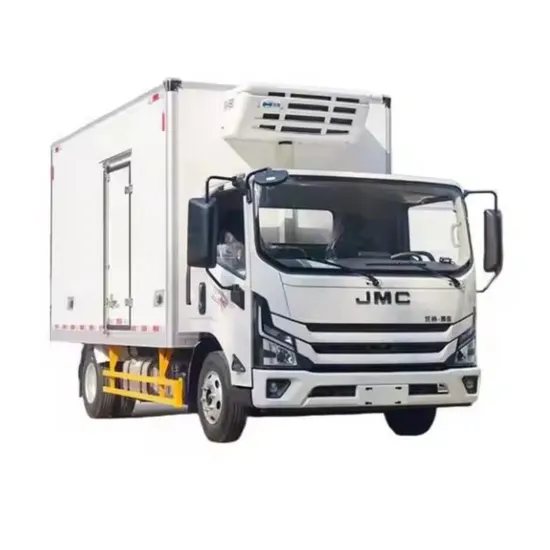
The JMC freezer truck offers a different chassis reference, with a 2,771 cc engine entry, 68 kW at 3,600 rpm and a 5MT gearbox. These are specific differences to record in the quotation comparison. They do not, by themselves, establish which truck costs less to operate or which is better for every route.
Ask each supplier to name the chosen chassis, engine, cab arrangement and steering position. Give the country and delivery location so the offer is prepared for the intended destination rather than a generic catalog version.
2. Describe the insulated box separately
The Isuzu listing provides a 4,100 × 1,800 × 1,900 mm box dimension and describes glass-reinforced plastic surfaces with an 8 cm polyurethane insulation layer. The JMC listing includes an 8 cm insulation description referring to XPS and separate cargo-length entries labeled SC at 4,100 mm and DC at 3,100 mm.
A supplier should identify the selected body and cab combination instead of repeating all the alternatives. Request usable internal dimensions, panel construction, floor specification and access-door arrangement. State whether loading uses pallets, crates or individual packages. The same normal box length may not yield the same usable cargo arrangement.
Ask which body fittings are included. A quotation that includes more doors or handling equipment has a different scope from one for a basic insulated enclosure. Keep optional items visible rather than allowing them to disappear into the complete-vehicle total.
3. Name the cooling unit and its duty
The Thermo King Isuzu refrigerated truck listing mentions Thermo King in its title, while its refrigeration-plan entry lists Hanya, Carrier and Thermo King. The offered unit therefore needs to be selected explicitly. A brand name without a model and performance conditions does not fully define the equipment.
Request the unit model, power arrangement, temperature-control equipment and stated performance for the chosen box. The listing includes a temperature-to-minus-18-degree entry. Your inquiry should still state the goods' required temperature, loading condition and ambient conditions. Do not assume every optional unit provides the same result for every route.
Give suppliers the same delivery brief
| Buyer input | What the quotation should address |
|---|---|
| Cargo volume, dimensions and weight | Usable body space and complete-vehicle loading information |
| Target temperature and loading condition | Selected refrigeration unit and its stated operating conditions |
| Route, journey duration and expected ambient conditions | Cooling duty and the planned chassis configuration |
| Loading method and stop pattern | Door arrangement, access dimensions and handling options |
| Delivery location | Named delivery point and the transport services included |
Ask for a base configuration plus separately identified options, with each line marked included or excluded. If a supplier changes the box or unit to meet your duty, request an updated equipment schedule alongside the revised price.
Send Chengliwei your cargo volume, target temperature, route and loading method. Those details allow an offer to connect the chassis, box and cooling unit to one defined task, making price differences easier to explain.
Related reading: Cold plate truck or refrigerated truck: which one for deliveries