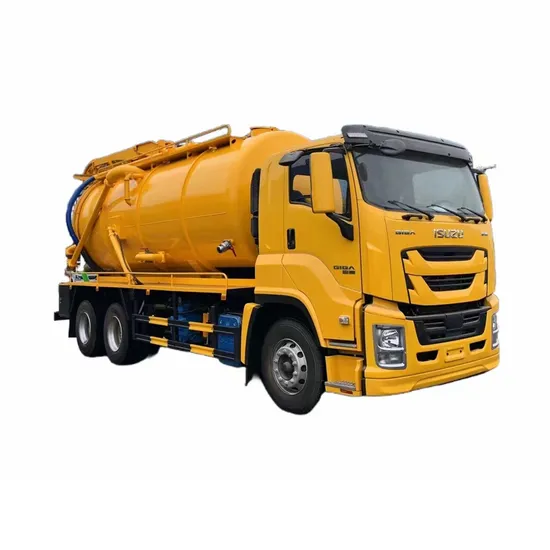
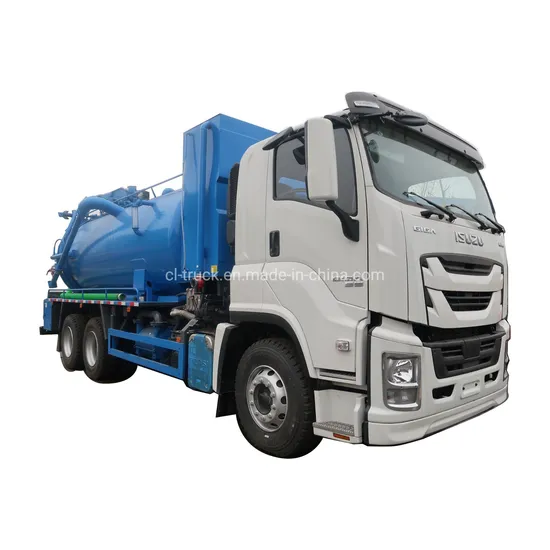
"Honey sucker" is the everyday name for a sewage suction truck: a sealed tank on a truck chassis with a vacuum pump that empties septic tanks, pit latrines, grease traps and sumps. You will also hear exhauster, septic tanker, cesspit emptier or vacuum truck. They are the same machine. This guide explains what to specify before you ask for a quotation.
How a honey sucker works
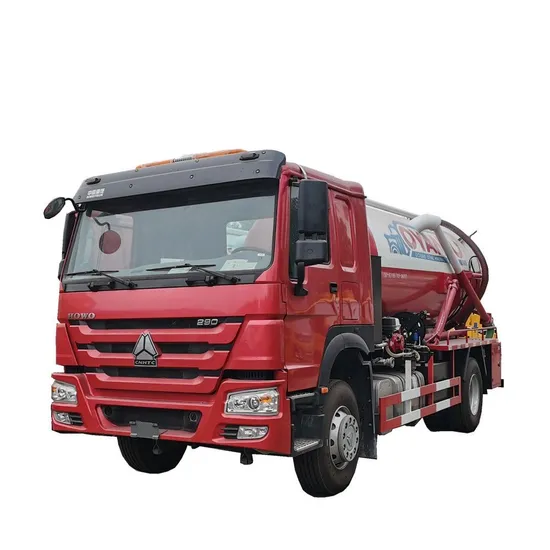
The vacuum pump removes air from the sealed tank. Atmospheric pressure then pushes liquid and sludge up the suction hose and into the tank. To empty it, the operator either reverses the pump to pressurise the tank or tips and opens the rear, depending on the design. The pump, the tank and the chassis are chosen together, so a good quotation names all three.
Typical tank sizes
- 3,000 to 6,000 litres: small trucks for household septic tanks, narrow lanes and compounds with limited access.
- 8,000 to 12,000 litres: the usual size for private contractors. It balances access with the number of jobs per trip.
- 16,000 to 20,000 litres: heavier trucks for municipal contracts, industrial sites and long runs to the disposal point.
Pick the size from the tank volumes you empty and the distance to your disposal site. A truck that makes one extra trip per day because it is too small costs more than the price gap to the next size.
Size ranges at a glance
| Class | Typical tank volume | Typical chassis | Typical job |
|---|---|---|---|
| Small | 3,000 to 6,000 litres | Light 4x2 | Household septic tanks, narrow lanes, small compounds |
| Medium | 8,000 to 12,000 litres | 4x2, up to about 12,000 litres | Private contractors serving homes, shops and small businesses |
| Large | 16,000 to 20,000 litres | 6x4 | Municipal contracts, industrial sites, long runs to the disposal point |
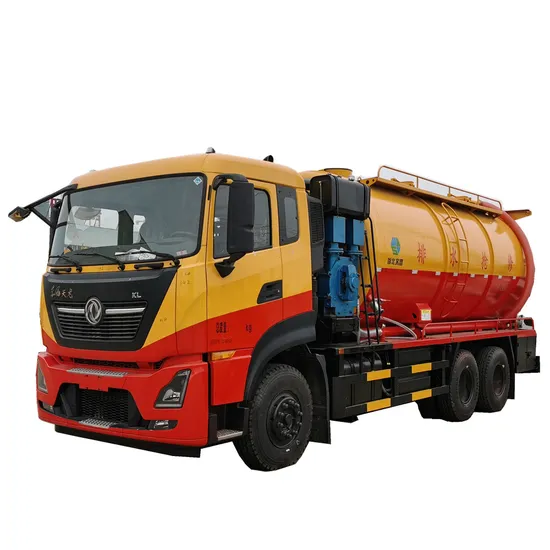
These are typical bands, not fixed models. The product pages show what a real truck carries. The Sinotruk HOWO 4x2 12000L page shows a 9 metre swivel suction tube, a double vacuum pump, an anti-overflow valve, an oil and gas separator, a 6 inch disc valve outlet at the rear and a tank that is tipped by hydraulic pressure for full discharge. The Dongfeng 6x4 page shows a 15-18 CBM tank in 6 mm carbon steel, a 9 m vertical suction range, one 8 m suction pipe and a hydraulically opened back door. Ask for the same level of detail in every quotation you compare.
Pump types, hose and discharge
Two pump families are common. Liquid-ring and rotary-vane pumps are widely used for sewage work, and both are driven from the engine through a power take-off. Ask the pump maker, the rated vacuum and the suction depth the pump is designed for. Thick sludge and deep pits need a stronger pump than shallow household tanks.
Check these items on the quotation:
- Suction hose: diameter and length supplied, and how many hose lengths are carried.
- Hose storage: a rack or reel on the side of the truck, so the hose is not carried on the ground.
- Discharge: rear valve and outlet size, and whether the tank can be pressure-discharged.
- Level gauge and safety valve: to stop the pump drawing sludge into its housing when the tank is full.
- Vacuum breaker and filter: protect the pump from overflow and solids.
Chassis options
A 4x2 chassis suits tanks up to about 12,000 litres on firm roads and keeps running costs down. A 6x4 chassis carries larger tanks and copes better with soft or uneven ground at sites. Choose the chassis brand for the service and spare parts you can get locally, because a honey sucker works every day and cannot stand idle waiting for parts. Our standard is left-hand drive, and right-hand drive is available on request for all trucks. See drive side by country before you decide.
Look at example trucks in the sewage and fecal suction truck range, for instance the Sinotruk HOWO 4x2 Vacuum Cleaning Truck 12000L 266HP, the Dongfeng 6x4 Heavy Sewage Suction Truck 20000L Euro 3 and the Isuzu Giga VC61 6x4 Suction Jetting Truck 20m3 Euro 5.
Municipal use or private contractor
A municipal fleet usually wants the larger tank, a strong pump and, often, a combined suction and jetting unit that can clear blocked sewers as well as empty them. A private contractor serving households usually does better with a smaller or mid-size truck that reaches tight compounds and keeps the purchase price down. If you serve both kinds of customer, a 10,000 to 12,000 litre truck is a common compromise. Write down your real job mix before you choose, then compare the quotations against it.
Common mistakes when ordering
- Choosing by tank size alone. Two trucks with the same tank can have very different pumps, hoses and discharge valves. Compare all three.
- Forgetting the disposal point. Check the outlet size and the connection fitting at the place where you will discharge.
- Buying a heavy 6x4 for narrow lanes. A large truck that cannot reach the customer's tank wastes its capacity.
- Not asking about wear parts. Ask which pump vanes, seals and hose couplings are supplied with the truck.
- Leaving out the drive side. State left-hand or right-hand drive in your first message.
Maintenance points
- Flush the tank, hose and pump inlet with clean water after each working day.
- Check the pump oil level and change the oil on the schedule in the pump manual.
- Inspect the tank door seal, valves and hose couplings for leaks, since a leak ruins suction and fouls the road.
- Test the safety valve and level gauge regularly.
- Grease the power take-off and propeller shaft as the chassis maker advises.
What to ask in the quotation
- Tank volume, steel thickness and whether the tank has baffles or partition boards.
- Pump make and model, rated vacuum, and the suction depth it is designed for.
- Suction hose diameter and total length, and discharge method and outlet size.
- Safety fittings: overflow valve, level gauge, vacuum gauge and separator.
- Chassis brand, engine power, gearbox, axle layout and steering side.
- Spare parts supplied, destination port and the shipping terms you want quoted.
Names buyers use
Buyers in different markets ask for the same truck as a honey sucker, exhauster, septic tanker, cesspit emptier, vacuum tanker, sewage suction truck or fecal suction truck. A truck that also has a high-pressure water pump for cleaning sewers is often called a suction and jetting truck. We recognise all of these names, so add the tank volume and pump type to make the request exact.
Send us your requirements
For a quotation, tell us the tank volume, whether you need suction only or suction and jetting, the chassis and drive side you prefer, and the destination port. We reply with a configuration that matches. For more detail read our exhauster trucks and septic tankers guide, what to check in sewage suction truck quotes and our guide to the different types of tanker lorry. You can also see all vacuum trucks for sale. Use the inquiry form on this page or on any product page, or send us your requirements directly.