Choosing a road sweeper truck starts with the surface and the work area. Urban streets may combine kerbs, parked vehicles and short cleaning sections. An industrial yard may offer longer uninterrupted passes but contain loading zones, narrow aisles and concentrated deposits near handling areas. These differences shape the required equipment more directly than a headline cleaning-capacity figure.
Map access before comparing cleaning systems
Measure entrances, internal lanes and working space beside obstacles. Mark areas that remain occupied during the planned cleaning shift. On streets, record where parked vehicles interrupt kerb access. In yards, identify delivery movements and storage areas that restrict the route.
The Dongfeng small road sweeper includes a compact electric chassis specification with vehicle dimensions of 5750 × 1910 × 2670 mm. This makes it a useful smaller-equipment reference when discussing restricted access. The chosen complete sweeping configuration should be stated in the quotation, including its auxiliary equipment and charging arrangements.
Describe the debris and the required result
Distinguish collecting loose debris from washing a surface. Brushes, suction equipment and a debris hopper address collection. Water application may support dust control or surface cleaning. Spraying water alone does not prove that displaced material is recovered.
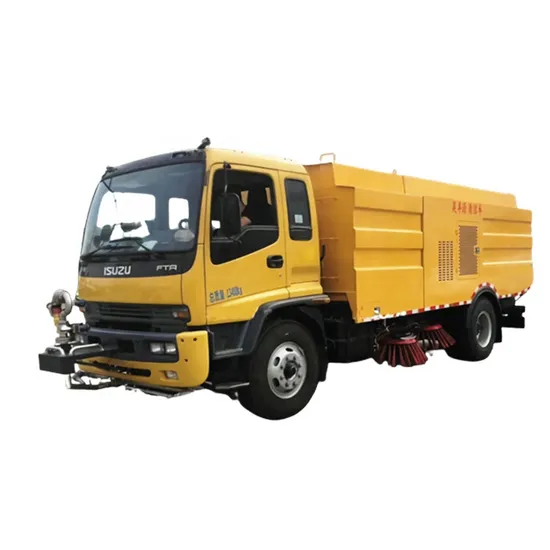
The FTR street road sweeper page describes several configurations. Its road-sweeper arrangement includes four central sweeping discs, a centrifugal fan and a lifting garbage bin, with a listed 2.8 m sweep width. That equipment description is relevant to a buyer seeking a defined sweep-and-collect process.
Compare site characteristics with equipment functions
| Site characteristic | Cleaning requirement | Vehicle information to use |
|---|---|---|
| Narrow lanes or restricted entrances | A vehicle that can reach the work area | Complete dimensions and selected chassis configuration |
| Kerbs and scattered loose debris | Brush access and debris pickup | Sweeping-disc arrangement, suction system and hopper |
| Large uninterrupted paved areas | Sustained passes with manageable support stops | Working width, water capacity and debris storage |
| Surface washing requirement | Suitable water application and runoff arrangements | Specified spray or flushing equipment |
| Distant water point | A practical refill schedule | Selected water-tank capacity and refill access |
Keep alternative sweeping configurations separate
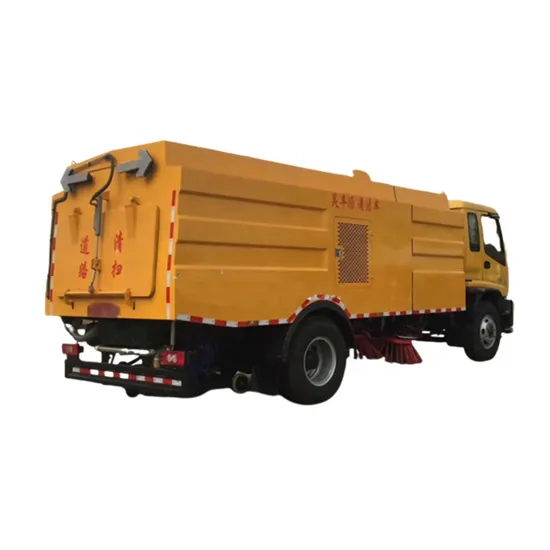
The FTR cleaning sweeper listing describes a cleaning-sweeper arrangement with two central sweeping discs, high-pressure water equipment, an 8.5 m³ water tank and a 7 m³ dust tank. The same page also presents other arrangements with different tank capacities. Choose one complete arrangement when comparing quotations rather than combining the largest capacities from different options.
For an industrial yard, a continuous cleaning zone may make combined washing and collection attractive. For an urban route broken into small sections, access, repositioning and interruptions may be more significant. Neither setting supports a guaranteed daily output based solely on the equipment's listed working width.
Plan water support and distinguish flushing from recovery
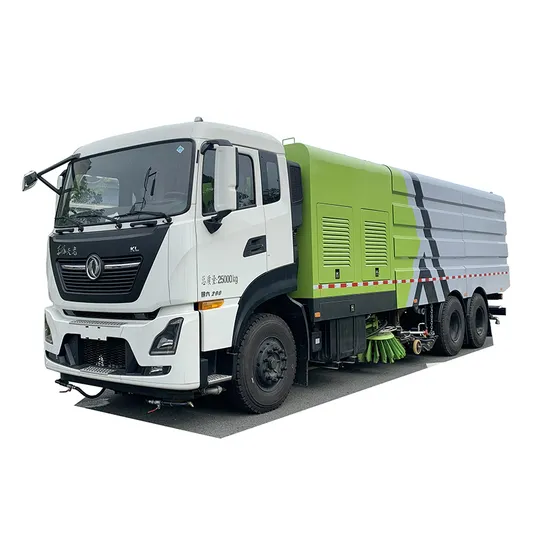
The Dongfeng 6×4 road washer and street cleaner lists a 9000 L clear-water tank, a 7 m³ dustbin, two sweeping brushes and a rear floating suction nozzle. Its equipment information also identifies an optional water-sprinkler system. Specify the requested flushing or sprinkler arrangement explicitly; water application and debris recovery remain separate functions even when fitted to one truck.
Mark refill points and debris-unloading locations on the planned route. Then give the supplier a short site brief covering access, debris type, continuous working area and required cleaning result. For municipal and industrial buyers, this turns a broad road sweeper truck enquiry into a comparison of equipment that can actually perform the intended work.