
A compactor garbage truck is built for collecting and carrying bagged, bin and loose household waste. Instead of simply tipping waste into a box, it presses the waste into the body so that the load is dense and evenly spread until the body is full. This way of collecting refuse is widely used around the world.
Understanding the cycle and the main parts helps operators work safely and helps buyers ask the right questions. Further down, we compare the main refuse truck types and the working conditions each one suits.
Video: rear-loader garbage compactor truck walkaround
See a Chengli compactor garbage truck with tandem rear axles in this short exterior walkaround. The footage illustrates the vehicle layout; it is not an operating tutorial or a specification for the other models linked in this guide.
Watch the rear-loader garbage compactor truck video on YouTube.
The compaction cycle
Waste is tipped into the hopper at the rear. The scraper plate opens, and the compaction mechanism travels down to the end of its stroke. The scraper then gathers the waste, and the mechanism moves up and presses it into the body. Inside the body a push plate works together with the compaction mechanism to pack the load tighter. The mechanism repeats the stroke again and again, and a further plate pushes the waste deeper into the body. When the mechanism can no longer press any more waste in, the body is full.
Main parts of the truck
- Body. A fully sealed welded steel body, fixed to the chassis through a sub-frame. Liquid from the waste drains into a sewage tank, which protects the body and chassis from corrosion and avoids dripping on the road.
- Loader (filling unit). It consists of a frame, guide rails, a curved hopper, scraper plate, slide plate and a pressing plate. Cylinders move the parts in sequence to feed waste into the body. The loader also seals the rear of the body and can be raised by lifting cylinders. Its own sewage tank empties fully during unloading.
- Hydraulic system. The engine powers it through a power take-off that drives a gear pump. The pump draws oil from the tank through a filter and supplies a multi-way valve, which sends oil to the cylinders. When no cylinder is working, the oil returns to the tank. The system drives the compaction, lifts and lowers the hopper, and moves the push plate for pre-compaction and unloading.
The basic driving performance matches the chassis, so use the chassis manual alongside the manual for the refuse body. Operators should read the body manual in full before starting work.
Choosing among refuse truck types
Each type of truck suits a different collection method:
- Bin-lift trucks lift standard waste bins automatically into the body. They suit municipal street collection.
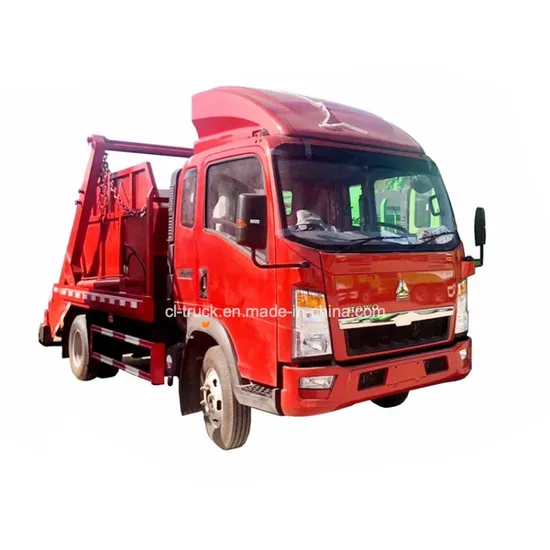
- Swing arm trucks carry a bin that separates from the vehicle, so one truck can serve several bins in a loop. Square bins suit sunken pits, boat-shaped bins stand on the ground.
- Docking trucks are used at compression stations. The body door docks with the station box, and a push plate moves compressed waste straight into the truck. One truck can serve several stations.
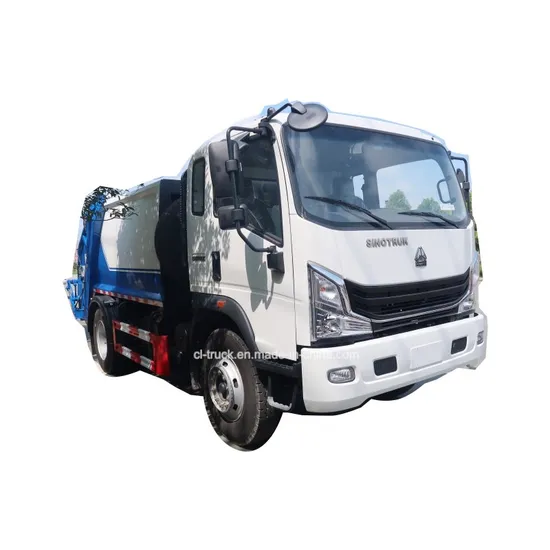
- Rear compactor trucks load, crush and compact waste automatically, with liquid draining into the sewage tank. They are efficient for general collection.
- Hook lift trucks take detachable containers with a lid, with one truck serving several containers placed at collection points.
- Sealed tipper trucks have a fully sealed, flip-top or sliding-top body, which tips to unload and limits spillage on the road.
Our guide to choosing a garbage truck size covers the next step once you have chosen a type.
Working conditions in Africa
Match the truck to the way waste is actually collected. Collection points may be shared bins, open dumping spots or door-to-door rounds, and the road may be unsurfaced and muddy in the rainy season. In hot weather, a sealed body and working sewage drainage can help limit smell and leaks. Dust can clog radiators and filters, so plan regular cleaning, and because a workshop may be far away, keep the common wear parts on hand. Fuel quality can vary, which is another reason to keep filters in good order. Our article on how a garbage compactor truck works gives further background.
Related models
Explore our compactor garbage trucks and swing arm garbage trucks. Examples include the HOWO Light 4x2 compactor truck 6m3, the 6m3 refuse compactor upper body and the HOWO Light 4x2 swing arm truck 5m3.
To ask for a quotation, please contact us or message us on WhatsApp.
Related reading: Refuse compactor truck sizes: 4, 6, 8, 12 and 16 m3 compared | Bin lifter, rear loader or skip loader: which waste truck | Rubbish truck, dustbin truck, bin truck and refuse truck explained | Garbage truck price: what changes the cost
Video: 10 compactor garbage trucks leaving the factory
Watch a batch of 10 Chengli compactor garbage trucks lined up and leaving the factory for delivery. The footage shows a factory delivery; it does not establish an overseas destination or the specifications of the individual models discussed in this guide.