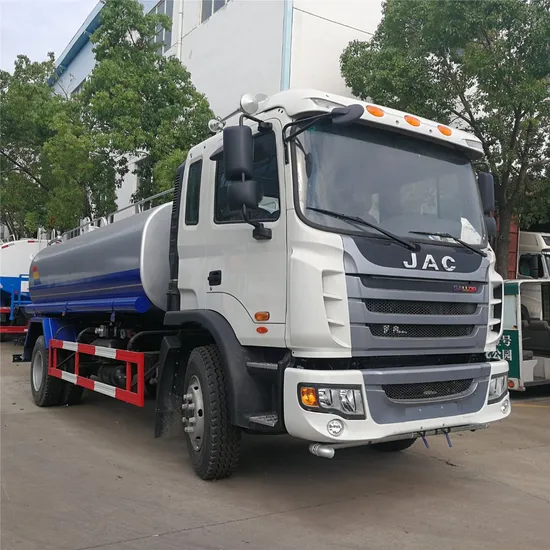
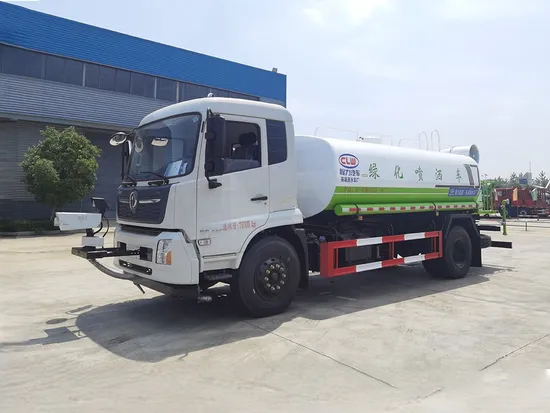
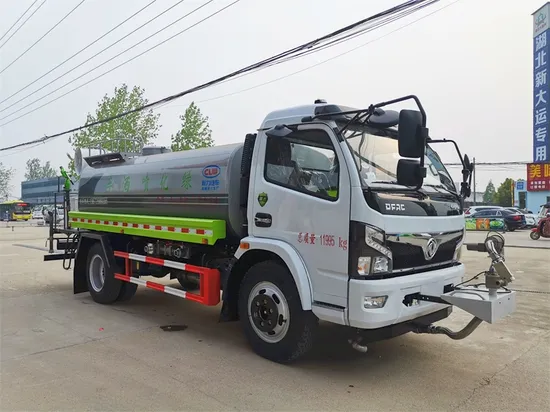
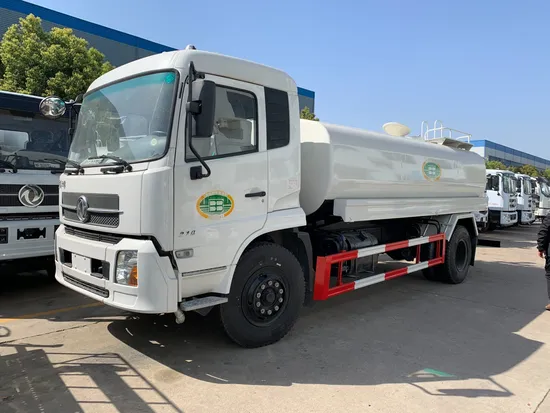
The JAC 4x2 Water Truck 10000L Euro 2 is a medium-duty water tanker with a tank in the 10 m³ class on a 4×2 chassis. It has left hand drive as standard, with right-hand drive available on request, an A5L half high roof cab, a straight four-cylinder diesel engine of 125 kW and a manual gearbox with six forward gears. The equipment on the tank includes a water pump, a top manhole and hose reels on both sides of the body.
It is a fitting choice for municipal departments, road maintenance contractors, construction companies and industrial sites that need a tanker bigger than a light truck but do not need the length and running weight of a three-axle model.
Typical working routines
In daily use a truck like this alternates between filling and spraying. A morning shift might begin with filling at a depot, followed by sprinkling a construction access road, a cement plant yard or a stretch of dusty highway shoulder. When the tank runs low, the driver returns to the water source and starts again. With a 10 m³ class tank, a driver can cover a useful stretch before refilling, yet the truck is still short enough to work in a busy city.
The same truck is used for street washing, watering trees and verges, filling site tanks and supplying water to crews for cleaning plant and equipment. The hose reels on each side let a second worker pull a hose while the truck stands still.
Chassis, cab and drivetrain
The wheelbase is 4500 mm, the curb weight is 6757 kg and the overall dimensions are 8180 × 2500 × 3180 mm. The engine is model B170 33, a straight four-cylinder unit meeting Euro 2, with a rated power of 125 kW. A fast six-speed manual gearbox with one reverse gear sends power to the rear wheels.
Steering is power assisted and braking is by air. The cab is the A5L half high roof type, and the standard configuration includes air conditioning, electric windows, ABS and central locking. ABS is especially useful on a truck that is heavy when full and light when empty, because wet and dusty road surfaces change braking behaviour from one part of the shift to the next. The wheels carry 9.00R20 tyres, with eight fitted and one spare.
Tank and pump equipment
The tank is Q235 carbon steel, and stainless steel is available as an option. Carbon steel suits spraying and site water, while stainless steel is the usual choice if cleanliness matters more. The tank has one DN500 manhole on top for inspection and cleaning.
The pump is model CLW80QZF-60/90N. It offers suction of at least 7 m and range of at least 28 m. In practice, suction means you can fill from a river bank, pond or open storage tank, and range is the distance the water is thrown from the nozzle. Two hose reels are fitted on each side of the truck.
Maintenance and daily checks
Start each shift by checking the tank, pump and fittings for leaks, and make sure the air system has built up pressure before the truck moves. Look at the tyres, since a water tank puts steady load on all of them, and check that the manhole cover is properly closed. At the end of the shift, empty the pump and pipes if there is any risk of freezing, and rinse the tank so that mud or scale does not settle. Keep the strainer on the suction side clean, because most pump faults on tankers begin with grit or weed pulled in from an open water source.
What to confirm before ordering
The chassis make, engine capacity and spray width are confirmed in the quotation.
Also check the tank volume and payload for your build, the tank material, whether the air conditioning and other cab features are included as standard, and the colour. Any extra equipment should be itemised in writing.
Request a current quotation for your selected configuration, quantity and delivery terms.