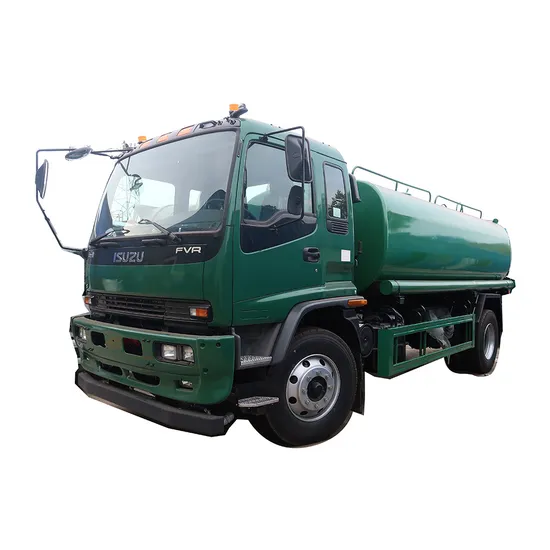
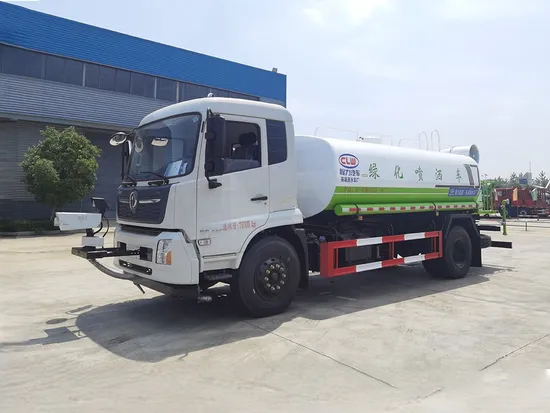
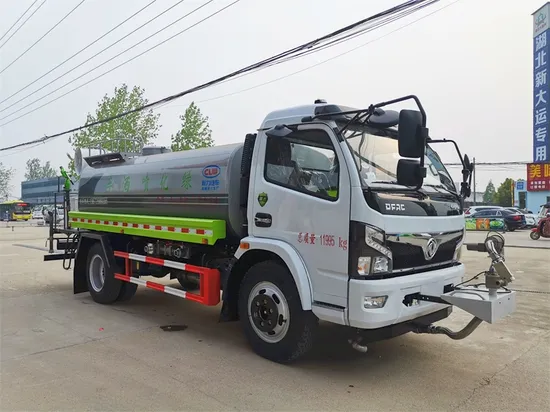
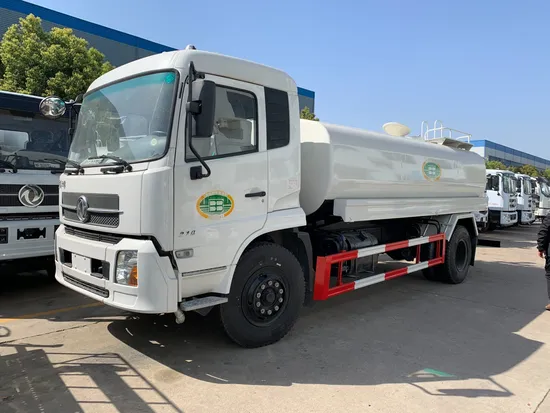
The Isuzu FTR FVR 4x2 Water Tank Truck is a water tanker offered on the Isuzu FTR cab and chassis, in a 4×2 layout with left-hand drive and right-hand drive on request. The tank is made in several sizes, so the same basic truck can be fitted to the volume your daily work requires.
This type of vehicle serves municipal road washing, construction sites that need dust control, landscaping and tree watering, and industrial yards that need a mobile water supply. Buyers who run different jobs through the week often choose a medium-to-large tank because it reduces the number of trips back to the refill point.
Tank sizes and water equipment
The model name covers a range of tank volumes, and the volume of the truck you order is confirmed in the quotation. Choose it from your route length and the water you use per shift. A bigger tank saves refill stops, but it also adds weight and affects handling, particularly on uneven ground.
The tank has a DN500 mm manhole on top for access. A CLW80QZF-60/90N pump supplies water, with a suction of at least 7 m and a spraying range of at least 28 m. Two hose reels, one on each side of the truck, support hand watering, washing and filling work next to the vehicle.
Cab, engine and chassis
The Isuzu FTR cab includes air conditioning and a radio. The engine is the 4HK1-TCG40 diesel, rated 190HP, water-cooled and intercooled, with a displacement of 5.193 L and a maximum output of 139 kW. Emissions are Euro 4, and an MLD gearbox gives six forward gears and one reverse.
Steering is power-assisted and the brakes are air operated. The wheelbase is 4,500 mm and overall dimensions are 8,150 × 2,500 × 3,200 mm. Axles are rated at 6.3 tons at the front and 13 tons at the rear, and the curb weight is 7,250 kg. The truck runs on 10.00-20 tyres, six plus a spare.
Daily operation tips
Fill the tank slowly and keep the hose end clear of the water surface if the supply is potable, to avoid backflow. When the tank is partly full, drive smoothly, because sloshing water pushes the truck forward when you brake. Keep the manhole cover closed while the truck is moving.
Flush the pump and pipework after pumping dirty or muddy water, and check hoses on the reels for cracks. Inspect tyres and air brake components regularly, since a loaded water tanker is heavy. Record the engine oil and filter intervals so that servicing stays on schedule.
What to confirm before ordering
Confirm the tank volume you want, the tank material, the payload and the pump setup, as these depend on the configuration and are set out in the quotation. Confirm the drive side and the emission standard you need for the roads where the truck will work.
Also decide on the body colour, extra spray outlets, a front or rear spray bar, and any equipment you want fitted near the cab. A short note about your water source and route length helps us suggest a combination that suits your daily use.
Request a current quotation for your selected configuration, quantity and delivery terms.