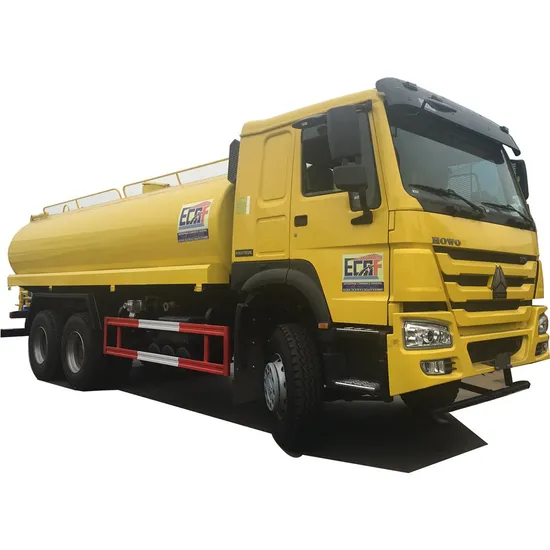
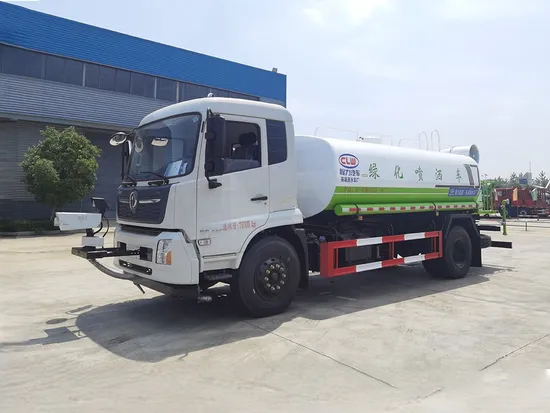
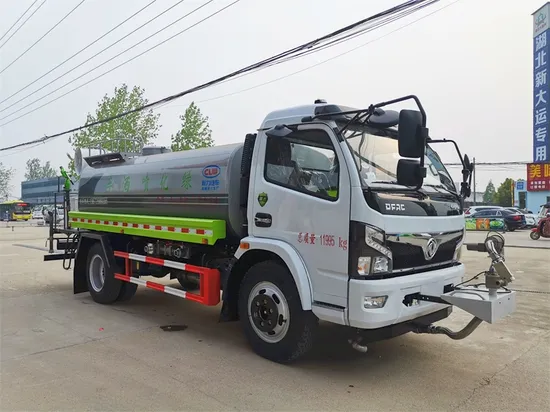
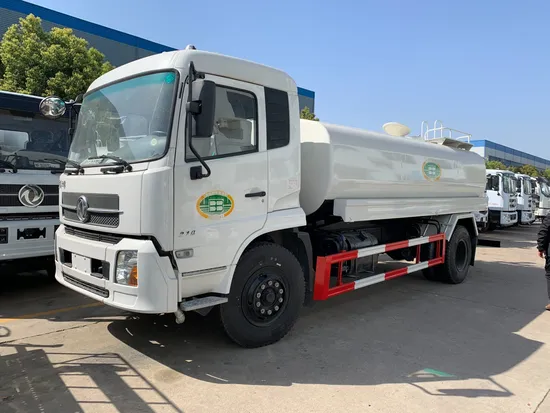
The HOWO 6x4 Stainless Steel Water Tank Truck is a heavy water bowser built on a Sinotruk HOWO 6x4 chassis, with a water pump, a front spout, rear and side sprinkling and a working platform at the back. The standard engine is the WD615.62 rated at 266 HP, with a manual 10-speed gearbox, and the truck is left-hand drive as standard, with right-hand drive available on request. It suits municipal road washing and dust suppression, mine and quarry haul roads, construction sites and greening departments that need a large volume of water on board.
Chassis, engine and drivetrain
The WD615.62 is a straight-six diesel, water-cooled, turbocharged and intercooled, displacing 9.726 L. Maximum power is 196 kW at 2200 rpm and maximum torque is 1100 N*m between 1100 and 1600 rpm. Engines of 290, 336 and 371 HP can be chosen instead. The gearbox is the HW13710 with 10 forward and 2 reverse gears, steering is ZF8098 power steering, and the brakes are air operated. Axles are HF7 at the front and ST16 at the rear, the wheelbase is 4325+1350 mm, and the tyres are 295/80R22.5, ten plus a spare. The electrical system is 24V, and the HW70 cab has air conditioning.
Tank, pump and sprinkling equipment
The tank is stainless steel, and its exact capacity depends on the configuration and is confirmed in the quotation. The pump is a CLW80QZF-60/90N rated at 60 m³/h with a 90 m delivery head, running at 1180 r/min with a matched power of 22 kW. It is self-priming, with a time of 1.5 minutes over a 4 m lift, and a fire coupling is included.
Performance targets are suction of at least 7 m, sprinkler width of at least 14 m and a range of at least 28 m. Water can be discharged through a front spout, a rear spill outlet and side spouts. A working platform at the rear can carry a high-pressure water spray gun whose pattern can be changed from heavy rain to drizzle or haze, which is useful for washing walls, trees and dust sources. Two 75 ft hose reels are mounted, one on each side, and a DN500 manhole on top gives access to the tank for cleaning.
Working routines and checks
A typical day starts with filling at a hydrant or by suction from a pond, using the self-priming pump and a strainer. Spraying takes place at low speed; use the rear spill for wide road washing and the side spouts for kerbs and central reservations. Before each shift check the pump seals, hoses, tank outlets, air brake pressure and tyre condition. Flush the tank at intervals to remove sediment, and drain exposed lines in freezing weather.
What to confirm before ordering
Confirm the tank capacity and the tank material. Confirm the engine power from the options, the emission standard and the drive side. Ask for the payload and weight set, the overall size, the pump output, the hose reel length and whether the rear platform and spray gun are included.
Request a current quotation for your selected configuration, quantity and delivery terms.