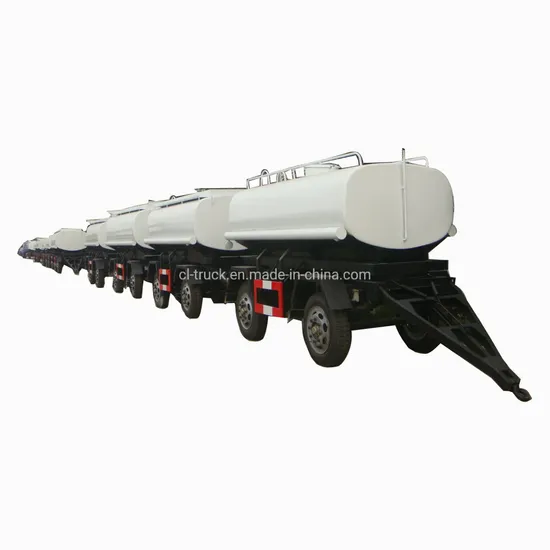
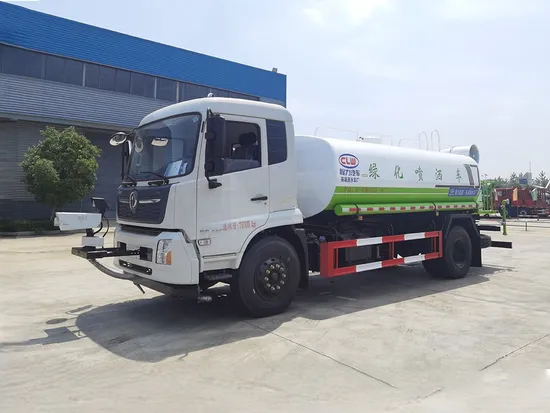
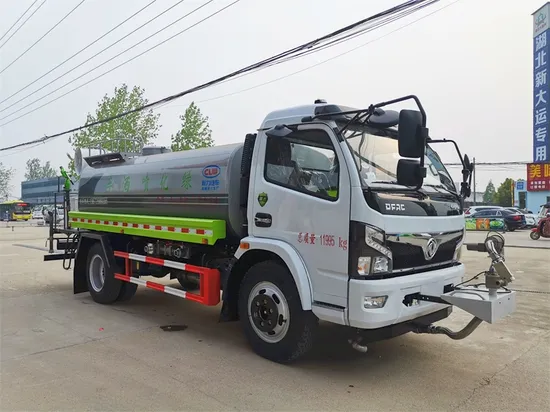
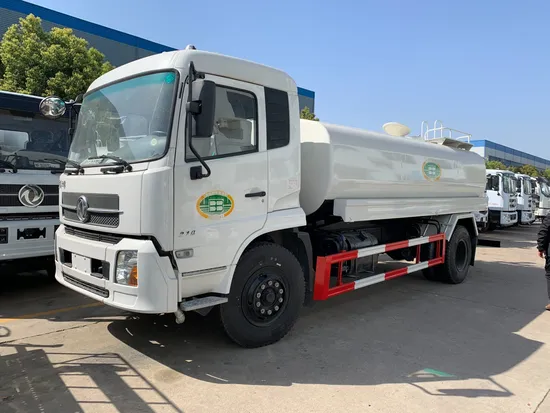
The Chengliwei Full Trailer Water Tank 3000L is a towed water tank on a full trailer, a unit with no engine and no gearbox of its own. It is pulled by a separate drawing vehicle and used to carry water for sprinkling, construction sites, farms, dust control and general water supply.
Because the trailer has no engine, it suits operators who already own a tractor or truck and want to add water capacity without buying another driven vehicle. The tank can be built in carbon steel or stainless steel, and the colour follows your requirements.
How a full trailer works
A full trailer carries its own load on its own axles and is connected to the drawing vehicle by a drawbar, so none of its weight rests on the towing vehicle. This keeps the load off the towing vehicle's rear axle and allows a larger tank to be carried in a single combination.
The drawing vehicle must be able to pull the filled trailer and match its coupling and brake connections. A full tank of water is heavy and the liquid moves in the tank during braking, so the drawing vehicle needs enough braking and traction. Tell us what you plan to use for towing.
Tank and body configuration
The tank is available in Q235 carbon steel or stainless steel. Carbon steel is the usual choice for general water work such as dust control and construction. Stainless steel suits cleaner water and helps if you want to avoid corrosion or want easier cleaning. A manhole on the top of the tank gives access for filling, inspection and cleaning.
The tank capacity and payload depend on the configuration and are confirmed in the quotation. Confirm whether you want fittings such as outlet valves, a filling connection and a pump, since these change how the trailer is used. Without a pump, the water is discharged by gravity or by equipment on the drawing vehicle.
What to confirm before ordering
Tell us which vehicle will tow the trailer, so we can check the coupling, the brake connection and the drawbar. Confirm the tank volume you need, the tank material, the colour and whether you want a pump or sprinkling equipment fitted. These items define the configuration and are written into the quotation.
Describe the surface where the trailer will work: paved roads, building sites or fields. Tyre size, axle layout and ground clearance depend on that. Please also state the maximum weight your towing vehicle can pull, and what the water will be used for, so our team can recommend a suitable setup.
Maintenance and daily checks
Before every trip check the drawbar, coupling pin, safety chains and brake connection, and make sure lights work if the trailer will travel on public roads. Inspect tyre pressures and wheel nuts, since a full water load is heavy. Check the manhole cover seal so water does not splash out on corners.
Drain and flush the tank regularly to remove sediment, and let it dry if it will stand unused. Grease the drawbar eye and axle points at the intervals in the manual. Drive slowly with a part-filled tank, because the water surges forward and backward during braking and can unsettle the whole combination.
Request a current quotation for your selected configuration, quantity and delivery terms.