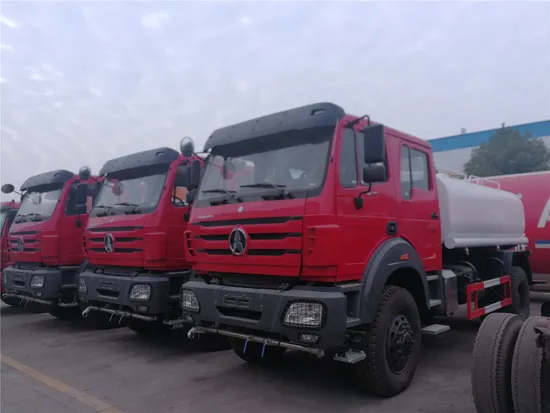
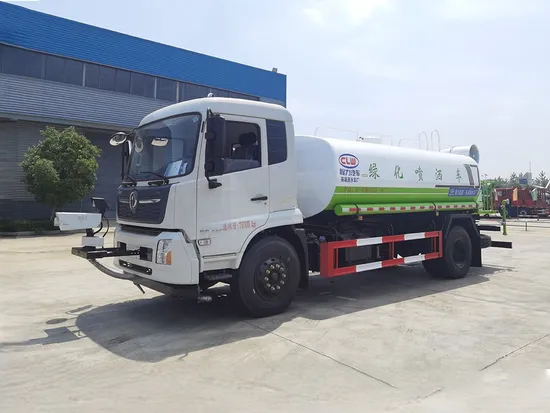
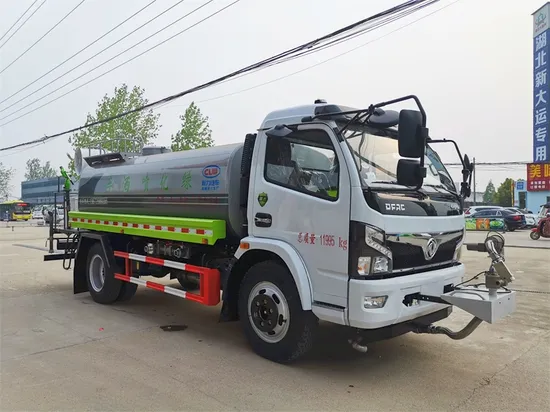
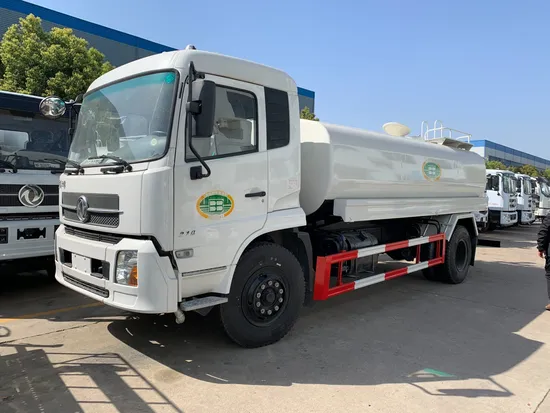
The Beiben 4x4 4x2 Water Tank Truck 10000-12000L is a diesel water tanker built on a Beiben chassis, offered with either a 4×4 or a 4×2 drive layout. It has a manual gearbox, a steel water tank and a Euro 2 emission specification. The two drive layouts let the buyer choose between a road-focused truck and one that can handle rougher ground.
The truck suits contractors, quarries, municipal departments, farms and construction sites that need to move water for dust suppression, road work, tree watering, cleaning or temporary supply. Because the tank is large, one trip can serve a long stretch of road or several work points before the truck returns to the filling point.
How a water tank truck works
A water tank truck is a chassis carrying a closed steel tank. The tank is filled through a top opening or an inlet connection, and the water is then discharged either by gravity or by a pump. Sprinkling versions add spray equipment, so that the water leaves in a fan across the road or work area.
The weight of water is high, as one cubic metre weighs about one ton. This is why the chassis, the axles and the tyres must be matched to the tank size. A full tank on a short wheelbase puts heavy load on the axles, and the driver should treat braking and cornering with respect when the tank is full.
Configuration of this truck
The truck is powered by a diesel engine and a manual gearbox, and the standard emission specification is Euro 2. The drive layout is either 4×4 or 4×2. The 4×4 version suits unsurfaced tracks, building sites and soft ground, while the 4×2 version is simpler and is suited to sealed roads and yards.
The tank is made of Q235 carbon steel, and a stainless steel tank is also available. Carbon steel is a common choice for general water duty, while stainless steel is considered where cleaner water, longer life or particular water quality are priorities. The exact tank volume is confirmed in the quotation.
Typical working routines
A normal day starts with a check of the tyres, the brakes, the tank fittings and the fuel level, followed by filling at a water point. The driver then follows a fixed route, discharging water in controlled amounts. On a site road, regular passes keep dust down, and the driver should avoid over-wetting the surface.
Partly filled tanks allow water to surge, which can affect braking and stability. Drive smoothly, brake early and avoid sharp turns. Between jobs, drain the tank and fittings, especially if the truck stands unused for some time, and clean the tank interior regularly so that sediment does not build up and block outlets.
What to confirm before ordering
The tank volume, the payload and the drive layout are the key items to confirm in the quotation, because the model covers more than one combination. Tell us how much water you move per trip, the ground you drive on, and any weight limits on your roads, so that the matching chassis and tank are quoted together.
Also confirm the drive side, the emission standard needed for registration, the tank material you want, the sprinkling and pump equipment, and the paint colour. A pump and spray arrangement suits road and dust work, while a plain discharge outlet may be enough for filling tanks, so state the use clearly.
Request a current quotation for your selected configuration, quantity and delivery terms.