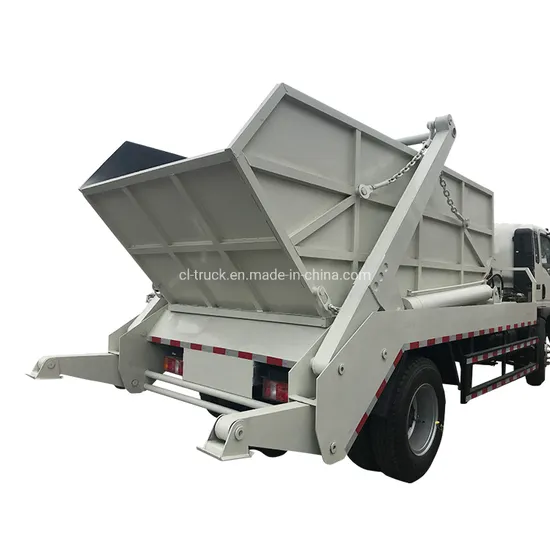
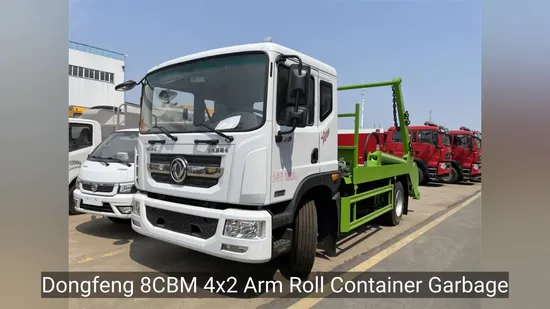
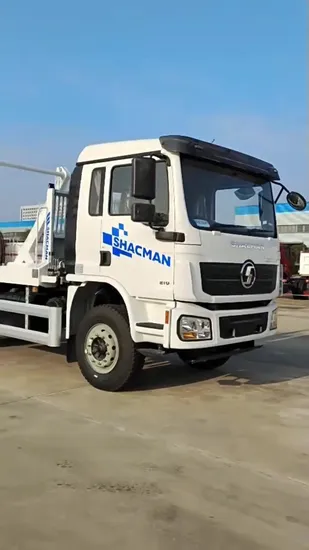
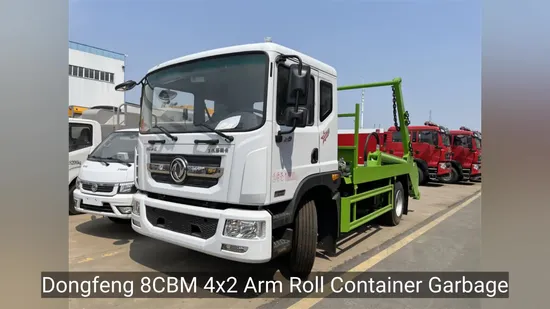
The Sinotruk HOWO Light 4x2 Swing Arm Garbage Truck Euro 2 is a small swing-arm garbage truck with a 5 m³ carbon-steel box, built on a HOWO Light chassis with a YN4102QBZL four-cylinder diesel of 116 hp. It is a 4x2 with a manual gearbox, built as left-hand drive with right-hand drive available on request.
The compact size suits narrow streets, estates, markets and collection rounds with smaller bins and skips.
How the swing arm loads and unloads
The configuration includes a hydraulic cylinder, big arms, chains and rear outriggers, and the truck can load and unload by itself. The chains are fixed to the container, the arms swing it up and over onto the truck, and the movement is reversed to lower it. The rear outriggers support the truck while the load is lifted, which keeps the chassis steady. Hydraulic control is manual, from the side of the body.
Always set the outriggers on firm ground before lifting, keep people out of the swing area, and check the chains and hydraulic hoses at the start of each shift.
Chassis and body
The cab is the HOWO 2080. The engine is 3.76 litres with an output of 85 kW, and the gearbox has six forward gears and one reverse. Steering is power assisted and the brakes are air operated. The wheelbase is 3,800 mm, the axles are rated at 2.7 tons front and 7.2 tons rear, and the tyres are 7.50R16, six plus a spare. Kerb weight is approximately 5,900 kg.
The box is carbon steel, 4 mm on the bottom and 3 mm on the sides, with a capacity of 5 m³. Overall length is approximately 7,030 mm.
Matching the truck to your routes
A 5 m³ box suits frequent short collections better than long hauls. Check the gate widths, overhead cables and turning space on your routes, because the arms and container rise above the body while working. Think about the waste type as well: wet or dense waste fills the weight limit long before the volume, so state what you will carry.
Looking after the lifting gear
The chains, arms and hydraulic cylinder do the hardest work on this truck, so keep them in good order. Grease the pivots regularly, look for worn chain links and loose pins, and check the cylinder and hoses for oil leaks. After tipping, wash out the container and the area around the arms, because refuse residue speeds up corrosion.
Drivers should lift a container only when the truck is on level ground with the outriggers fully set. A short training session for new operators helps avoid damaged containers and keeps each collection stop quick and safe.
What to confirm before ordering
Payload, overall dimensions, cab equipment, drive side and the number of containers are confirmed in the quotation. Air conditioning is optional. Tell us the container sizes and the waste you collect so that the quotation matches your routes.
Request a current quotation for your selected configuration, quantity and delivery terms.