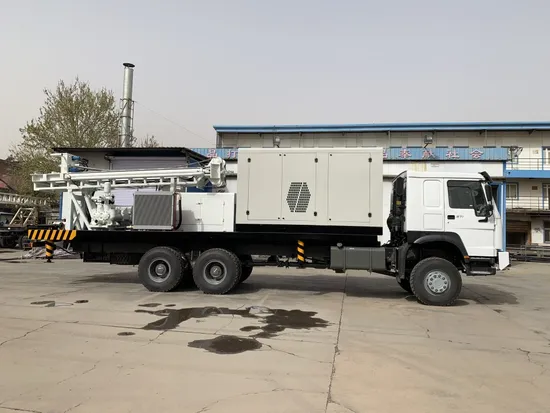
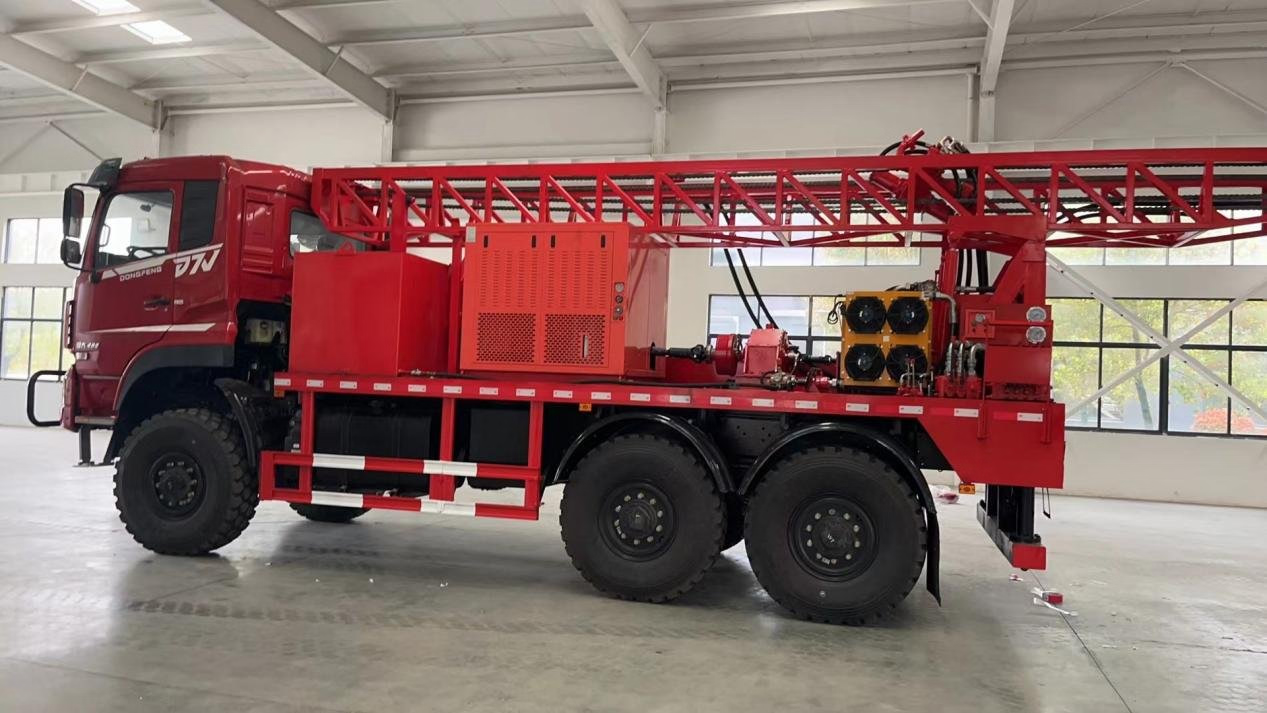
The HOWO Truck Mounted Water Well Drilling Rig 200-300m is a drilling machine carried on a HOWO truck, built to drill water wells in the 200 m to 300 m depth range. Because the rig travels on a truck, it can move from one drilling site to the next under its own power and be set up on arrival.
It suits water well drilling contractors, farms and communities that need boreholes, and companies that drill several sites in a season. It uses rotary drilling with a drag bit and covers hole diameters from 100 mm to 400 mm, so one machine can serve both smaller and larger bores.
How rotary drilling works
In rotary drilling the bit is turned against the ground while the cuttings are carried out of the hole. A drag bit cuts by shearing the material, which is why it is commonly chosen for softer and medium formations such as clay, sand and weathered rock. The rotation of the drill string is what advances the hole.
As the hole deepens, further sections of drill pipe are added so that the bit can keep cutting. The drilling crew watches the rate of progress and the returning cuttings, adjusting the drilling approach to suit the ground. Understanding the formation before starting is the best way to choose the correct bit and diameter.
Drilling range and tooling
The rig is built for hole diameters of 100 to 400 mm and drilling depths in the 200 m to 300 m range. The actual depth that can be reached depends on the diameter drilled, the ground conditions and the tooling used, so the figures for your project are confirmed in the quotation.
A smaller diameter generally allows a deeper and faster hole, while a larger bore suits wells needing bigger pumps or casing. Tell us the intended casing size and pump so that we can match the drilling diameter. The standard bit is a drag bit, and other bit options can be discussed according to your ground.
Truck-mounted working routine
A truck-mounted rig is driven to the site, positioned over the planned hole location and stabilised before drilling starts. Good preparation matters: choose firm, level ground, clear a safe area around the rig and keep bystanders away from rotating parts. Once drilling ends, the equipment is secured and the truck moves to the next site.
This arrangement saves the transport and setup effort required by a skid or trailer unit, which is useful when you drill many boreholes in different places. Regular inspection of drill pipes, the bit and the drive components keeps the machine reliable, and the crew should clean the equipment after each hole and note any wear for replacement.
What to confirm before ordering
Please confirm the depth you plan to drill, the hole diameters you need and the type of ground, because these decide the tooling and the configuration we quote. Also confirm the colour, the drive side of the truck and the emission standard needed for registration. The final specification of the chassis and drilling equipment is confirmed in the quotation.
Tell us about any extra equipment you want to carry, such as additional drill pipes, spare bits or support equipment, so that we can plan the layout. Customisation is available, and describing your typical wells, site access and the number of holes per season helps our team propose a suitable configuration.
Request a current quotation for your selected configuration, quantity and delivery terms.