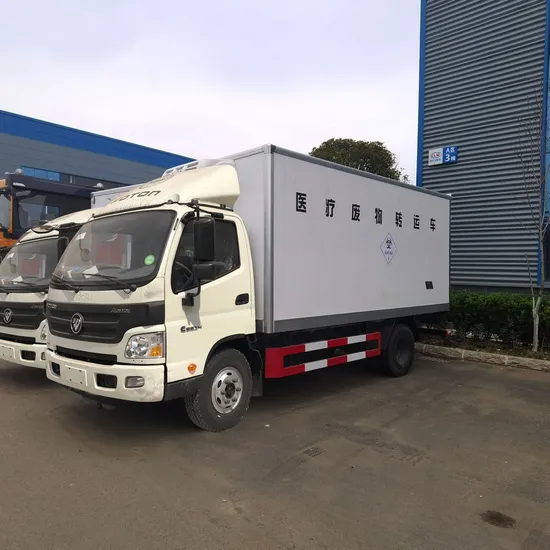
The Foton Aumark C38 Medical Waste Transfer Truck Cummins is a medium-duty refrigerated van on the Foton Aumark C38 chassis, with a Cummins diesel engine and a single-row cab for three people. The wheelbase is 3800 mm, the engine displacement is 3.76 L, the rated power is 105 kW and the maximum torque is 450 N.m. The gearbox is manual.
It is designed for hospitals, medical waste contractors and treatment plants that need a larger refrigerated van than a light truck can offer. The insulated body has a stainless steel interior and a refrigeration capability down to minus 18 degrees Celsius, so it suits routes where waste has to stay cold for long periods.
Body and refrigeration
The body is made as a sandwich: a glass plate on the outside, a stainless steel plate on the inside and a polyurethane core with a density of at least 40 kg/m3. The front plate, rear plate and roof are 60 mm thick, and the left and right side plates are 80 mm thick. The upper and lower frames and the front columns are made of aluminium profiles or stainless steel, and the door locks and folding parts are stainless steel.
The doors are a double rear door and a single side door on the passenger side. The minimum refrigeration temperature is minus 18 degrees Celsius. The body also includes a stainless steel sewage tank, a clean water tank, a fixation device inside the van and an LED ceiling light. Backup electricity and heating can be discussed with our team if you need them.
Chassis, engine and drivetrain
The cab is a single row with seating for three; left-hand drive is standard and right-hand drive is available on request. The wheelbase is 3800 mm and the gross vehicle weight is about 6500 kg. The rear suspension uses leaf springs in an 11 plus 7 arrangement. The parking brake is a gas brake and the auxiliary brake is an engine exhaust brake. The wheels are six tyres plus a spare in size 8.25R16.
The engine has a displacement of 3.76 L, a rated power of 105 kW and a maximum torque of 450 N.m. An exhaust brake is a useful feature on a heavy van, since it saves the service brakes on long descents and when stopping frequently with a loaded box.
Matching the truck to your job
This model fits routes with a larger volume of waste, such as a district collecting from several hospitals, or a treatment plant receiving a daily load from many clinics. The double rear door and the passenger-side door provide two ways to load, and the stainless steel interior helps with disinfection.
Because payload depends on the chassis rating and the gross weight of 6500 kg, the real payload has to be agreed carefully. Provide the daily volume, the type of container you use and the number of stops, so the factory can calculate how many containers the body can hold and whether the chassis rating is suitable.
Maintenance and daily checks
A heavier refrigerated van deserves a routine. Each morning, start the refrigeration unit and let the box reach its set temperature before loading. Check the door seals, the locks and the drain of the sewage tank. On the chassis, look at oil and coolant levels, the air system, the leaf springs and the tyres, and test the exhaust brake before the first long descent. After unloading, wash the stainless steel interior and leave the doors open to dry.
What to confirm before ordering
The payload, the gross vehicle weight and the emission standard depend on the configuration and are confirmed in the quotation.
Also confirm the drive side, the refrigeration unit brand and capacity, the thickness of the floor, the need for backup electricity or heating, the door lock arrangement, and the layout of the sewage and clean water tanks. A written drawing of the box interior helps to avoid surprises.
Request a current quotation for your selected configuration, quantity and delivery terms.