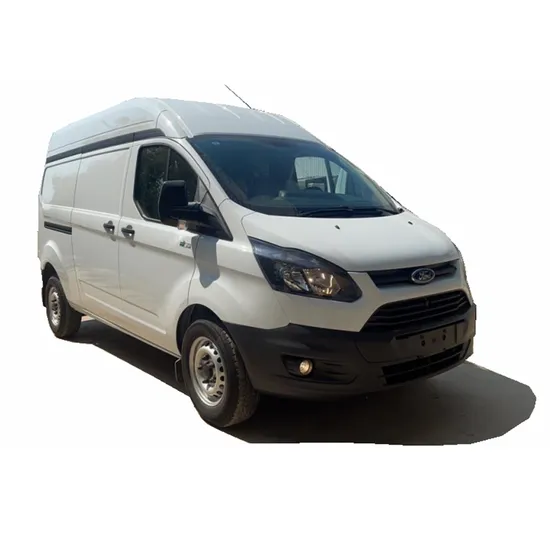
The Ford Medical Waste Incineration Vehicle Euro 6 149kW is a compact special-purpose vehicle for the harmless treatment of medical waste and animal carcasses. It uses a 149 kW engine with a displacement of 1,997 ml, a manual transmission and a single axle, which keeps the vehicle small enough to reach clinics and farms along narrow roads.
It suits hospitals, veterinary stations, disease-control teams, farms and waste service companies that prefer to treat waste at the place where it arises. Treating material on site avoids moving untreated waste through public roads, and it lets one vehicle serve several small sites in turn.
Where this vehicle is used
Medical waste has to be handled quickly and in a controlled way. A mobile incineration vehicle can visit a small clinic, a laboratory or a rural health post that produces too little waste to justify a fixed plant. The operator arrives, treats the load and leaves, so the site does not need its own equipment.
Animal harmless treatment is the second main use. After an outbreak or a large loss on a farm, animal carcasses must be disposed of promptly. A vehicle that can be driven to the farm shortens the handling chain and limits how long infected material stays in the open.
Chassis, engine and dimensions
The vehicle runs on a 149 kW engine at Euro 6 level. Overall dimensions are 5,341 × 2,032 × 2,630 mm with a wheelbase of 3,300 mm, and the tyres are 215/75R16LT, four in total. Those figures describe a compact body that can enter yards and service lanes where a large truck could not.
The transmission is manual and the vehicle has a single axle. With a body of this size, the driver can park close to the waste collection point and keep carrying distances short. Please ask us for the exact weight and axle load figures for your configuration, since these depend on the equipment fitted.
Operating routine and daily checks
An incineration vehicle is used in short, repeated cycles: load the waste, run the treatment, allow cooling, and clean out the residue. Operators should work from a written routine and keep a record of each cycle. We recommend that anyone who runs the equipment is trained before the first job.
Before each trip, check tyres, fluid levels, lights and brakes as for any vehicle, and inspect the treatment chamber and its door for damage. Keep the working area clear of bystanders during operation, and follow the rules of the authority that regulates waste treatment where you operate.
What to confirm before ordering
Please confirm the steering side, the emission standard, the fuel type, the type and amount of waste you plan to treat per cycle, and the equipment you want fitted. Our team will state the confirmed fuel, capacity and equipment details in the quotation so that the vehicle matches the waste stream you actually have.
Also tell us about the sites you intend to visit, including road width, gate height and whether power or water is available there. If you need a particular colour, marking or additional safety equipment, say so at this stage so that it can be included in the quotation.
Request a current quotation for your selected configuration, quantity and delivery terms.