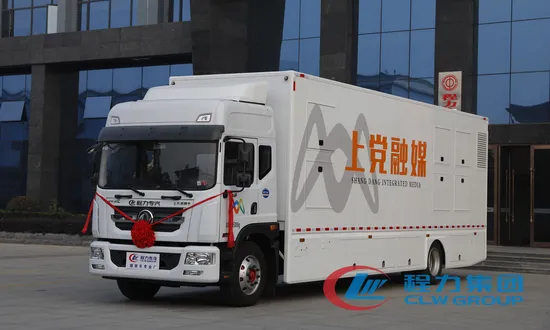
The Dongfeng 4x2 News Report Truck is a Dongfeng-based vehicle on a 4x2 chassis, intended to carry a reporting crew and its equipment to the scene of an event. It works as a mobile base for gathering, handling and sending out news material away from a studio. This page explains how such a truck is normally set up and what to settle with us before an order.
Typical users are television and radio stations, online media groups, event organisers and public information offices that want a dedicated vehicle instead of improvising with a van and loose cases. A purpose-built truck keeps cables, cameras and workstations in one place, so the crew can start working soon after arriving on site.
How a news report truck is used
The usual job begins with driving the crew to a site, positioning the vehicle with a clear view of the sky or a good path for its signal, and setting up working positions inside or beside the body. Operators then record, edit and transmit material while the truck stays parked for as long as the assignment needs.
Because the truck is stationary for long periods, power supply, working space and ventilation matter as much as the chassis. Producers often want a seat for a director, a rack for equipment and room to move. We discuss how many people will work on board and which tasks they perform, so the interior follows your routine.
Chassis and drivetrain
The truck is built on a Dongfeng 4x2 chassis, which means two driven wheels on one axle and a simple layout familiar to workshops and drivers. Final engine output, gearbox, wheelbase and body size depend on the configuration chosen and are given in the quotation for your specification.
A two-axle chassis keeps the vehicle manageable in city streets, stadium car parks and event grounds. When you request a quotation, tell us the route conditions, the number of crew and the equipment weight, so our team can match the chassis to the load and the body to your equipment.
Body and equipment planning
A reporting vehicle is only as useful as its fit-out. Items commonly discussed include a camera and signal mast, cable routing, equipment racks, work desks, seating, lighting and a power source for long sessions. Which of these are fitted is decided together with you, and each item is written into the quotation.
Think about how the crew enters, where cases are stored while driving and how equipment is secured. A neat internal layout reduces setup time at the scene. Provide us with your equipment sizes and a rough sketch of the working positions, and we will turn them into a body plan for your approval.
What to confirm before ordering
Please confirm the drive side, the emission standard your registration requires, the body size, the number of working positions and the equipment you will install yourself. Tell us whether any items should be supplied by us or fitted by your own technicians, so responsibilities are clear from the start.
Also confirm the power arrangement for operation when the engine is off, the exterior colour and lettering, and any roof-mounted equipment, since roof loads and overall height affect how the truck passes under bridges and gates. All of these points are fixed in the quotation before production starts.
Request a current quotation for your selected configuration, quantity and delivery terms.