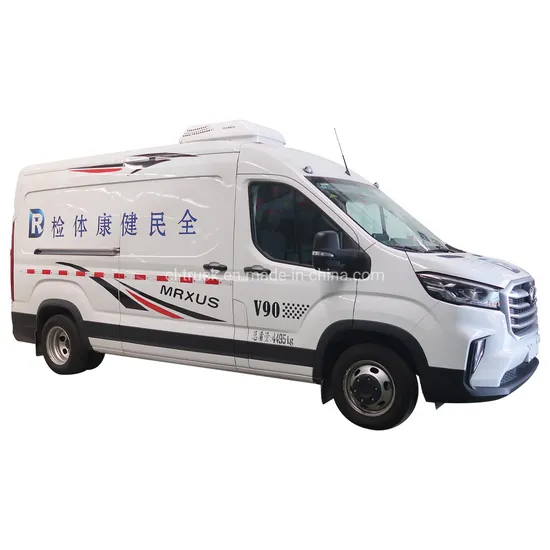
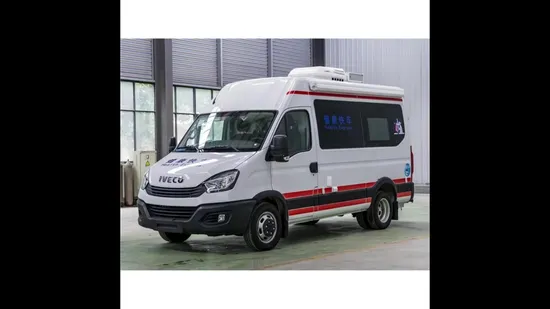
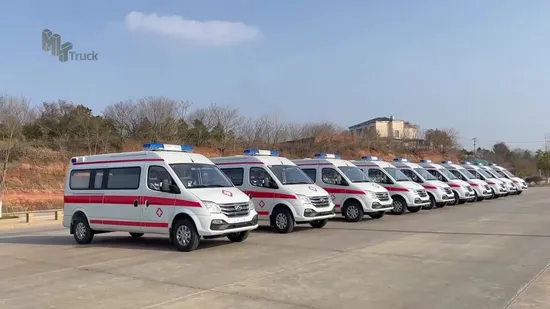
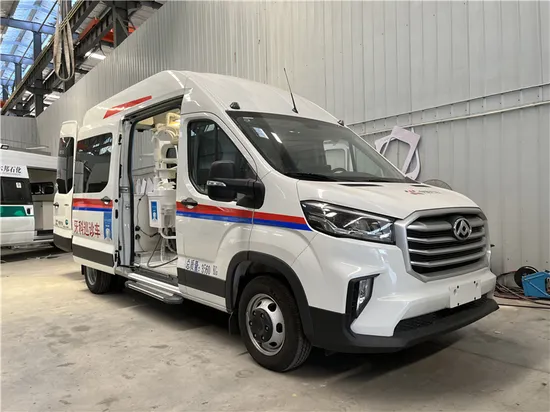
The Small Bus Health Examination Vehicle Euro 2 81kW is a van-type vehicle on a Foton chassis, prepared for use as a mobile health examination point. A 4J28TC3 diesel engine with 81kW, a five speed manual gearbox, a cab with air conditioning and power steering make up the base. The vehicle is white and is supplied without medical equipment unless the quotation says otherwise.
It is intended for public health teams, employers and community programmes that want to take basic checks to people, in a vehicle that is easier to park and run than a full size bus.
Matching the vehicle to your job
Begin with what you will do inside. A health examination point may handle height and weight checks, blood pressure, sample collection, interviews and record keeping. Each activity needs a different amount of space and different furniture. The medical compartment size is confirmed in the quotation, so the interior layout is something to define with our team.
The vehicle itself measures about 5380 × 1920 × 2480 mm with a wheelbase of 3110 mm, a gross vehicle mass of 3400 kg and a curb weight of 2160 kg. The difference between these two weights is the allowance for equipment, furniture, staff and fuel, so plan the fit-out within it.
Chassis, engine and drivetrain
The engine is a 4J28TC3 diesel, rated at 110HP and 81kW, with a displacement of 2771 cc. The gearbox has five forward gears and one reverse. Steering is power assisted. The tyres are 215/75R16LT, with four fitted and one spare.
The drive layout, 4×2 or 4×4, is confirmed in the quotation. Left-hand drive is standard, and right-hand drive is available on request. Because the 4×4 option changes the ride height and the driving characteristics, confirm which version your quotation covers.
Cab and operator features
The cabin has air conditioning and power steering. For a vehicle that spends a lot of time parked with the engine off and staff working in the rear, cooling and ventilation of the working compartment matter as much as the cab. Ask whether the working area has its own air conditioning, extraction or fans, and whether a generator or mains connection is provided to run them.
Also think about the drive itself. A vehicle with a gross mass of 3400 kg and a fitted-out interior handles differently from the empty base, with a higher centre of gravity and more weight at the rear. Drivers should take corners and speed bumps gently, and fix cabinets and equipment so that nothing moves on the road.
Planning the interior
List the equipment you intend to bring in and its weight, and the power it needs. Plan lighting, sockets, hand washing, storage for supplies, and a way to keep records private. Think about access: steps or a ramp for patients, and a door position that keeps queues off the road.
Ask for a layout drawing and compare it with your workflow before you approve it. An hour spent on the drawing can save rework after the vehicle is built.
What to confirm before ordering
Please confirm the emission standard, the drive layout, the drive side and the size of the medical compartment in the quotation.
Please also confirm the medical equipment, the interior layout, the power supply, the air conditioning in the working area and the colour. With these in the quotation, we can check the finished vehicle against them.
Request a current quotation for your selected configuration, quantity and delivery terms.