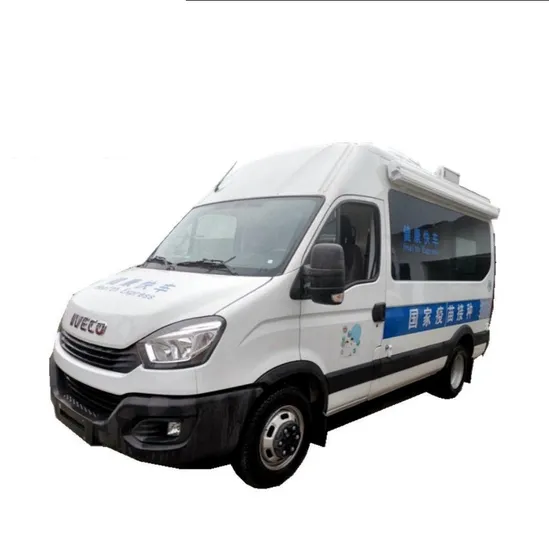
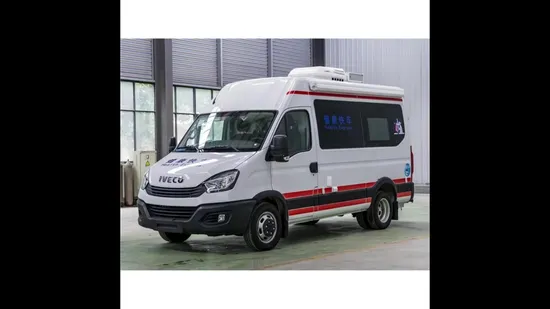
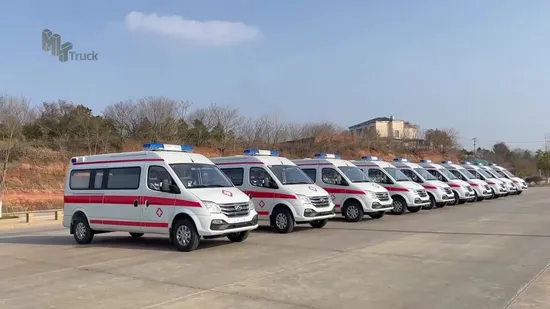
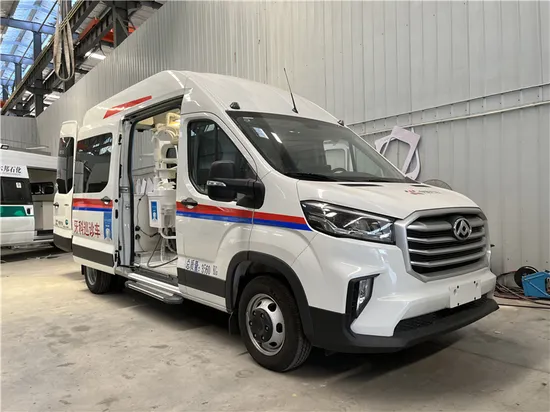
The Chengliwei Vaccination Vehicle is a compact van-type unit on the NJ6536EYCM chassis, fitted with an all-metal closed body and a patient compartment measuring 2820 × 1725 × 1760 mm. It is built for vaccination teams that need a clean, enclosed space and a vehicle that is easy to drive between sites.
Three seats are provided in the cab, the vehicle uses a manual-style driver set-up with air conditioning, and it is offered in left-hand drive with right-hand drive available on request. Health departments, clinics and community programmes can use it to hold vaccination sessions at schools, depots and public spaces.
Where this vehicle is used
A vaccination day usually involves many short visits by many people, so the vehicle must be quick to set up and comfortable for staff. Because the body is a closed van with a side sliding door, the team can open the vehicle, begin registration and start vaccination without assembling any tent or temporary shelter.
The overall size of 5760 × 2011 × 2880 mm makes the vehicle easier to manoeuvre than a large mobile clinic. A turning diameter of 12.9 m and a minimum ground clearance of 148 mm suit town streets and paved access roads, but unpaved tracks should be assessed before the vehicle is sent.
Chassis, engine and drivetrain
The engine displacement is 2287 ml with a maximum power of 95 kW, and it is a four-cylinder in-line unit with intercooling and direct injection. Fuel type and engine arrangement depend on the configuration, because both petrol and diesel versions are offered and the final choice is confirmed in the quotation.
The fuel tank holds 80 litres and the maximum speed is 130 km/h. Suspension is McPherson independent at the front with a leaf spring rear axle, and braking uses disc brakes on all four wheels with ABS and EBD. The parking brake is a manual mechanical type. Tyres are 195/75R16LT, four in total.
Cab and standard fittings
Standard fittings include a side sliding door, central door locking, a front power window, a driver seat with manual six-way adjustment, steel wheels with hubcaps, integrated side windows, a driver airbag with seatbelt warning, a high-mounted stop lamp, a stereo radio and air conditioning.
A power mirror and reverse sensors are optional. The reverse sensors are helpful when backing into a narrow site, and power mirrors save time when several drivers share the vehicle. Curb mass is 3550 kg against a gross vehicle weight of 4000 kg, so the interior fit-out and its equipment should be planned within that margin.
What to confirm before ordering
Confirm the fuel type and engine choice, the drive side and the emission standard that applies to your registration. Please also decide whether you want the power mirror and reverse sensors, since both are optional and are written into the quotation as separate items.
Tell us how many staff will work in the patient compartment, how the vaccines and supplies will be stored, and what power supply you expect at each site. Our team can then check the interior layout against the compartment dimensions and the weight limits of the chassis before the specification is finalised.
Request a current quotation for your selected configuration, quantity and delivery terms.