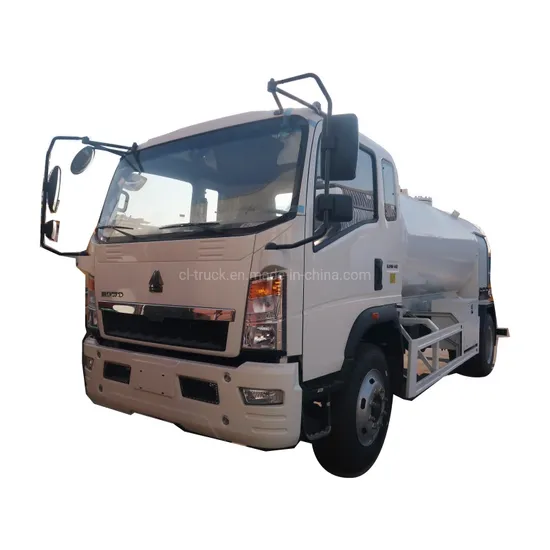
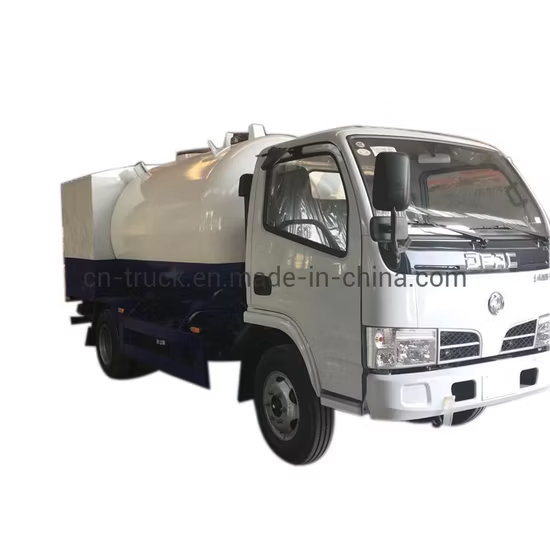
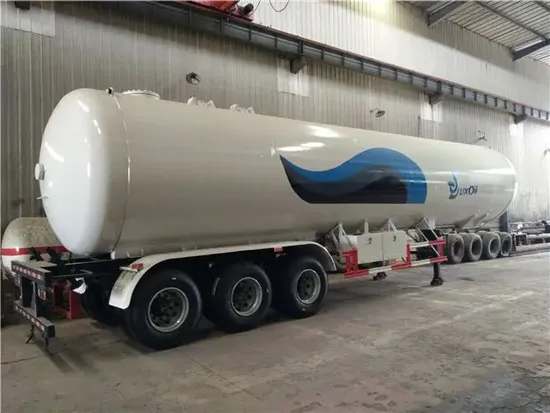
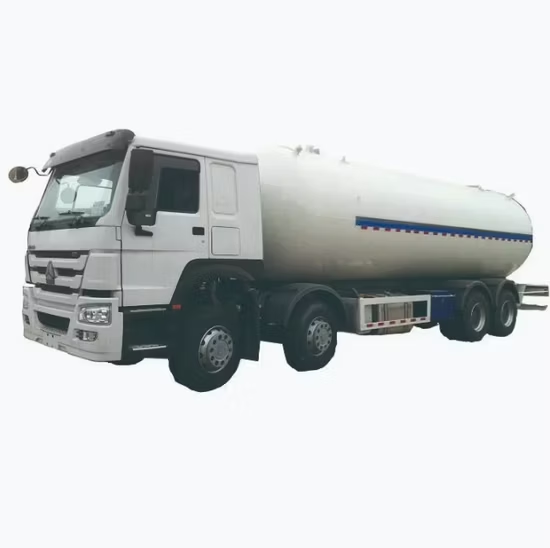
The HOWO Light 4x2 LPG Bobtail Truck 140-160HP is a small liquefied petroleum gas tanker built on a HOWO light chassis with a HOWO cab. The tank is 10 m³ and the rated payload is 5000 kg. It is a left-hand-drive 4×2 truck, with right-hand drive available on request, and the Yuchai diesel is offered at 140 or 160hp.
A bobtail delivers gas directly to customers rather than only moving it between depots. It suits LPG distributors who refill domestic storage tanks, commercial kitchens, small industrial users and satellite storage sites that large semi-trailer tankers cannot reach easily. The short 4×2 chassis can turn in narrow lanes and tight yards where a heavier combination would struggle.
Chassis, engine and drivetrain
The wheelbase is 4200 mm and the approximate overall dimensions are 7300 × 2450 × 3200 mm. The engine is a Yuchai four-cylinder diesel, four-stroke, water-cooled and inter-cooled, offered at 140 or 160hp. The gearbox is a manual unit with six forward gears and one reverse, and the brakes are air operated.
Axles are rated at 3.2 tons at the front and 8 tons at the rear, on 8.25R20 tyres, six fitted plus a spare. The electrical system is 24V and standard tools are supplied. Maximum speed is 90 km/h, though a loaded gas tanker should be driven well below this, with extra following distance for braking.
Tank and gas handling
The tank material is Q345R, a steel grade commonly used for pressure vessels, and the tank is intended for liquefied propane. The design basis is the GB150 pressure-vessel standard together with LPG safety inspection procedures. Ask for the documents that apply to the tank you receive, rather than relying on a summary line.
In service, the truck transfers gas into customer tanks through a hose and metering arrangement. The pump, meter, hose reel and valves are confirmed in the quotation. A bobtail also needs earthing, safety valves, an emergency shut-off and clearly marked controls, which the buyer should ask to see on the drawing.
Driving and routine checks
Liquid in a partly filled tank surges when the truck brakes or turns, and a bobtail with a high centre of gravity needs gentler handling than a van of equal weight. Drivers should brake early, take corners slowly and avoid sudden lane changes. Check tyre condition and air brake pressure before each trip, since stopping power is vital with a gas load.
Before each delivery, inspect hoses, couplings and valves for damage, confirm the fire extinguishers are charged and watch for fuel or oil leaks around the chassis. Never leave the vehicle unattended during transfer. Regular pressure-vessel inspection and relief-valve servicing are required by the applicable rules and should be planned in advance.
What to confirm before ordering
Confirm whether the quotation is for the 140hp or the 160hp engine, the emission standard, steering side, and the filling limit of the 10 m³ tank. The rated payload is 5000 kg, so ask how much LPG the tank may carry and how the final loaded weight meets the axle ratings.
Also confirm the pump, meter, hose and safety equipment, the tank documentation supplied, the cab features and any optional equipment. Tell our team your delivery routes, the sizes of your customers' tanks and your usual load, so that the configuration matches your work and the truck is not over- or under-equipped.
Request a current quotation for your selected configuration, quantity and delivery terms.