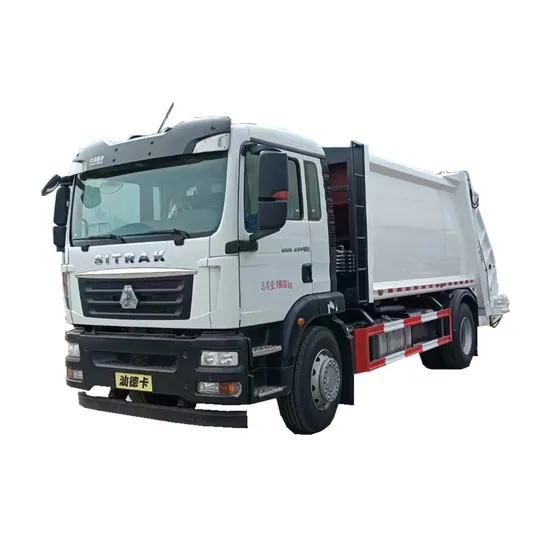
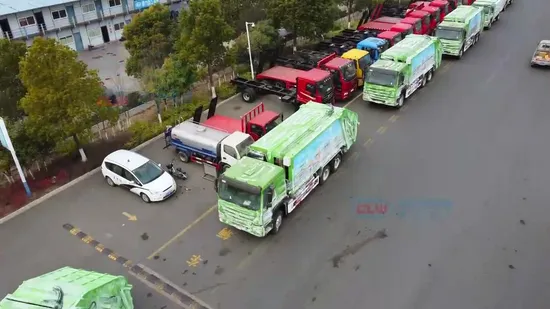
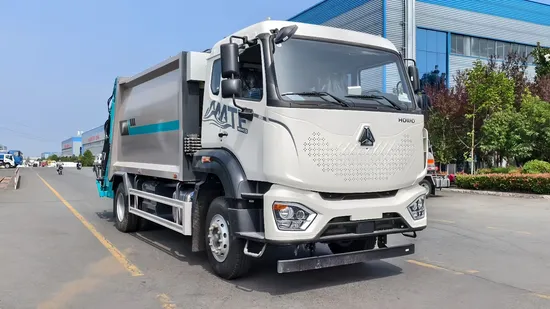
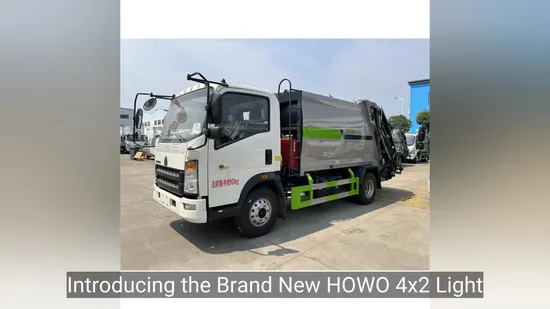
The Sitrak 4x2 Garbage Compactor Truck, model CLW5180ZYSZ6, is a mid-size refuse collector built on a Sitrak 4×2 chassis with a WP 220 diesel engine and an 8-speed manual gearbox. The compactor body is in the 14 m³ class and the truck has a 4,700 mm wheelbase, which keeps it manageable on city and suburban collection routes.
It is aimed at municipal sanitation teams, waste contractors, and estates or industrial parks that need a mid-size compactor rather than a heavy six-wheel unit. A 4×2 layout is simpler to maintain and easier to place on narrow streets, while the compression body lets each trip carry more waste than an open tipper of similar size.
Chassis, engine and drivetrain
The engine is the WP 220, a diesel unit with a displacement of 5,900 ml producing 162 kW (220 HP). Power goes to the rear axle through an 8-speed manual gearbox. Steering is power-assisted and the brakes are air-operated, which suits a vehicle that stops many times on every route. Tyres are 10.00R20.
The wheelbase is 4,700 mm and the overall size is 8,650 × 2,480 × 3,150 mm. Gross weight is 18,000 kg and tare weight is 9,840 kg. Because the dimensions are modest, the truck can often use streets, alleys and gate openings where a longer chassis would not turn. Always compare these figures with the tightest point on your route.
How the compactor body works
A compactor body takes waste in through a loading hopper and presses it into the main box with a hydraulic ram, so the box holds far more than the loose volume. This reduces the number of trips to the disposal point, saves fuel, and lets crews cover more stops per shift than a simple open body would.
Operators should load evenly, keep rigid items such as long steel or concrete out of the hopper, and stay clear of the body while the ram moves. Cycle times, hydraulic pressure and hopper size depend on the body fitted, and we confirm them in the quotation so that you can estimate stops per load.
Daily checks and care
Before each shift, walk around the truck and look for hydraulic leaks near the body, check tyre pressures, and test the air brakes by watching the pressure gauge build and hold. Check engine oil and coolant, and make sure the warning lamps work. A few minutes at the start of a shift prevents breakdowns on the route.
At the end of the shift, wash out the hopper and the body floor so that residue does not harden or corrode the plates. Grease the points the manual specifies and log any unusual noise from the ram or pump. Regular cleaning also reduces odour, which matters when the truck is parked near homes overnight.
What to confirm before ordering
Please confirm the drive side, the emission standard required for registration, and the payload you plan to carry per trip. Confirm the body volume too, so that axle loads and legal weight limits on your roads are respected. Our team can check these against the route and the weighbridge you use.
Tell us about any extra equipment you want, such as bin handling, cameras or warning lights, along with the body colour. Customisation is available. Describe the type of waste, the number of stops per day and the distance to the disposal point, and we will prepare a quotation that fits the work.
Request a current quotation for your selected configuration, quantity and delivery terms.