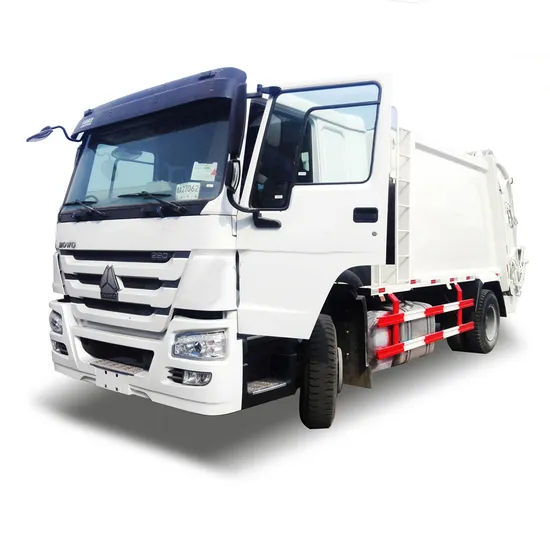
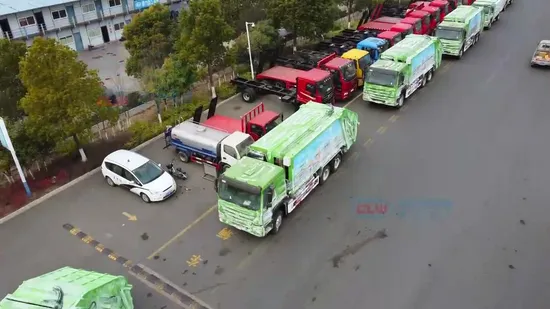
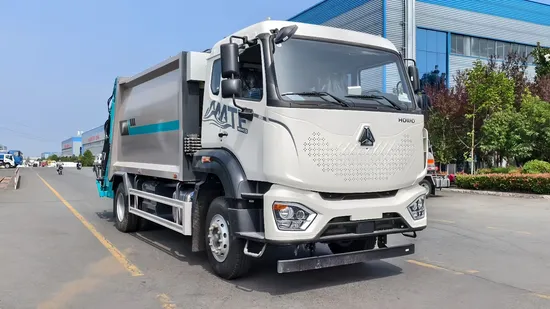
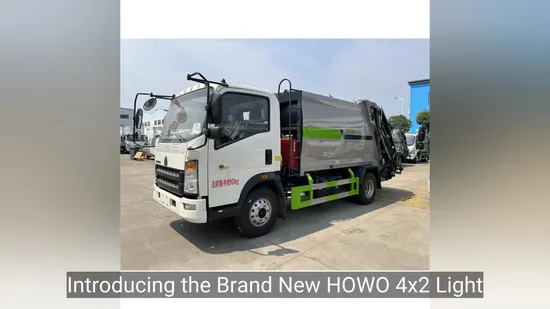
The Sinotruk HOWO 6x4 6x6 Compactor Garbage Truck 16-20m3 is a large refuse truck on a HOWO chassis, offered with compactor bodies of 16, 18 or 20 cubic metres. It has left-hand drive, a WD615.87 diesel engine described as 290HP, a ten-speed manual gearbox, an HW76 cab with air conditioning and an unloading system of the dump type.
It is built for city sanitation departments and large contractors that need a high-capacity truck for main roads, industrial areas and long hauls to the disposal site, where fewer, larger loads lower the cost per ton of waste.
Where this truck is used
The 16 to 20 m³ size is used on main collection routes and as a second-stage truck taking waste from transfer stations to the final site. The overall dimensions are 8850 × 2500 × 3250 mm and the wheelbase is 5000 mm, which is moderate for a truck of this capacity. The curb weight is listed as 11800 kg and the top speed as 90 km/h.
Because the model name mentions both 6x4 and 6x6, the drive layout is something to settle early. A 6x4 truck drives two of its three axles and suits paved routes and well-kept transfer sites. A 6x6 truck drives all three, which helps on soft ground, steep landfill tracks and wet access roads, at the cost of extra weight and fuel use. The drive layout depends on the configuration and is confirmed in the quotation.
Chassis, engine and drivetrain
The WD615.87 is a six-cylinder in-line diesel, water-cooled and intercooled, with a displacement of 9726 ml. Its rated power is 213 kW at 2200 rpm, and the maximum torque is 1160 N·m between 1100 and 1600 rpm. A broad torque band suits a refuse truck that moves slowly between collection points.
The gearbox is an HW19710 with ten forward gears and two reverse gears. The steering is a ZF8198 with power assistance, and the brakes are air operated. The tyres are 295/80R22.5, six fitted and one spare, on HF7 front and ST16 rear axles.
Body and compaction system
The body is made of steel plate 5 mm thick at the sides and 5 mm at the bottom. A 200 litre sewage tank collects liquids. Loading takes 8 to 10 seconds, the loading cycle takes 50 to 60 seconds per turn, and unloading takes 30 to 40 seconds. The body is unloaded by dumping.
Dump unloading means the front of the body rises, the tailgate opens and the compacted waste slides out. It is quick and simple, but it needs overhead clearance and firm, level ground at the tipping point, so check your sites. Compacted waste can stick, so ask how the body is shaped to allow it to slide freely.
A large body also raises the question of axle loads. A full compactor body can be heavy, and the weight is concentrated behind the cab, so ask for the axle load figures with a full body and compare them with the limits on your routes. Where routes are mixed, a body at the lower end of the 16 to 20 m³ range may keep the truck inside its legal weight more easily.
Cab and daily checks
The cab is the HW76 type with air conditioning. A large truck needs a daily routine: check oil and coolant, drain the air tanks, look at the tyres, test lights, and check the hydraulic oil and the packing cycle. Wash the hopper and body at the end of the shift.
What to confirm before ordering
The drive layout, body volume, rated payload, emission standard and axle ratings depend on the configuration and are confirmed in the quotation. Please also state the bins and containers you collect, the route lengths, the type of disposal site and its clearance, and the colour and steering side you need.
Request a current quotation for your selected configuration, quantity and delivery terms.