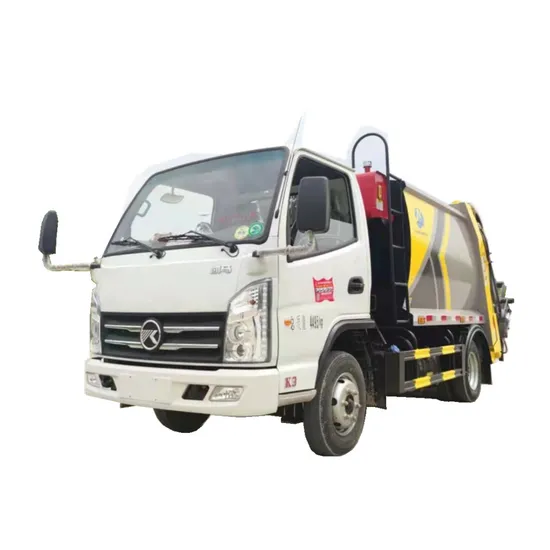
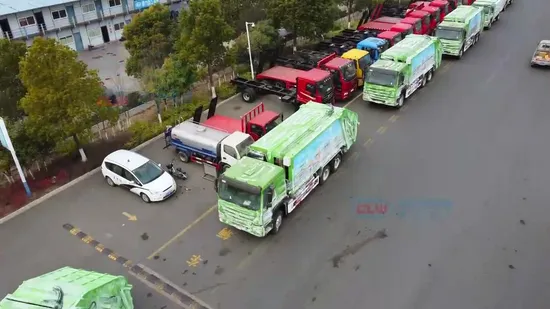
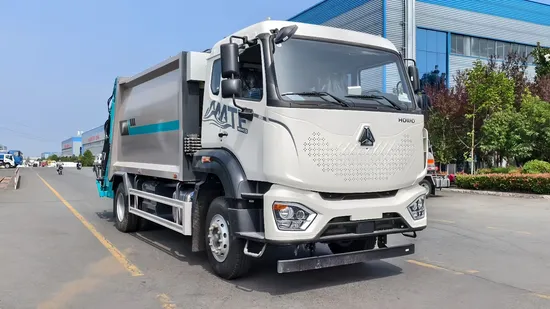
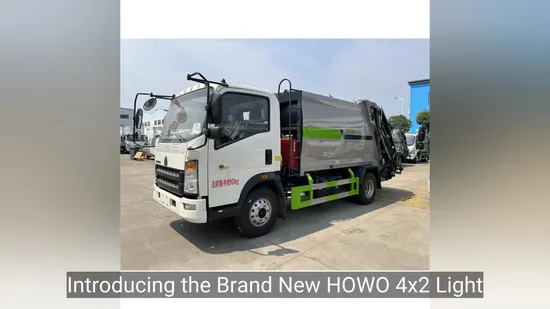
The Kmc 4x2 Mini Compactor Garbage Truck, model CLW5041ZYSK4, is a compact refuse truck with a body of about 3m3. It has a two-seat cab, a diesel engine of 2300 ml, a manual gearbox and a sealed dustbin arrangement with hydraulic compression. It is designed for alleys, pedestrian zones, villages, parks and older districts where only a very small vehicle can pass.
Where this truck is used
Very small trucks are chosen for access, not for volume. Typical settings are lanes narrower than a normal truck, estates with tight gates, tourist areas with limited road width, and collection points reached through arches. The overall dimensions are 5995 × 1920 × 2480 mm and the wheelbase is 2800 mm.
The approach and departure angles are 19 and 12 degrees. The front and rear overhang figures are 1100 and 1795 mm. Those numbers matter on ramps, kerbs and uneven yards, because a long rear overhang can scrape when the truck leaves a steep driveway or a loading dock.
A small body also gives drivers an advantage at the tipping point. The truck is light, quick to position and easy to reverse into small transfer bays. In places where many small trucks feed one larger vehicle or one container, a mini compactor can tip repeatedly in a short time without tying up the site.
Equipment and operating system
The truck has a hermetic dustbin, a hydraulic system and an operating system, with automatic compression and unloading. A sealed bin keeps odour and liquid inside the body, which is helpful when the truck passes close to people. Automatic compression means the operator starts the cycle and the hydraulic system completes it.
The truck also has a sewage arrangement for collecting liquid from the waste. Ask for the tank volume and the way it is drained. In a small truck, a liquid reservoir fills quickly on wet routes and should be emptied at each stop at the depot.
Chassis and drivetrain
The engine capacity is 2300 ml, with a manual gearbox and a diesel fuel system. The maximum speed is 100 km/h. The leaf spring arrangement is 9/8+4, and the tyres are 6.50-15. Axle loads, the front track and the rear track should be reviewed when the final body is confirmed.
The cab seats two people, so a driver and one loader. A small crew fits the size of the truck, but it also means the workload for each person is higher. Plan routes so that the stops are short and the bins are easy to reach from the road, which keeps the loader's work manageable.
Maintenance and daily checks
On a small vehicle the same components work close to their limits all day, so simple daily checks pay off. Look at tyre pressures, engine oil, coolant and the hydraulic oil level. Inspect hoses and cylinder rods for leaks, and make sure the bin lid or tailgate seals close evenly.
Wash the inside of the body at regular intervals. Small bodies concentrate odour quickly, and dried waste in the corners makes the compression stroke less effective. Keep the access routes clear for the loader, and do not overfill the body beyond what the hydraulic system is designed to compress.
What to confirm before ordering
The weights, the payload and the emission level depend on the configuration and are confirmed in the quotation. Ask for the gross weight, the curb weight and the rated load to be stated together for one specific vehicle, and for the body volume to be confirmed at about 3m3.
Check also the drive side, the colour, the tank volume, the tyre size and any extra equipment. A short description of the narrowest point on your route will help us confirm that the dimensions are suitable before you decide.
Request a current quotation for your selected configuration, quantity and delivery terms.