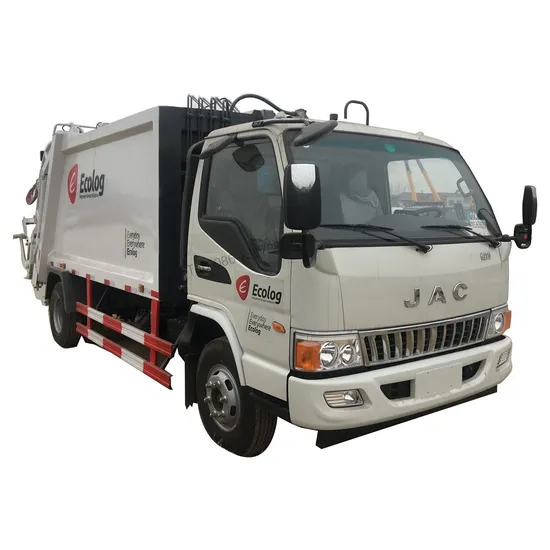
The JAC 4x2 Compressible Garbage Truck is a compactor refuse vehicle on a JAC chassis, designed for door-to-door and street waste collection. It uses a diesel engine, a five-speed manual gearbox and a 4x2 drive layout, and it is built to the Euro 5 emission standard. The compactor body presses waste so that more fits into each round.
This is a small, manoeuvrable refuse collector, suited to residential streets, markets, campuses, business parks and narrow service roads. Where a full-size compactor would be too long or heavy to reach the bins, a vehicle of this size can complete the route and return to the disposal point with fewer trips.
Typical working routines
A collection crew brings the bins to the truck, loads the waste into the loading opening, and operates the compaction cycle so the material is pushed into the body. Repeating this at each stop fills the body steadily. The driver watches the body fill level and heads for the disposal point when it is full.
Short stops and frequent starts are normal in this work, so a five-speed gearbox, a compact wheelbase of 3815 mm and a body width of 2150 mm are practical on narrow routes. Planning the route so the truck finishes near the disposal site with a full body keeps fuel use and driver time low.
Chassis, engine and drivetrain
The chassis is JAC and the engine is a Yunei diesel rated at 95 kW. The gearbox has five forward gears and one reverse, and the tyres are 8.25-16. Gross vehicle mass is 8495 kg and kerb weight is 5800 kg, which gives the vehicle a modest overall size and weight for city streets.
Overall dimensions are 7240 × 2150 × 2600 mm. Height matters for low gates, tree branches and covered loading bays, so measure the tightest point on your route against the 2600 mm figure. Body colour follows your request, and chassis alternatives can be discussed when you ask for customisation.
Maintenance and daily checks
Compactor bodies work hard under repeated loading, so a short check before each shift pays off. Look at the hopper area for trapped material, check for fluid leaks around the compaction mechanism, and confirm that lights and warning devices work. Clean residue from the body at the end of each day so that corrosion does not start in damp corners.
On the chassis, follow the engine, gearbox and axle service intervals from the chassis maker, and check tyre pressures often, as refuse routes involve kerb contact. Keep a record of faults reported by the crew, because patterns in these notes help our team advise on spare parts and body adjustments.
What to confirm before ordering
Please confirm the compactor body volume you need, because the final figure depends on the configuration and is confirmed in the quotation. Also confirm the payload you expect to carry, the drive side, and the emission standard; Euro 5 is the standard for this model, but tell us if your requirement differs.
Tell us whether you need a bin lifting device, cameras or extra warning lights, and which body colour you want. Describe the width of your streets and the waste type you collect, wet or dry, so that our team can recommend a body arrangement that suits the actual route.
Request a current quotation for your selected configuration, quantity and delivery terms.