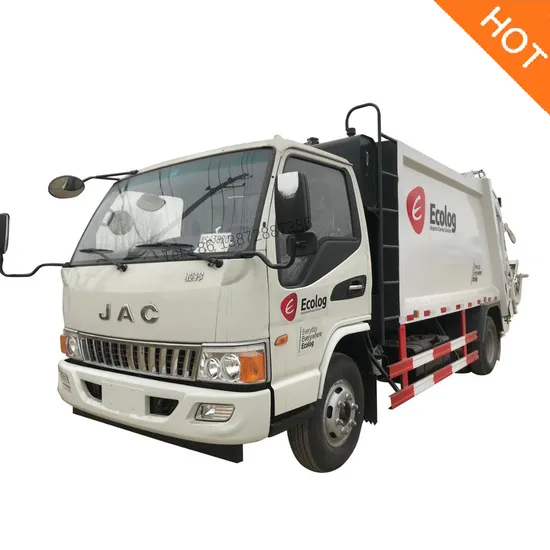
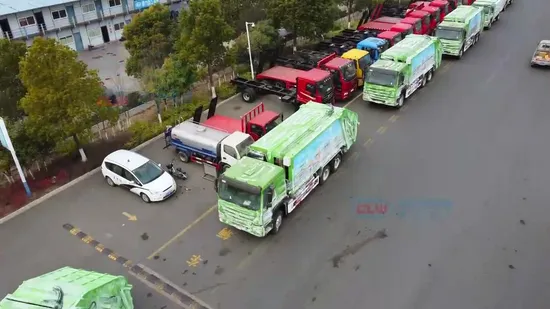
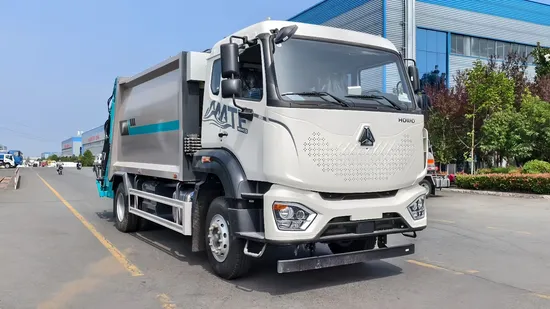
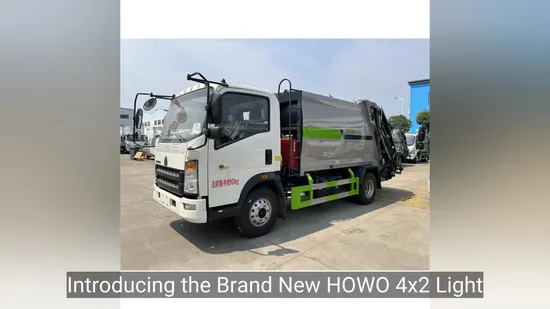
The JAC 4x2 Compactor Garbage Truck 6000L Euro 5, model CLW5080ZYSH5, is a compression-type refuse truck on a JAC two-axle chassis, powered by a diesel engine with a manual gearbox. It carries the Chengli brand and is built for regular door-to-door and street-bin waste collection, with the colour chosen by the buyer.
Typical users are city sanitation departments, residential communities, industrial parks and private waste contractors. The compactor body presses the waste to a smaller volume, so the truck can stay on its route longer between unloading trips. A 4x2 format also makes parking and turning easier than a three-axle truck would.
Where this truck is used
In practice the truck is used on early-morning collection rounds, where it moves slowly from stop to stop and the crew loads bins by hand or with their usual lifting equipment. The body takes the waste, compresses it, and its tank holds liquid that drains from the load. The wheelbase is 3815 mm, which helps in lanes with limited space.
Check the overall size of 7240 × 2150 × 2600 mm against the narrowest street, bin store entrance and depot door on your route. The vehicle height matters most where there are canopies, cables or tree branches. When access is tight, a measured site check before ordering saves problems later.
Chassis, engine and drivetrain
The chassis is JAC and the engine is listed as a Yunei unit with an output of 95 kW. Power goes through a five-speed manual gearbox with one reverse gear. Tyres are 8.25-16, with six fitted and a spare. The emission standard and final engine output are confirmed in the quotation.
Gross vehicle mass is listed as 8495 kg, with a kerb weight of 5800 kg. The difference is what remains for the waste, the water in the tank, the crew and equipment. When you plan routes, compare the typical weight of wet household waste with the payload confirmed in the quotation, not just the body volume.
Body and daily care
The configuration lists a carbon steel tank, and the body volume depends on the configuration and is confirmed in the quotation. A compression-type body uses a hydraulic mechanism to push waste into the body and press it, so keeping hydraulic oil clean and hoses sound is the main maintenance task.
At the end of each shift, wash out the filling area, drain the tank and look for leaks at hose connections. Check the tyres, lights and brakes before the next round. A short written daily checklist kept in the cab helps drivers on different shifts follow the same routine and report faults early.
What to confirm before ordering
Confirm the drive side and the emission standard first, since both affect registration. Then ask for the rated payload and the body volume in writing, because both depend on the configuration and are confirmed in the quotation. Confirm the colour you want, since the finish is arranged according to customer requirements.
Ask whether you need extra items such as a tool kit, warning lights or reversing aids, and how they would be fitted. Quote the model number CLW5080ZYSH5 in your enquiry so the correct specification is used. Describe your route length and the waste you collect so the setup can be matched to your needs.
Request a current quotation for your selected configuration, quantity and delivery terms.