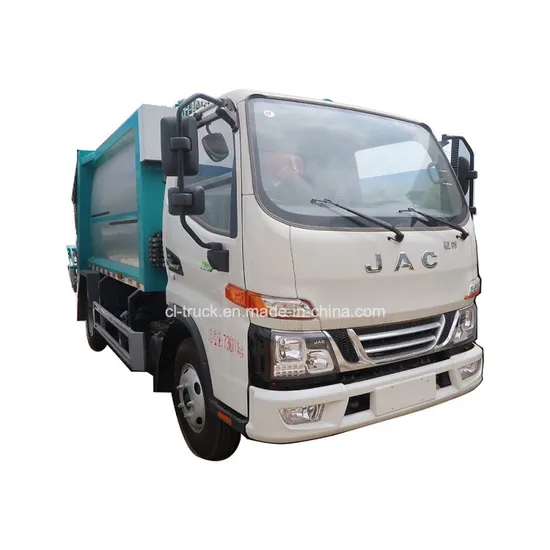
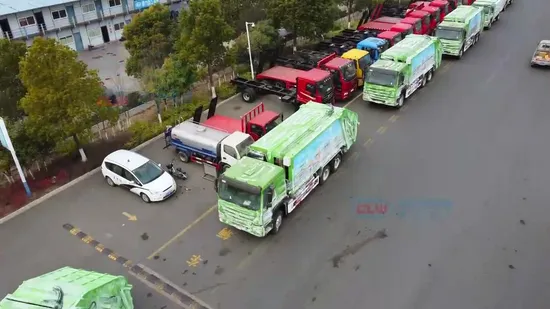
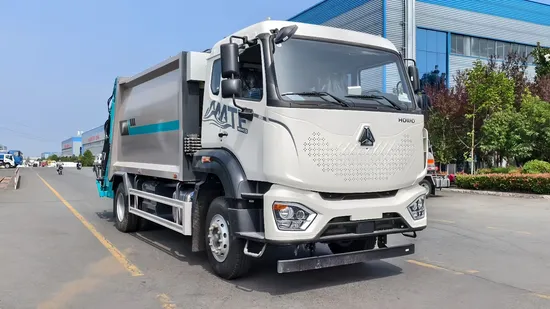
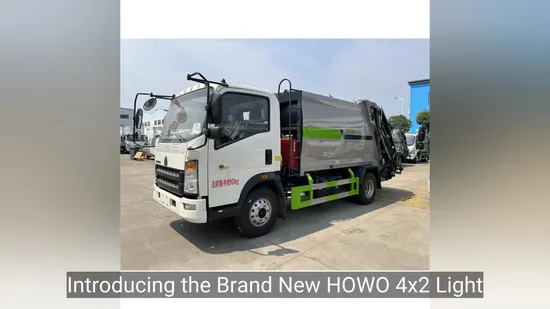
The JAC 4x2 Compactor Garbage Truck 5000L Euro 5 is a small compression-type refuse collector built on a JAC chassis and sold under the Chengli name. It runs on diesel with a five-speed manual gearbox, and the final body volume is confirmed in the quotation to match your collection needs.
It suits municipal sanitation teams, property management companies and contractors that collect waste from streets, compounds and bin points where a heavy truck is hard to use. A compacting body means the crew can serve more stops before unloading, which shortens the number of trips to the disposal site.
Typical working routines
A day on this truck usually starts with a check of the hydraulic oil, tyres and lights, followed by a route of short stops. Bins are emptied into the body and the waste is pressed by the compaction mechanism. When the body is full the truck drives to the transfer or disposal point and unloads.
Because the chassis is a compact 4x2 with a wheelbase of 3815 mm, it can work in lanes where a larger truck would struggle. The overall dimensions are 7240 × 2150 × 2600 mm. Check these against gateways, bin enclosures and overhead obstacles on your route before deciding on the body size.
Chassis, engine and drivetrain
The engine is listed as a Yunei unit rated at 95 kW, matched to a gearbox with five forward speeds and one reverse gear. The tyres are 8.25-16, fitted as six plus one spare. Gross vehicle mass is listed as 8495 kg and kerb weight as 5800 kg, which leaves the rest of the mass for the waste load, water and crew.
Diesel fuel and a manual gearbox keep the driveline simple and familiar to most drivers and workshop staff. The emission standard is confirmed in the quotation, so state the standard your area requires when you enquire. The same applies to the final output of the engine, which should be confirmed alongside the gearbox details.
Body, tank and materials
The compactor body and its tank are described as carbon steel in the configuration. The body volume depends on the configuration and is confirmed in the quotation. Choose the size by the amount of waste your route produces between unloading trips, and by the weight of that waste, since wet refuse is dense.
Carbon steel needs care around a refuse body, where moisture and acidic liquids collect. Rinse the body and tank after each shift, drain the tank at the disposal point and touch up any damaged paint quickly. These simple routines slow corrosion and keep the pressing mechanism free of build-up that could affect its movement.
What to confirm before ordering
Confirm the drive side first, since it is fixed in the quotation. Then confirm the emission standard, engine output and rated payload in the quotation, because the payload figure depends on the configuration. Ask what colour options are open to you, as the finish is chosen according to customer requirements and customisation is available.
Ask also about optional equipment, such as the tank arrangement, tool storage and any camera or warning devices you need. These are not part of the details described on this page, so list them in your enquiry. A clear description of your route and waste type helps the body size and hydraulic setup to be matched.
Request a current quotation for your selected configuration, quantity and delivery terms.