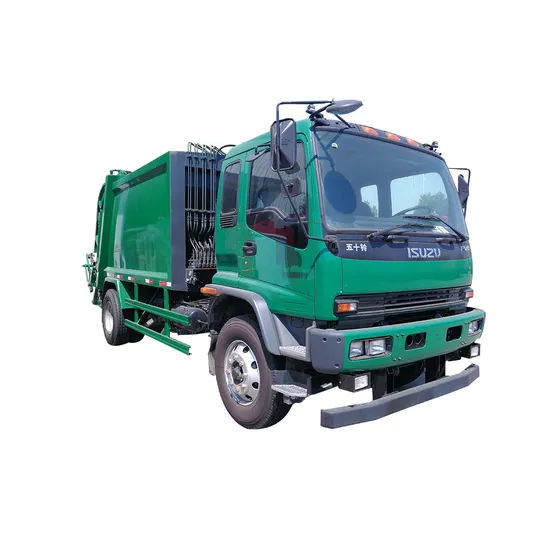
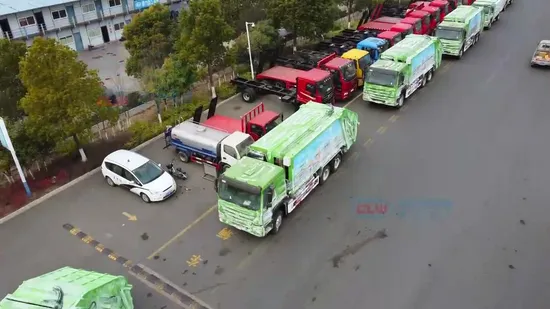
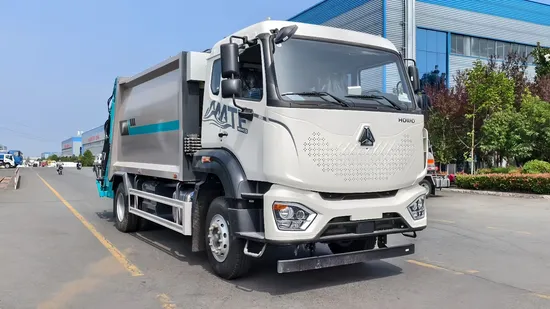
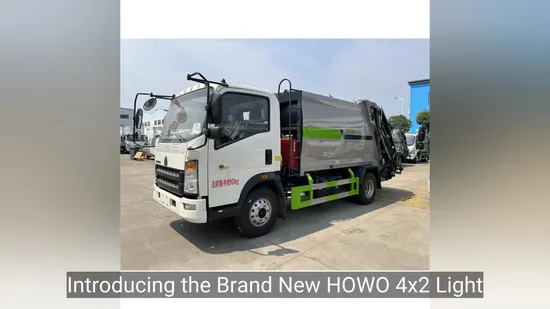
The Isuzu FVR 4x2 Compactor Garbage Truck is a medium-size refuse collector with a left-hand-drive cab, a 12 m³ compression body and a manual gearbox. It is offered in the 8-12 ton class with Euro 5 emission. Where a light compactor fills too quickly and a heavy 6x4 is more than the roads need, this model fills the middle: it suits town cleaning departments, district waste contractors and industrial estates with several large collection points.
Where this truck is used
A 12 m³ body gives a crew time to cover a long route before heading to the tipping point. Typical work includes weekly collection from housing blocks with shared bins, daily pick-up from markets and shopping centres, and rounds through business parks where skips and wheeled bins are mixed.
With an overall size of 8730 × 2470 × 3330 mm and a wheelbase of 4500 mm, the truck needs more room than a mini compactor. Check turning space at the depot, height under any gates, and the width of the narrowest street on the route before settling on this size.
Compactors of this class also work well as the main truck of a mixed fleet. Smaller trucks collect from the narrow streets and bring the load to a transfer point, while the 12 m³ truck takes the long, high-volume rounds. Planning the fleet this way keeps each vehicle on the kind of route it handles best.
Chassis, engine and drivetrain
The engine is a 4HK1-TC50 of 5.193 L displacement, rated at 205 HP and 151 kW. It is a four-stroke, water-cooled, intercooled diesel that meets the Euro 5 standard. Power goes through a six-speed manual MLD gearbox with one reverse gear, and steering is power assisted. The brakes are air operated.
The front axle is rated at 6.3 tons and the rear axle at 13 tons, running on 10.00R20 tyres, six fitted with one spare. Curb weight is 9420 kg and maximum speed is 90 km/h. These ratings are the ones to compare against the axle regulations on your roads, together with the final laden weight after the body is fitted.
Cab and operator features
The cab seats three people, which suits a driver and two loaders. Standard equipment includes electric windows, a USB port, a radio and central locking. These are small points, but on a truck that works long shifts they affect how well the crew copes with the day, and central locking helps when the vehicle is left at stops.
The electrical system is 12V/24V, so confirm whether the chassis and body equipment work on one voltage or use separate circuits, because it affects battery replacement and the choice of lamps and accessories.
Body and hydraulic system
The compactor body is made of 4 mm plate on the sides and 5 mm on the bottom. A hydraulic system with a pressure of 16 MPa operates the compaction mechanism. Loading takes 8-10 seconds, the complete loading cycle takes 50-60 seconds per turn and unloading takes 30-40 seconds.
A 200 L sewage tank collects liquid from compressed waste. One tool box is standard equipment. The colour of the cab can be white or blue, with the box colour selectable. Hydraulic hoses, tailgate seals and the sewage outlet should be on the daily inspection list.
What to confirm before ordering
Payload class and the exact body volume depend on the configuration and are confirmed in the quotation. Ask for a single set of figures written against the vehicle you will actually receive.
Also confirm the drive side, the voltage of the electrical system, the tyre specification and whether any extra equipment is needed, such as a rear camera or additional work lights. Share the typical weight of your waste and the length of the route so the configuration can be checked against your use.
Request a current quotation for your selected configuration, quantity and delivery terms.