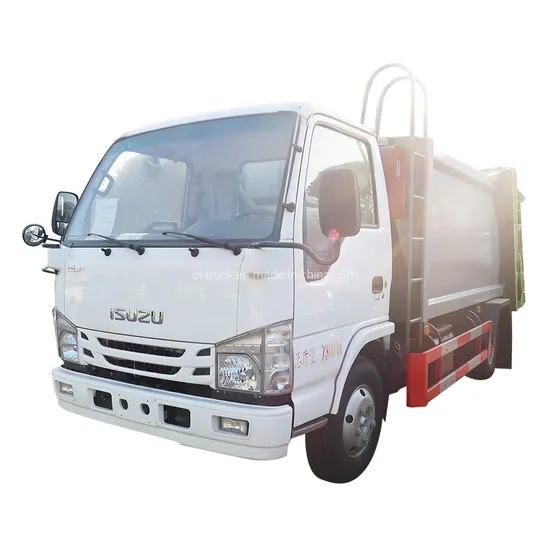
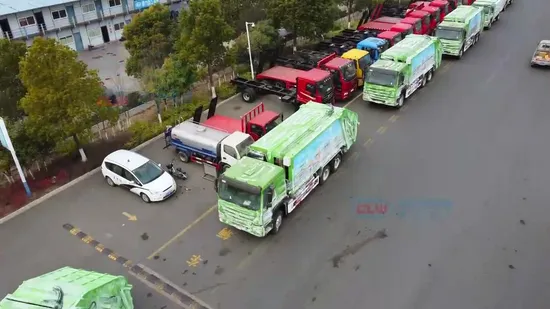
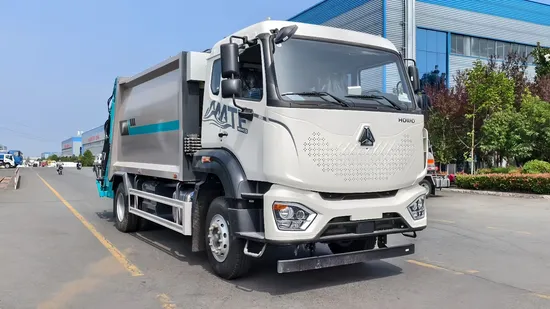
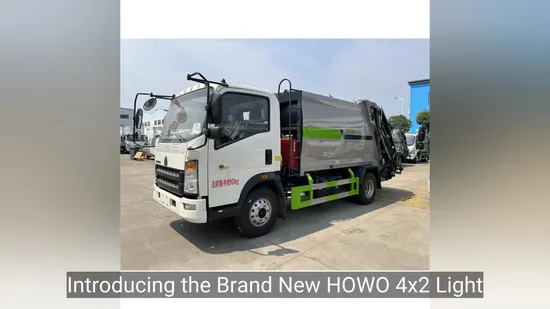
The Isuzu Elf 4x2 Garbage Compactor Truck Euro 5 is a small refuse collection vehicle built on a two-axle Isuzu Elf chassis, with a hydraulic compactor body mounted behind the cab. It carries the model name 100p garbage compactor truck and is supplied with left-hand drive as standard, while right-hand drive can be arranged on request.
It suits narrow streets, housing estates, trading streets and small commercial areas where a larger truck cannot turn or park easily. The compacting body lets one crew collect more waste per trip than an open tipper of similar size, which reduces the number of runs to the transfer point or disposal site during a shift.
Where this truck is used
A small compactor of this kind is normally assigned to routes with short distances between stops, such as residential lanes, campus roads, small town centres and service areas around shops. The 2.5 ton front axle, the 4.8 ton rear axle and a wheelbase of 3360 mm point to a compact vehicle intended for tight access rather than long-distance work.
Waste is loaded into the body and a hydraulic pressing mechanism pushes it forward and compresses it. Because the load is compressed, the same body volume holds more material than loose waste would. Crews therefore spend less time driving to unload and more time collecting along the route during each working day.
Chassis, engine and drivetrain
The engine is a 4JB1CN unit, a four-stroke, water-cooled, intercooled straight-four of 2.999 litres with a maximum output of 72 kW, equal to 98 HP. The exact engine version and its emission standard depend on the configuration and are confirmed in the quotation. Power goes through a five-speed manual gearbox with one reverse gear.
Steering is power assisted, and the braking system is an oil brake with a vacuum pump. Standard tyres are 7.00-15, supplied as six tyres plus one spare. The maximum speed is 98 km/h, though in refuse work the truck spends most of its time at low speed with frequent stops and starts.
Compactor body and hydraulics
The body uses 4 mm side plate and 5 mm bottom plate, and the truck carries a 200 L sewage tank for liquid that drains from the waste. The unloading method is dump, meaning the body is raised and the load is discharged by tipping. The final body volume is confirmed in the quotation, so state how much waste you collect per round.
The working figures are a loading time of 8 to 10 seconds and a full loading cycle of 50 to 60 seconds per turn, with unloading taking 30 to 40 seconds. Hydraulic system pressure is 16 MPa. The fill volume is 1.2 cbm, and curb weight is approximately 4550 kg.
Cab and dimensions
The cab has a sound system and parking sensors as standard items. Parking sensors are useful on a truck that spends much of its day reversing into lanes and bin areas. The finish is chosen according to customer requirements, with white and yellow for the cab and box, and the final colour scheme is agreed in the quotation.
Dimensions are another point to settle. The final overall length is confirmed in the quotation, while the width is 1880 mm and the height 2600 mm. Check those against gateways, overhead cables, bin enclosures and depot doors on your route before you decide on the final body arrangement.
What to confirm before ordering
Confirm the drive side first: left-hand drive is the standard, and right-hand drive can be arranged on request. Then confirm the emission standard and engine version, because Euro 5 appears in the model name while the engine details depend on the configuration. Payload and body capacity should also be written into the quotation.
Ask which colours are available, whether the cab and the box can differ, and what spare tyre and tool equipment come with the truck. Also describe your waste, for example mixed household refuse or commercial waste, and your typical route length, so that the body size and hydraulic setup can be checked against real use.
Request a current quotation for your selected configuration, quantity and delivery terms.