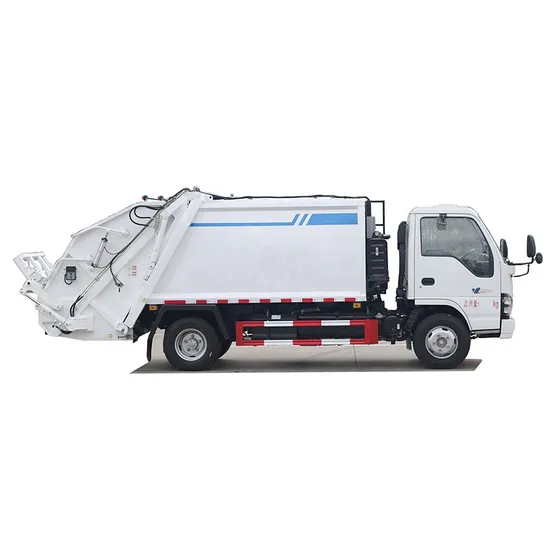
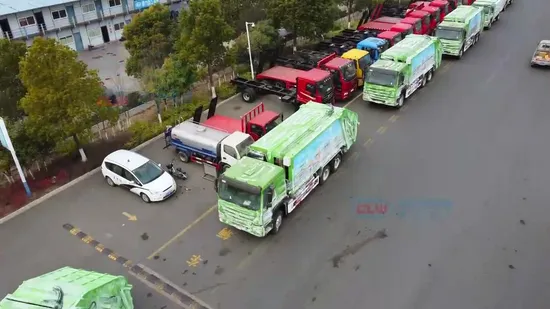
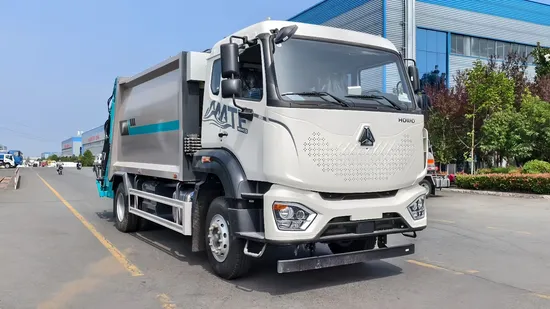
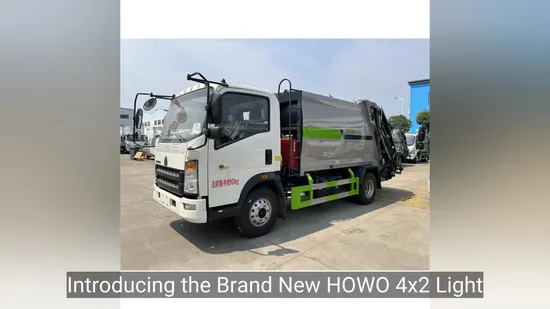
The Isuzu 6m3 Compression Garbage Truck 120HP is a small urban refuse compactor with an arc-shaped 6m3 body. It uses a 4KH1-TCG4O diesel engine rated at 120 HP on a two-axle chassis with a 3360 mm wheelbase, a gross weight of 7300 kg and a kerb weight of 5300 kg.
It is meant for daily kerbside and bin collection in towns, housing areas and commercial streets where a light, manoeuvrable truck is preferred. A compression body presses waste into the box, so each trip carries more than a simple tipper of the same size would hold.
Engine, chassis and running gear
The 4KH1-TCG4O engine has a displacement of 2999 ml and develops 120 HP on diesel fuel. Maximum speed is 100 km/h. Tyres are 6.50R16LT 14PR, with six tyres fitted and one spare, and the approximate overall dimensions are 6650×2050×2750 mm.
The emission standard can be Euro II, Euro III or Euro V, so it is a choice to be made when ordering rather than a fixed feature. Pick the level your registration and fuel quality require, because it affects the engine tuning and the cost of operation.
Body and compression
The arc-shaped body is made from Q345 manganese steel, with 5 mm on the bottom plate and 4 mm on the side plates. The compression ratio is 1:2.5 or more, and compressed garbage density is 0.5 to 0.8 t/m3. That density range is useful for estimating how much weight a full body carries.
Working pressure is 16 MPa and a power takeoff is included to drive the hydraulics. Loading and unloading time are each under 30 seconds. An emergency stop is available, and the electrical supply is 12V or 24V, which should be fixed in the quotation.
Safe daily operation
Crews should know where the emergency stop is and test it at the start of a shift. Keep people clear of the hopper while the blade is moving, and do not reach into the loading area unless the hydraulics are stopped. Clean the hopper at the end of the day to prevent build-up.
Check tyre condition, hydraulic oil level and hose connections, and watch for leaks around the cylinders. Because the truck is light, avoid exceeding the weight rating by pressing in more waste than the body is meant to hold. Weigh a few full loads to learn the real figure for your waste.
What to confirm before ordering
Confirm the emission standard, the electrical voltage, the steering side, the body volume and the exact payload. Emission and voltage each have several options, so ask for a single configuration. Also confirm the bin-lifting interface that matches your containers.
Ask whether the compression ratio, working pressure and cycle times in the specification are the values for your finished truck. Request the dimensions of the finished vehicle and compare them with the narrowest points on your route. These checks make the quotation a reliable description of the vehicle you will use.
Request a current quotation for your selected configuration, quantity and delivery terms.