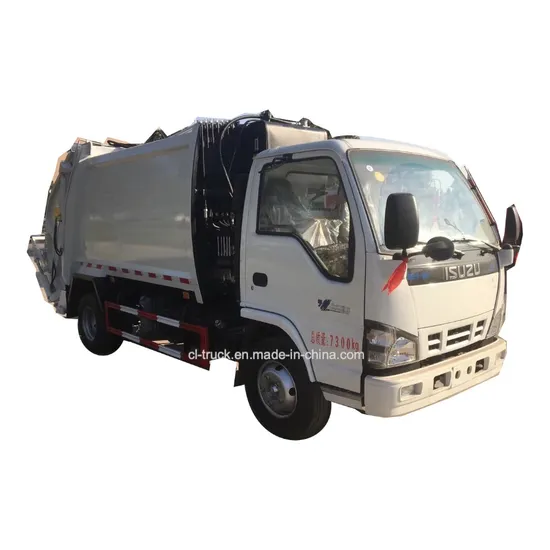
The Isuzu 600P 4x2 Compactor Garbage Truck 5-6 Ton is a compact refuse truck on an Isuzu 600P chassis, with a diesel engine, a 4×2 drive layout and a manual gearbox. Its rear-loading compactor body squeezes waste as it is collected, so the truck can finish more stops before heading for the disposal site.
Municipal sanitation teams, property management companies and private waste collectors are the usual buyers. It is a sensible size for lanes, compounds, markets and streets where a larger compactor would struggle to turn, yet it still gives crews a proper compression body instead of a plain open box.
Where this truck is used
Daily collection from residential blocks, shops, offices and small markets is the core use. Workers lift bins or sweep bags into the hopper at the rear. Because the hopper volume is 1.2 cbm, small loads can be tipped in quickly, and the compaction stroke follows without the crew leaving the back of the truck.
Loading takes roughly 10 to 12 seconds per cycle and unloading about 30 to 40 seconds. Wet waste releases liquid, and a 200-litre sewage tank at the body collects it. Empty this tank on schedule so that it does not overflow on the way to the disposal point.
Engine, gearbox and running gear
Power comes from an Isuzu 4-cylinder inline diesel of 2.999 L, rated 88 kW, water-cooled, inter-cooled and turbocharged. The quotation states the output option for your build. The MSB manual gearbox has five forward gears and a reverse, and power steering makes frequent manoeuvres easier.
Oil brakes act on the wheels. The wheelbase is 3360 mm, the tyres are 7.00-16 with six on the road and a spare, and the axles are rated 2.5 tons front and 4.8 tons rear. Maximum speed is 90 km/h. Empty weight is 5805 kg, and the cab is left-hand drive, with right-hand drive on request.
Body and hydraulic system
The body has 4 mm side and bottom plate. The hydraulic system operates at 16 MPa to drive the compaction and discharge movements. Keep an eye on oil temperature and level, and look for weeping at hose joints; small leaks are far cheaper to fix early than after a failure on a busy route.
Wash the hopper and body interior after each shift to limit odour and corrosion, and grease the moving joints according to the maintenance schedule. A clean machine is also easier to inspect, which helps your crew catch cracks or damaged seals before they become costly repairs.
What to confirm before ordering
Please confirm the body volume, the payload rating, the engine output option, the emission standard and the drive side. These figures depend on the configuration and are confirmed in the quotation. Tell us also your preferred colour and any extra equipment you need.
It helps our team if you describe your routes, including bin type, road width and distance to the disposal site. We can then advise whether this body size suits one trip per shift or several, and make sure the quotation covers everything your crew needs to work safely.
Request a current quotation for your selected configuration, quantity and delivery terms.