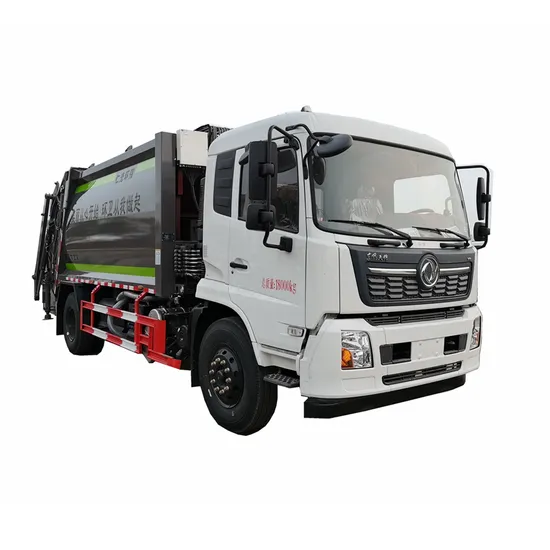
The Dongfeng Garbage Compactor Truck 12-14m3 is a diesel refuse collection truck on a Dongfeng chassis, with a compactor box of 12 to 14 m³. It carries a payload of 8150 kg and has a gross weight of 18000 kg. It is powered by an ISB 180 engine of 180 hp (132 kW) and meets the Euro V emission standard.
It suits municipal sanitation departments, waste contractors and large estates that collect household and commercial refuse on regular routes. Compacting the waste in the box means the truck carries much more material per trip than an open tipper, which reduces the number of runs to the disposal site.
Where this truck is used
Compactor trucks serve residential streets, markets, commercial districts and industrial parks where bins or bags are put out for collection. Crews load waste at the rear, and the compaction mechanism presses it into the box to make room for more. A route may include many stops, so the truck must cope with frequent starts and low speeds.
Planning the round is as important as the truck. Match the number of stops to the box volume so that the truck is full when it reaches the disposal point, rather than half empty or overloaded. With a 12 to 14 m³ box and a payload of 8150 kg, crews should watch the weight of dense, wet waste.
Chassis, engine and drivetrain
The engine is an ISB 180 producing 132 kW (180 hp) from a displacement of 5900 ml. Fuel is diesel and emissions meet Euro V. The transmission is an 8-speed manual, power steering is fitted and the brakes are air operated. The wheelbase is 5000 mm and the tyres are 10.00R20.
The overall dimensions are 8650 × 2480 × 3150 mm. The tare weight is 9840 kg and the gross weight is 18000 kg. Before placing an order, check the height against bridges, tree branches and building gates on your collection round, and check the length against the turning room at the transfer station.
Compactor box and body
The box volume is 12 to 14 m³. Compaction raises the amount of waste that fits in the box, so the truck can work more of the round before it must unload. How much the waste is compressed depends on its type: paper and plastic compress well, while wet organic waste, glass and construction debris compress less.
Keep the loading area clean, and wash the box and the rear loading opening after every shift to reduce smell and corrosion. Check the moving parts of the compactor for wear on a regular schedule, and ask your crew to report any unusual noise. Liquid leaking from the box should be dealt with quickly, since it affects the roads you drive on.
What to confirm before ordering
Please confirm the drive side. Right-hand drive can be arranged on request. Confirm also the emission standard you need for registration and the exact box volume within the 12 to 14 m³ range. The final payload and weight figures are confirmed in the quotation together with the chassis rating.
Tell us about the type of waste you collect, whether the crew will load by hand or with other lifting equipment, and the length of your route. Mention any extras such as lights or special markings, and the colour you want. We use these to prepare a configuration that matches your collection work.
Request a current quotation for your selected configuration, quantity and delivery terms.