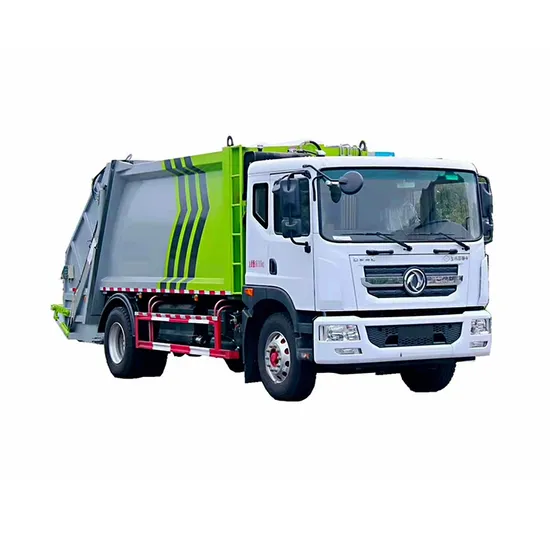
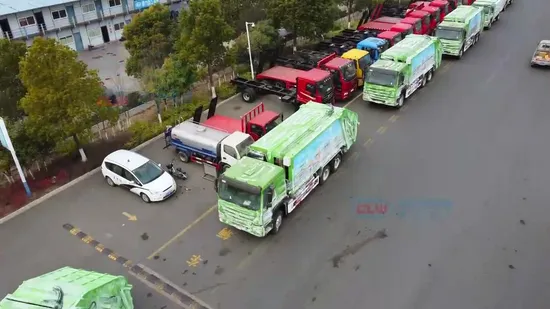
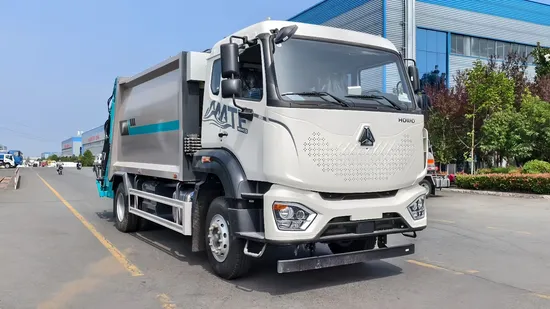
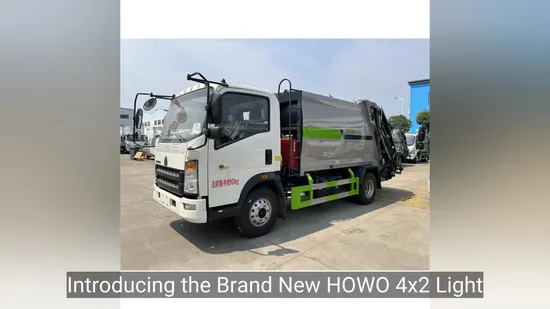
The Dongfeng 8m3 LNG Compressed Garbage Truck 160HP is a refuse compactor built on the Dongfeng EQ1120GL6NJ chassis and powered by a gas engine. It carries an 8m3 compression body, comes with left-hand drive as standard (right-hand drive is available on request), and is aimed at municipal fleets and contractors who want a compactor that runs on liquefied natural gas rather than diesel.
Compression bodies of this kind collect household and commercial waste from kerbside bins, press it into the body and carry more material per trip than an open tipper. A gas-fuelled chassis suits operators with a fixed depot where refuelling can be organised, and the Euro VI emission level suits routes with strict air-quality rules.
Chassis, engine and drivetrain
The chassis model is EQ1120GL6NJ with an engine type of YCS04160N-60. Maximum power is 118kW, equal to 160hp, from a displacement of 4.15L, and the emission level is Euro VI. The wheelbase is 3950 mm and left-hand drive is standard. We confirm these figures in the quotation.
The gross vehicle weight is 12400 kg and the curb weight is 9200 kg. The exact load capacity is confirmed in the quotation, because it depends on the final body, fuel system and equipment fitted, so plan route tonnage with some margin.
Body size and layout
Overall dimensions are 7850×2500×3250 mm, which gives a fairly compact footprint for an 8m3 compactor. Before choosing this truck, compare the width and height with the narrowest lanes, low gates and covered depots on your collection routes. Turning space at transfer points also matters with a wheelbase of 3950 mm.
A compression body works in a repeating cycle. Waste is tipped into the rear hopper, a hydraulic mechanism typically pushes it forward into the body, and the load is pressed and later ejected at the disposal site. Ask which loading method and which bin-lifting interface suit your containers, since both affect daily productivity.
Fuel and daily operation
Running on LNG changes daily routines compared with a diesel truck. The gas cylinder capacity is 240L, and the usable range between fills depends on that storage, the route and the stop-start pattern of collection. Work out how many stops and how many kilometres a shift involves, then confirm the range expected from this build.
Gas fuelling needs trained staff and a suitable filling point, and the gas storage should be inspected as part of the daily walk-round. Drivers should be briefed on the correct start-up and shut-down routine for the gas system. Keep a record of fills so that fuel use per shift can be tracked and compared with expectations.
What to confirm before ordering
Confirm the steering side first. Left-hand drive is standard and right-hand drive is available on request. Also confirm the emission standard needed for your registration, the final load capacity, the compression body details, and whether the 240L gas cylinder capacity matches your range requirement.
Ask for a written configuration sheet covering the chassis model, engine type, body volume, hydraulic system and safety equipment. Request the loading and unloading cycle times if they matter to your route planning. Matching the quotation to your own site conditions avoids surprises at handover.
Request a current quotation for your selected configuration, quantity and delivery terms.