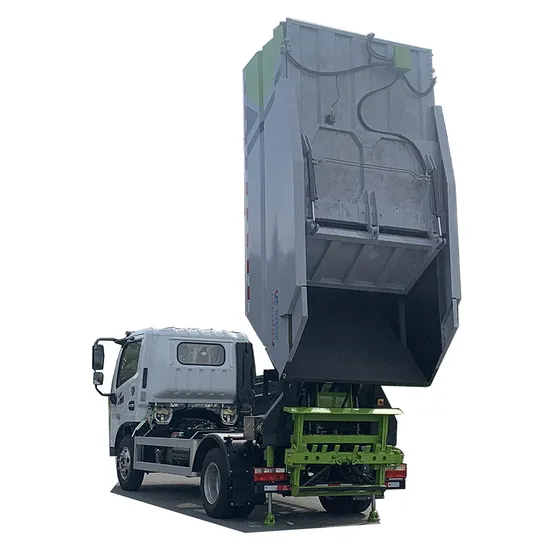
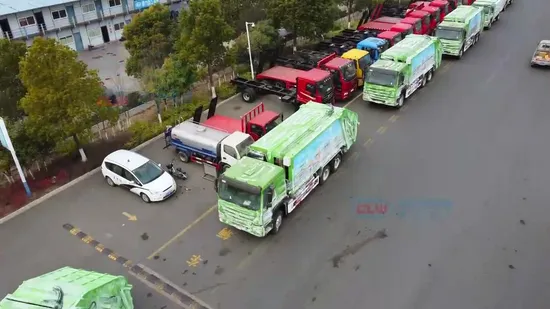
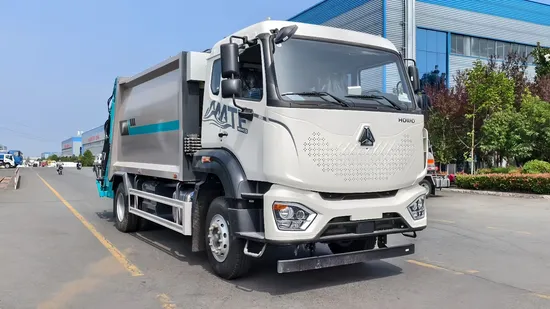
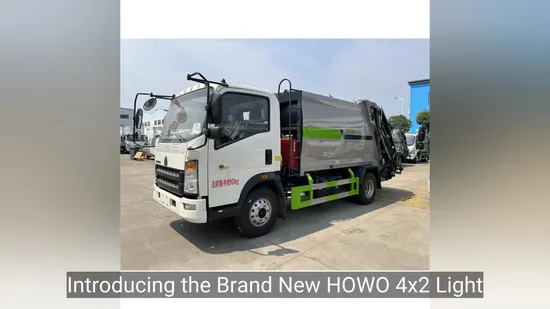
The Dongfeng 7m3 Hydraulic Lifting Box Compactor Truck is a rear loading refuse compactor on the Dongfeng EQ1075SJ3CDF chassis with a 4×2 drive layout. Its 7 m³ body compresses waste as it is loaded and uses a hydraulic lifting box to tip the contents out at the disposal point.
It is meant for collection rounds where a mid-sized vehicle is more useful than a heavy one. Typical users are municipal cleaning teams, residential estates and contractors serving compounds, markets and narrow streets. The 95 kW diesel engine provides steady power for repeated stop and start work.
Typical working routines
A shift usually starts with a walk-around, then the truck moves along the route while crew members load bags and bin contents into the rear hopper. The compaction plate presses each load forward into the body, so the truck can keep collecting long after an uncompressed body would be full.
When the body is full, the driver goes to the disposal point and the hydraulic lifting box raises the body to discharge the compressed waste. The truck then returns to the route. The short body and 3,360 mm wheelbase make this routine workable in areas where larger compactors struggle to turn.
Chassis, engine and drivetrain
The EQ1075SJ3CDF chassis has two axles and a gross vehicle weight of 7,360 kg. The engine is the D20TCIF1/CY4BK461, rated at 95 kW with a displacement of 3,707 ml, running on diesel and coupled to a manual gearbox. Tyres are 7.00R16, with six fitted and one spare.
The overall vehicle size is 5,750 × 2,020 × 2,580 mm. This compact footprint is the main reason to choose the 7 m³ class: it passes through gates, under low canopies and along service roads that restrict a full-size refuse truck.
Body, hydraulics and controls
The body is made from 4 mm carbon steel and has a ship-type cabin structure. Hydraulic outriggers are fitted at the rear and a hydraulic cylinder is mounted on the top of the body. The working pressure of the hydraulic system is 16 MPa, used for compaction and for raising the body.
A CAN control system manages the body functions, and operation can be either manual or electric on a 24 V supply. The bin lifting system for two 240 L bins is part of the equipment of this chassis family, and the exact lifting equipment on your truck is confirmed in the quotation.
Maintenance and daily checks
Check hydraulic oil level and look along hoses, cylinders and fittings for seepage at the start of every shift. Run the compaction plate and the lifting box through one cycle without load to confirm smooth movement, and make sure the outriggers extend and retract normally.
After the last load, wash out the hopper and body interior. Residue left in a refuse body shortens the life of the plate and the floor. Follow the engine service schedule, and talk to our team about replacement seals and hoses that are useful to keep available.
What to confirm before ordering
Please confirm the emission standard required for your fleet, the steering side, and the type of waste you collect, since these decide the final specification. Tell us how the truck will be unloaded, the height of any tipping structure at the disposal point, and the road width on your routes.
Painting follows the customer's requirement, so share your colour scheme and any logos. Additional lighting, cameras and other options can be discussed, and the payload figure and every optional item are confirmed in the quotation before the order is placed.
Request a current quotation for your selected configuration, quantity and delivery terms.