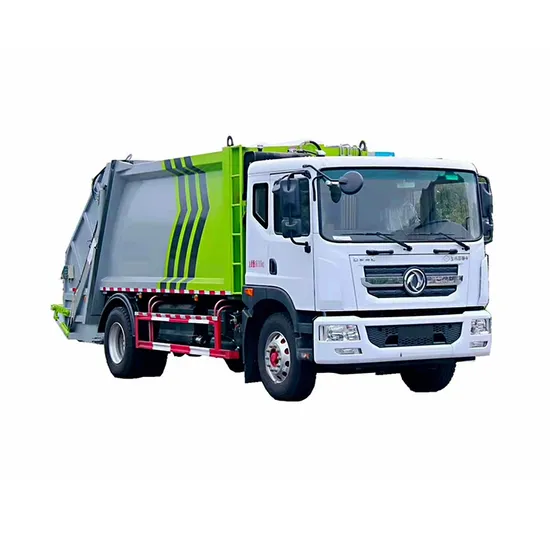
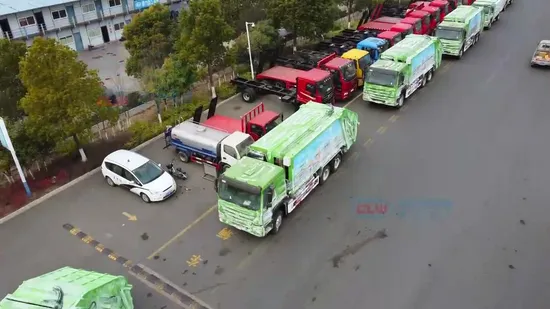
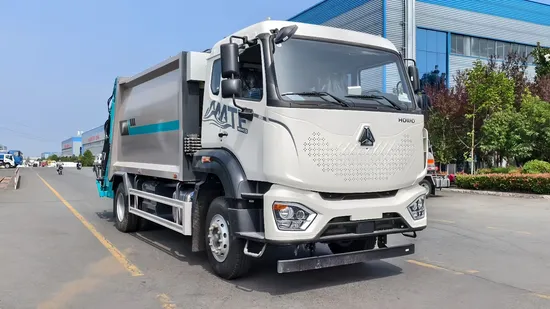
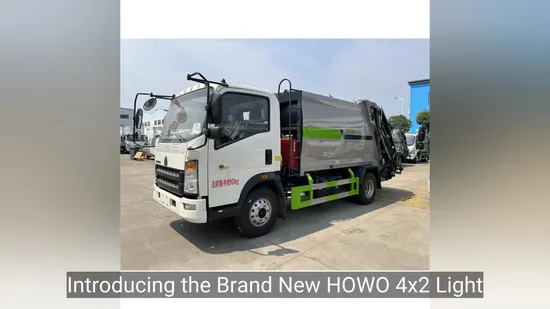
The Dongfeng 4x2 LNG Garbage Compactor Truck 8-10m3 is a refuse collection vehicle on a Dongfeng 4x2 chassis, model EQ1120GL6NJ, with a compaction body of 8 to 10 cubic metres. It has left-hand steering and a manual transmission, and it is intended for city and district waste collection.
It suits municipal sanitation departments, waste contractors, industrial parks and residential estates that collect bin waste on fixed routes. A compactor body presses the waste inside the body, so each trip carries more waste than an open tipper of similar size and the crew makes fewer journeys to the disposal site.
Where this truck is used
The truck works on regular collection rounds along streets, around housing blocks and through commercial areas. Crews load bins and bags at the rear, and the compaction mechanism presses the waste into the body, which keeps loose rubbish contained and helps limit litter and smell on the road.
The medium body size suits roads where a large refuse vehicle would be hard to turn, while still giving a useful volume for a full morning round. At the end of the round the driver goes to the transfer station or disposal site and discharges the compacted load.
Chassis, engine and drivetrain
The chassis is model EQ1120GL6NJ with a wheelbase of 3950 mm. The gross vehicle weight is 12400 kg and the curb weight is 9200 kg. The engine type is YCS04160N-60, with a displacement of 4.15 L and a maximum power of 118 kW, or 160 hp, driving through a manual transmission.
The LNG fuel arrangement is part of the specification of this model. It suits operators who plan fuel supply around natural gas stations, and who want to run a collection fleet on a gas fuel. Confirm the gas fuel system, the range between fills and the filling points on your routes in the quotation.
Compaction body and daily operation
The compaction body has a capacity of 8 to 10 m3. Its purpose is to take loose waste from the rear loading area, push it forward and press it against the body so more waste fits in. Check the body dimensions and the loading height against your bins and your discharge point.
Daily operation covers loading, compaction cycles and discharge. Crews should avoid loading items that are not household or commercial waste, such as large metal parts or sealed containers, because they can damage the compaction mechanism. Keep the body clean at the end of each shift so residue does not build up.
What to confirm before ordering
Please confirm the fuel system, the drive side, the emission standard required on your roads, the exact body capacity, the payload and the overall dimensions, because these depend on the configuration and are set in the quotation. Tell us also the type of bins you use and whether a bin lifter is needed.
Tell us the route conditions, such as road width, gradients and the distance to the disposal site, so our team can match the body size and the chassis to the work. For maintenance, check the hydraulic hoses, the body seals, the tyres and the gas system at regular intervals.
Request a current quotation for your selected configuration, quantity and delivery terms.