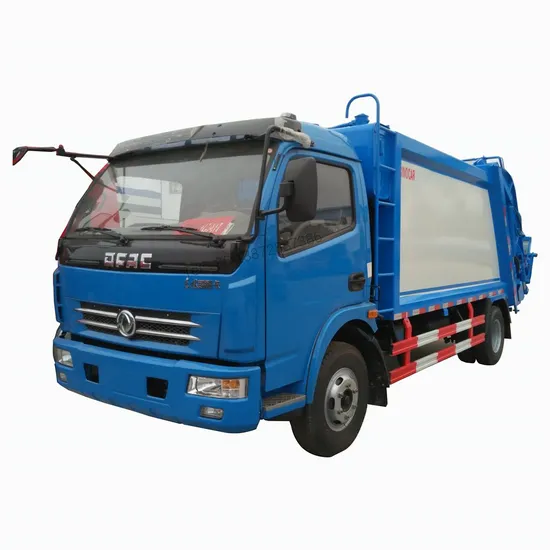
The Dongfeng 4x2 Garbage Compactor Truck 6m3 Euro 5 is a small rear-loading refuse truck built on a Dongfeng chassis with a 4×2 drive layout. It pairs a compression body in the 6 m³ class with a manual gearbox and a diesel engine. The short overall length makes it a handy choice for collection routes where a larger truck cannot turn.
It is aimed at residential streets, housing compounds, small commercial areas and municipal contractors who want to compact waste on board and make fewer trips to the transfer point. A compactor presses the waste into the body, so a small truck can carry far more material than an open tipper of the same size.
Where this truck is used
Narrow lanes, older neighbourhoods and estates with limited turning space are the typical setting. At 7240 mm long, 2150 mm wide and 2600 mm high, the truck is easier to place at kerbsides than a heavy refuse vehicle. Crews can work close to bins and containers without blocking an entire road for long.
Municipal cleaning departments use trucks of this size for daily household rounds, while private contractors use them for shopping streets, schools and light industrial units. Because the body compresses waste, the interval between emptying trips grows, and fuel use per tonne collected can fall compared with a non-compacting body of similar size.
Chassis, engine and drivetrain
The chassis is from Dongfeng. The engine is rated at 120 HP (88 kW) and runs on diesel, and the gearbox has five forward speeds and one reverse, operated manually. The wheelbase is 3815 mm. Emission level depends on the configuration you choose and is confirmed in the quotation, since it differs between destination requirements.
Gross vehicle mass is 8495 kg and the kerb weight is 5800 kg. Tyres are 7.00R16, supplied as six tyres with one spare. Drivers who move from a light truck will find the controls familiar, but they should allow for the added weight of a full body when braking and when climbing ramps at the disposal point.
Body and operating routine
The compression body is made of carbon steel and is sized in the 6 m³ class. In a typical cycle the crew tips bin contents into the loading area, runs the compaction stroke and repeats until the body is full. Experienced crews load evenly, because uneven loading can leave spaces that waste volume and slow compaction.
At the end of the route the truck discharges the compacted load at the transfer station or landfill. Because compacted waste is dense, the payload limit is often reached before the volume limit. Supervisors should therefore agree a loading target for the crew, based on the payload that is confirmed in your quotation.
What to confirm before ordering
Please confirm the drive side, left-hand or right-hand, and the emission standard your operation requires. Also confirm the body volume, the payload figure, whether you want a sewage water tank or any bin-lifting device, and the colour. Colour can be made to your requirements, and customisation is available, so tell us what your fleet already uses.
It helps if you describe the route: the narrowest street, the steepest ramp and the distance to the disposal site. Our team will compare these with the wheelbase and the power of the chassis and report any concern before the order is placed. The aim is a quotation that matches how the truck will be driven every day.
Request a current quotation for your selected configuration, quantity and delivery terms.