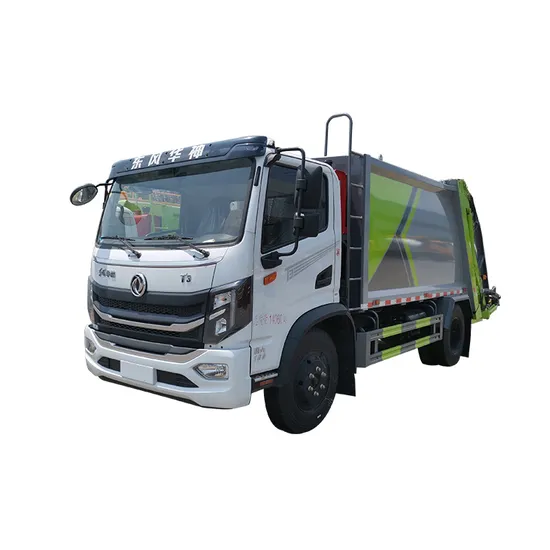
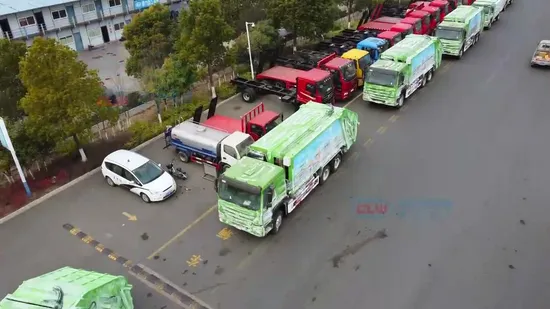
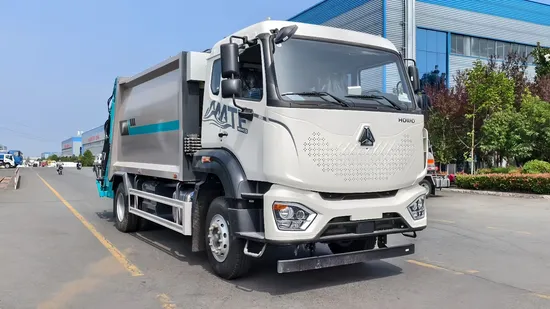
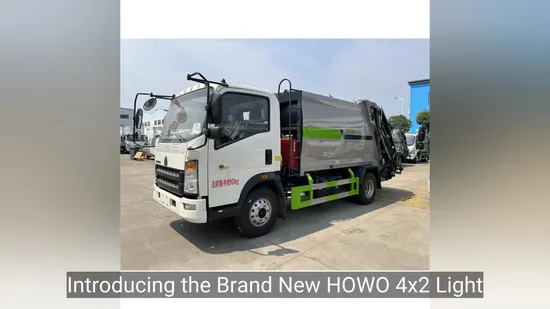
The Dongfeng 4x2 Diesel Compactor Garbage Truck 8m3 is a rear-loading refuse collection truck on the EQ1120GL6DJ chassis. It has a diesel engine, two-wheel drive, a manual gearbox and an 8 m3 compactor body that squeezes waste to carry more per trip. The cab is built for left-hand drive.
We recommend it to municipal sanitation departments, waste contractors, industrial estates and large residential districts that collect bagged waste or emptied bins on regular routes. A compactor truck suits operators who want fewer trips to the transfer station and a closed body that keeps waste out of sight and out of the wind.
Typical working routines
A collection day starts with the crew loading waste into the rear hopper from bins or bags. The compaction mechanism then pushes the waste forward into the body. When the body is full, the truck drives to the disposal site and discharges. Most routes repeat this cycle two or three times each shift.
Compacting reduces the volume of waste, so the truck carries more refuse than an open tipper of similar size. Drivers on residential routes make frequent stops and starts, so a responsive clutch, good brakes and a clear view of the rear hopper matter. Crews should clear spilled waste from the hopper edges before driving away.
Chassis, engine and drivetrain
The chassis model is EQ1120GL6DJ with a wheelbase of 3800 mm. The gross vehicle weight is 11,990 kg and the theoretical curb weight is 7150 kg. Power comes from a YCY30165-60 engine of 2.97 L displacement, with a maximum output of 121 kW (165 hp), paired with a manual transmission.
Frequent stopping puts heavy demands on the clutch, brakes and cooling system. Check these items daily, along with tyre pressure and engine oil. Because the compactor is driven hydraulically from the chassis, keeping the engine in good condition also keeps the compaction cycle quick. The emission standard is confirmed in the quotation for your roads.
Compactor body and waste handling
The body has a rated volume of 8 m3 and is built for trash bins and general waste collection. It works as a compression type: a blade or panel moves inside the rear section, draws waste in from the hopper and packs it against the load already in the body. This keeps waste inside and limits spillage on the road.
Wet waste can leave liquid at the bottom of the body, so crews should wash the hopper and the inside of the body after every shift. Check the hydraulic hoses, seals and cylinders for leaks and grease moving parts on schedule. Keep metal objects and gas cylinders out of the hopper, as they can damage the compaction mechanism.
What to confirm before ordering
Please confirm the drive side, the emission standard, the rated payload, the final body volume and the overall dimensions in the quotation. These figures are decided by the configuration you choose. Tell us what type of waste you collect and how heavy it is, because wet kitchen waste is far denser than dry packaging.
Also ask about optional equipment, such as a bin lifter, a camera for rear viewing, warning lights and a particular paint colour. Describing your route, the number of bins per stop and the distance to the disposal site lets our team propose a body size that suits one shift of work.
Request a current quotation for your selected configuration, quantity and delivery terms.